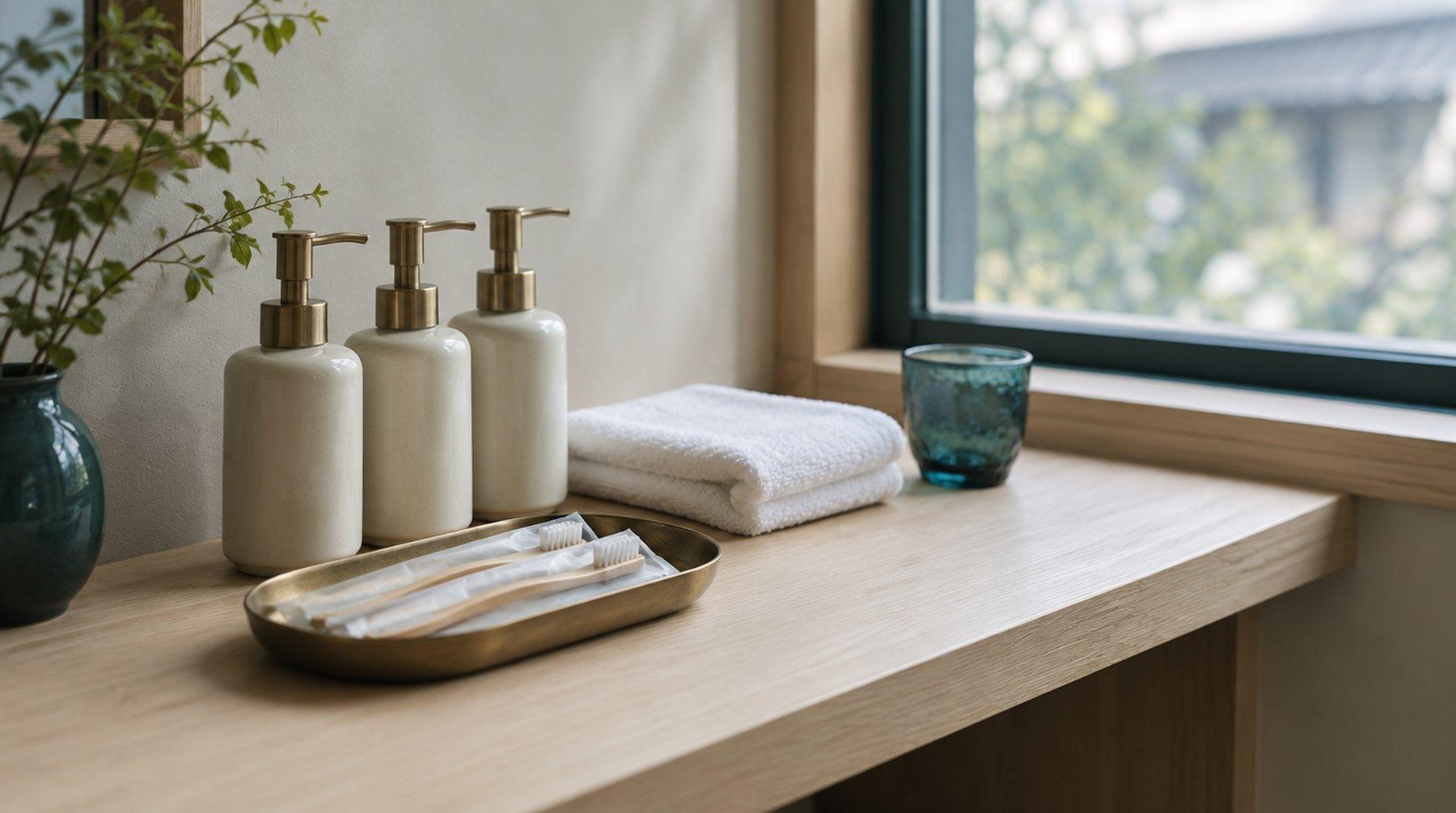
All six of our rooms, across three buildings, carry the same basic set, and it is restocked during the clean after every checkout. Over twelve months, consumable supplies came to 4.6% of revenue (November 2025 to October 2026, measured 10 November 2026, published with the method on our operating data page).
Consumables here means whatever runs down as guests use it: shampoo and soap, toilet paper, detergent, bin bags, small disposables. Things that break and get replaced are a separate subject, covered in broken and missing items.
What do our six rooms actually carry?
Some things are in every room and some only in a few. The table counts what each room's listing shows among its facilities and amenities, across the six rooms, as of November 2026.
| Item | Rooms |
|---|---|
| Shampoo, conditioner, body soap | 6 |
| Hair dryer, iron | 6 |
| Electric kettle, basic cookware | 6 |
| Washing machine, drying rack | 6 |
| First-aid kit | 6 |
| Tumble dryer | 5 |
| Cleaning products | 5 |
| Toothbrush, slippers | 1 |
The test we use is whether a guest arriving at night would have to go out and buy something. Check-in starts at 16:00 and late arrivals are common. Washing, drying your hair, boiling water and doing laundry are covered in every room. A toothbrush and slippers appear on the listing of only one room of the six.
Who restocks, and when?
The cleaner does, during the clean after checkout. Restocking is one of the four jobs in every clean, next to cleaning, changing the linen and checking the room, and it is never left for another day (how our cleaning runs).
The window is the five hours between 11:00 checkout and 16:00 check-in (10:00 checkout at one unit). Within it, stock is checked and brought back to a set level. With a fixed count for each room, anything short shows up on the spot, and the room looks the same whoever restocked it.
At 3.3 nights a stay and 83.3% occupancy, each room turns over seven or eight times a month. There were 515 checkouts in the twelve months, and every one was followed by a restock. Each restock is small; the number of them is what makes the supplies line.
What runs out first?
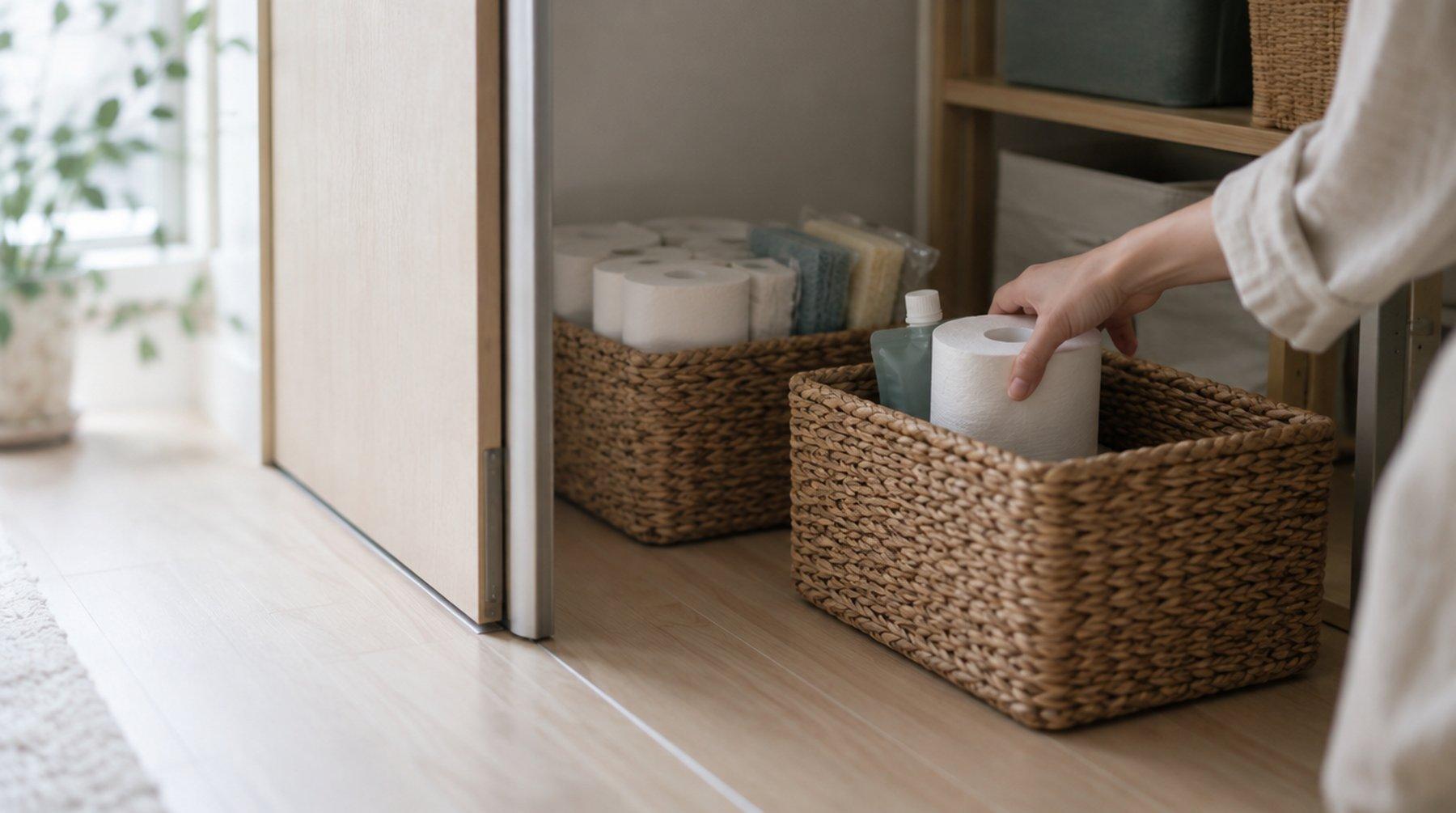
Toilet paper is the one that hurts most. We do not publish counts, because we never recorded this in a form we could count; it is what running the rooms has taught us.
The problem is when it runs out. A message saying the toilet paper is gone tends to arrive at night, and someone then has to take it over. That is why the amount to leave is better judged by whether it lasts to the last night of the next stay, not by whether it covers the first.
What goes in the kitchen?
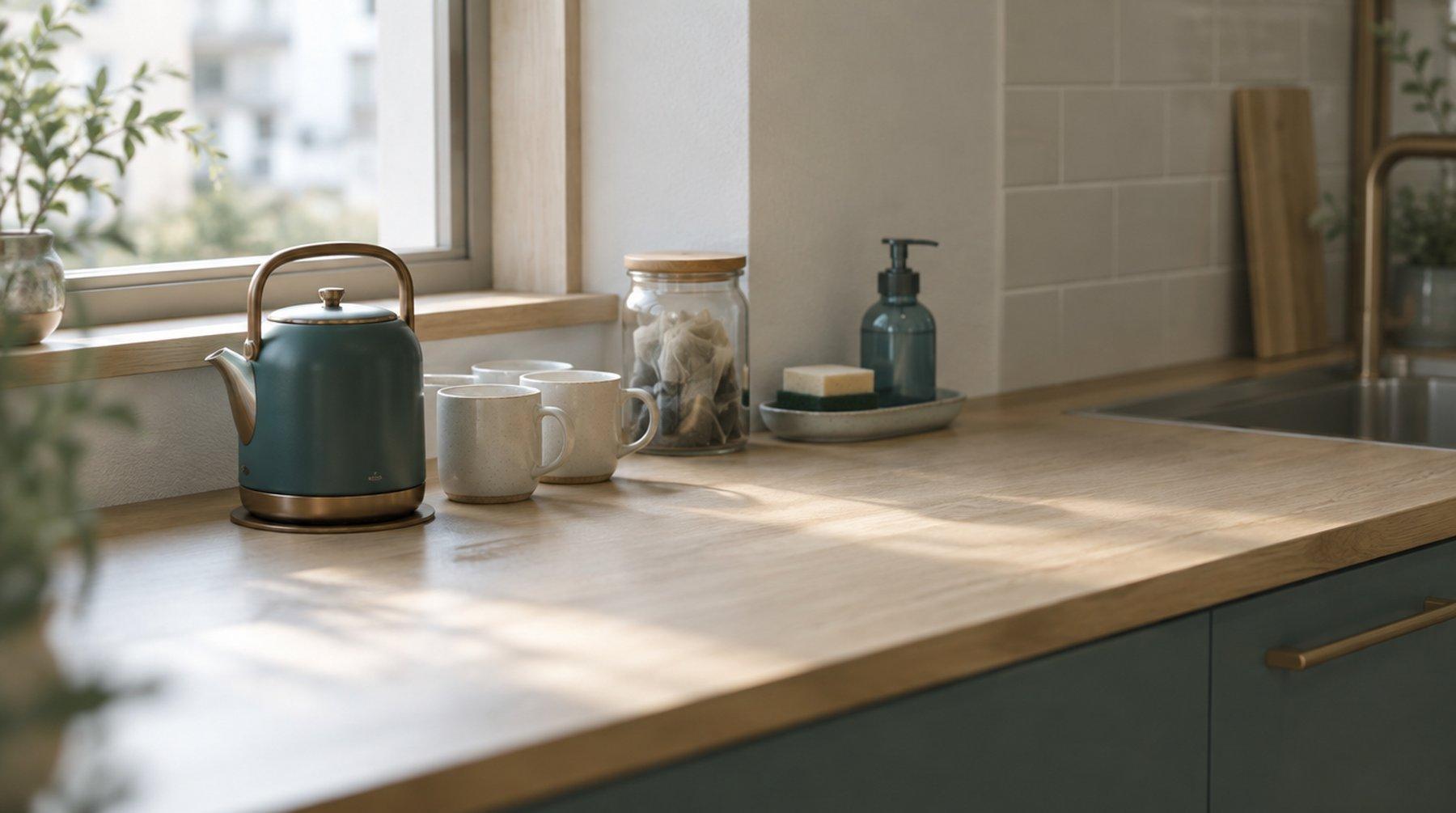
All six rooms have an electric kettle, a microwave, a rice cooker, basic cookware and tableware. The kitchen consumables are mainly dish soap and sponges.
Seasonings and food are the hardest consumables to manage. It is difficult to see the state of something once opened, and difficult to tell it apart from what the previous guest left behind. If you provide them, decide with the cost of checking contents and dates at every clean already counted in.
What changes in a room for more people?
The amount used at each changeover grows with the number of guests. It is not the number of changeovers that changes, but the weight of each one.
Our six rooms range from a room for two to a room for ten. After ten people have stayed three nights, the toilet paper and body soap are gone at a rate a room for two never sees, even though both count as one checkout. So the restock level is set room by room and topped up against the number of guests on the next booking, the same way towels and glasses are set out to match the guest count.
With a large group, some things also run short in the middle of the stay, and that message comes earlier than usual. If you are looking at a property for big groups, plan on a supplies ratio heavier than our 4.6%.
How much of revenue do supplies take?
Over our twelve months, 4.6%, about a quarter of cleaning at 17.5%. Together the two came to 22.1%, roughly three quarters of the 29.2% total of published operating costs: the part of the cost that moves with the number of changeovers.
What moves the ratio is the number of changeovers and guests more than unit prices. Shorter stays mean more changeovers, and a room for more people uses more each time. We do not publish purchase prices, because they shift with volume, buying method and timing and would not transfer to another property. The full cost picture is in operating costs, line by line.
When comparing quotes, read the supplies line together with cleaning. If a cleaning company handles the linen, the cleaning line gets heavier; if you buy and wash it yourself, supplies does (how sheets and towels are run). A quote with a low supplies line may simply have moved the cost to another line.
What should you ask a management company about supplies?
Four questions. The difference shows in whether the answers are concrete.
- Is there a set list, room by room, of what is stocked and how much?
- Is restocking done inside every clean, or on a separate visit?
- Are supplies charged at cost or with a mark-up, and on which line of the report?
- When a guest messages at night that something has run out, who takes it over?
Does this 4.6% apply to my property?
No. A supplies ratio moves with capacity, length of stay, the number and quality of items provided, and the kind of guest. Even among our six rooms, rooms with different capacities do not produce the same figure.
What we can offer is our own measured figures and a monthly record. For a property we manage, supplies are passed through at actual cost, and the fee is 20% of revenue plus actual cleaning, linen and supply costs (how the fee works). The cost lines are handed over every month as they are (what belongs in the monthly report). We promise no supplies ratio and no occupancy figure.
Talk to us about your property