
The easiest autumn base in Tokyo is a station you can walk to in under five minutes, on a line that reaches your destinations without three transfers. Autumn is the walking season here, so the thing that decides whether a day works is not how central your bed is, it is how few times you change trains before you are standing under the trees. Both of our Tokyo buildings were chosen on exactly that test.
When does autumn in Tokyo actually start?
In practice, mid-October to the end of November. September is still summer here: hot, humid, and the peak of typhoon season, which is why visitors who booked "autumn" for early September often feel misled by their own calendar.
October is the month the city becomes comfortable to walk, with a rainy stretch that can park itself over Tokyo for several days. Autumn colour (koyo, the turning of the leaves) arrives late in central Tokyo: most years the gardens and avenues peak from late November into the first days of December, well after the mountains have finished.
Those dates move by a week or two every year, so do not plan around a number in a guide, including this one. A week before you fly, check the Japan Meteorological Agency forecast for temperature and rain, and check the foliage report each garden or park publishes on its own site. That is what we do before we tell a guest what to expect.
What changes in your bag for autumn?
Three things: one warm layer you can take off, real rain cover, and shoes you can put ten thousand steps on. Mornings and evenings in November are cool while the middle of a sunny day is still mild, so a jacket you can carry beats a coat you have to wear.
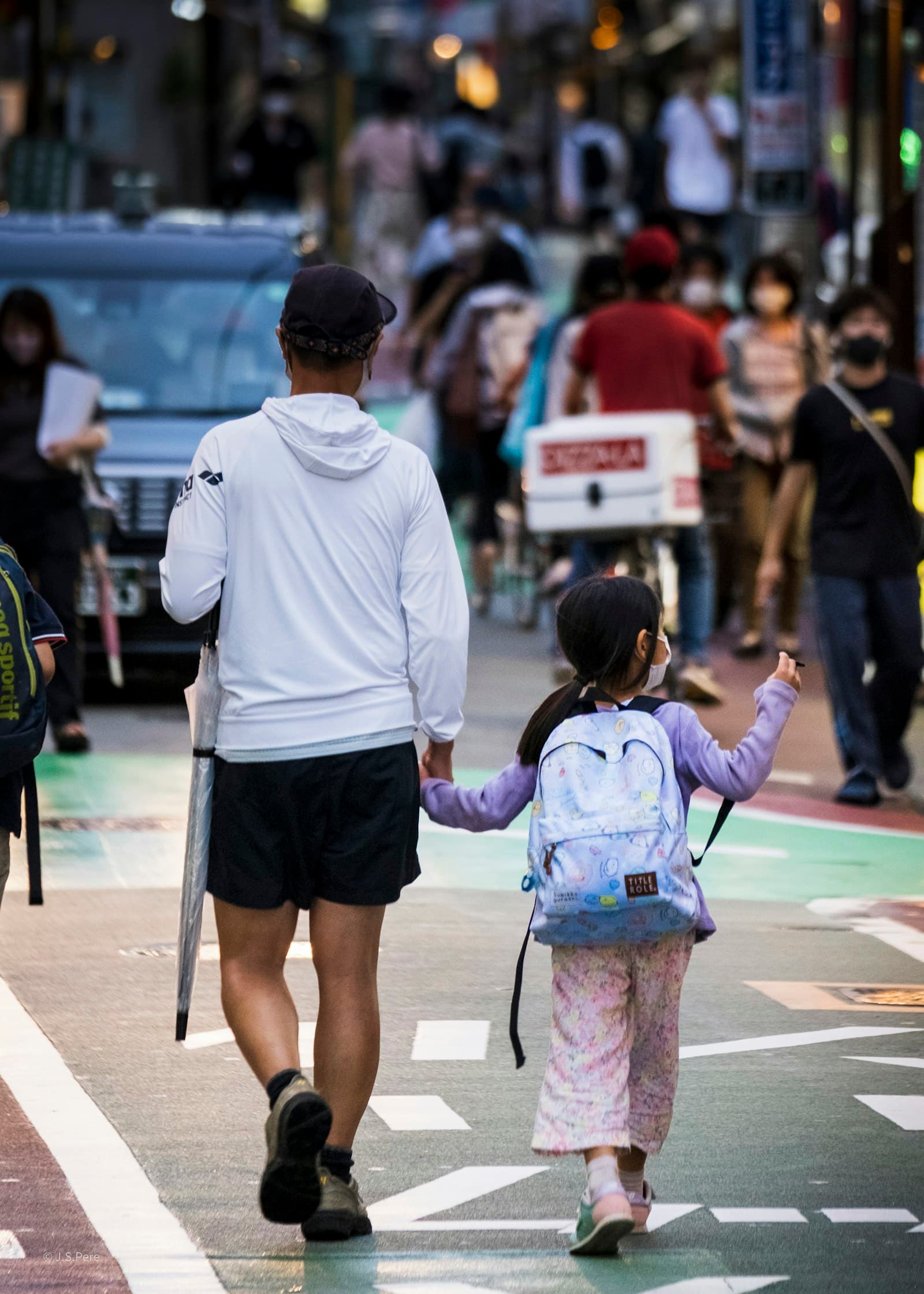
Rain is the part people underestimate. A folding umbrella lives in every Japanese bag for a reason, and convenience stores sell one on any corner if yours stays home. Waterproof shoes matter more than a waterproof coat, because the walking is what you came for.
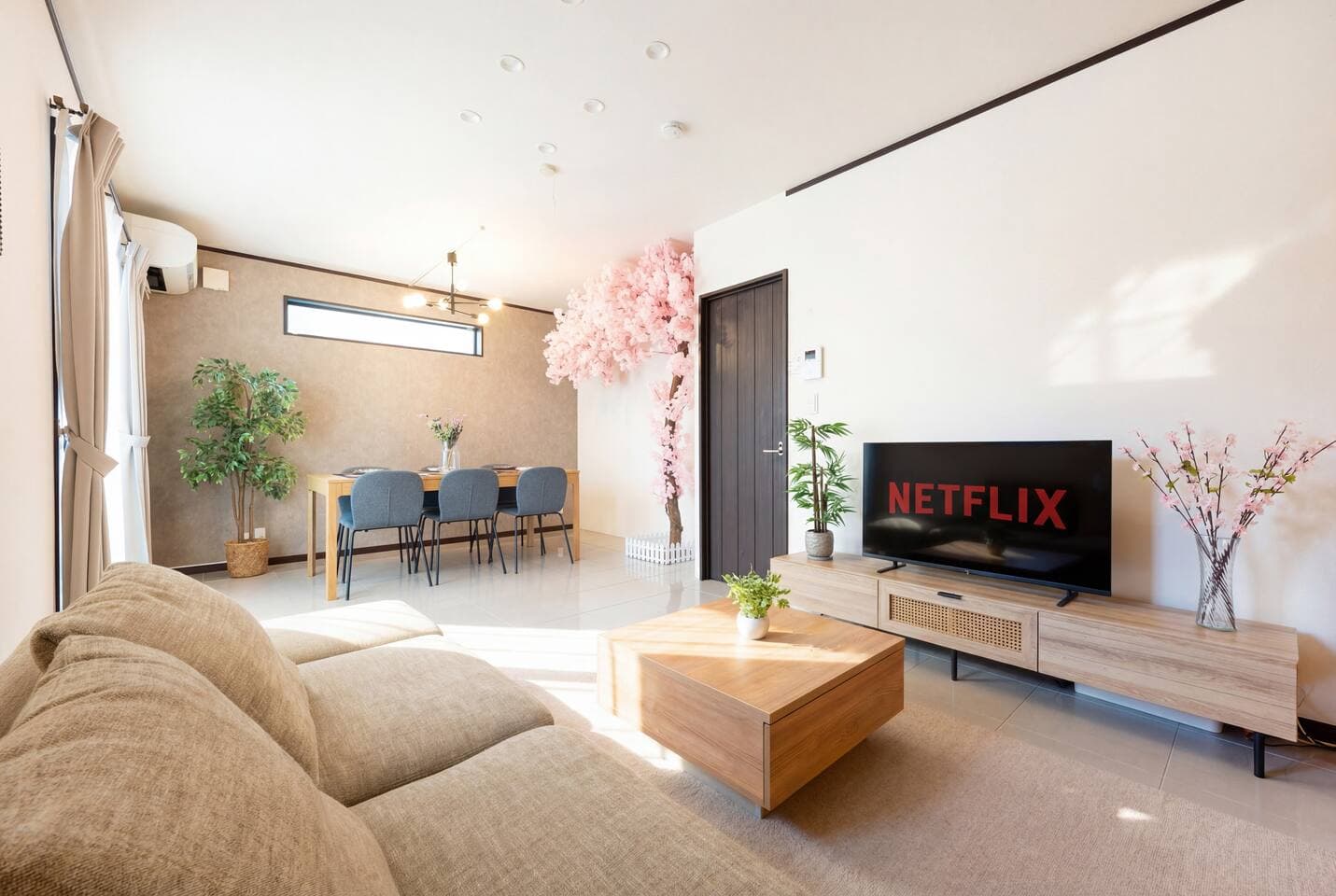
You can also pack less than you think. Both Kameari apartments have a washer and a dryer, so a week of clothes covers two. Our Heiwajima studio has a washer and an indoor drying rack but no dryer, which is worth knowing before you plan a wash the night before a flight.
Kameari or Heiwajima: which base suits which trip?
Kameari points north and east into old Tokyo, Heiwajima points south to Shinagawa, Shibuya, Yokohama and Haneda. Both are on a single line from the front door, and the times below are the ones we give guests, measured from the station rather than from a search engine.
| Base | To the station | Line | Tokyo Station | What it is close to |
|---|---|---|---|---|
| Kameari (Katsushika) | 4 min walk | JR Joban Line | 25 min | Ueno 15 min, Asakusa and Akihabara 20 min |
| Heiwajima (Ota) | 30 sec walk | Keikyu Line | 19 min | Shinagawa 6 min, Yokohama 14 min, Shibuya 23 min, Haneda 10 min |
How does Tokyo open up from Kameari?
From Kameari you work the old-town side first: Ueno is 15 minutes, Asakusa and Akihabara 20. Ueno Park alone can hold an autumn day, with the national museums around its edges for the hour the weather turns. Gardens like Rikugien and Koishikawa Korakuen are an easy extension by way of Ueno.
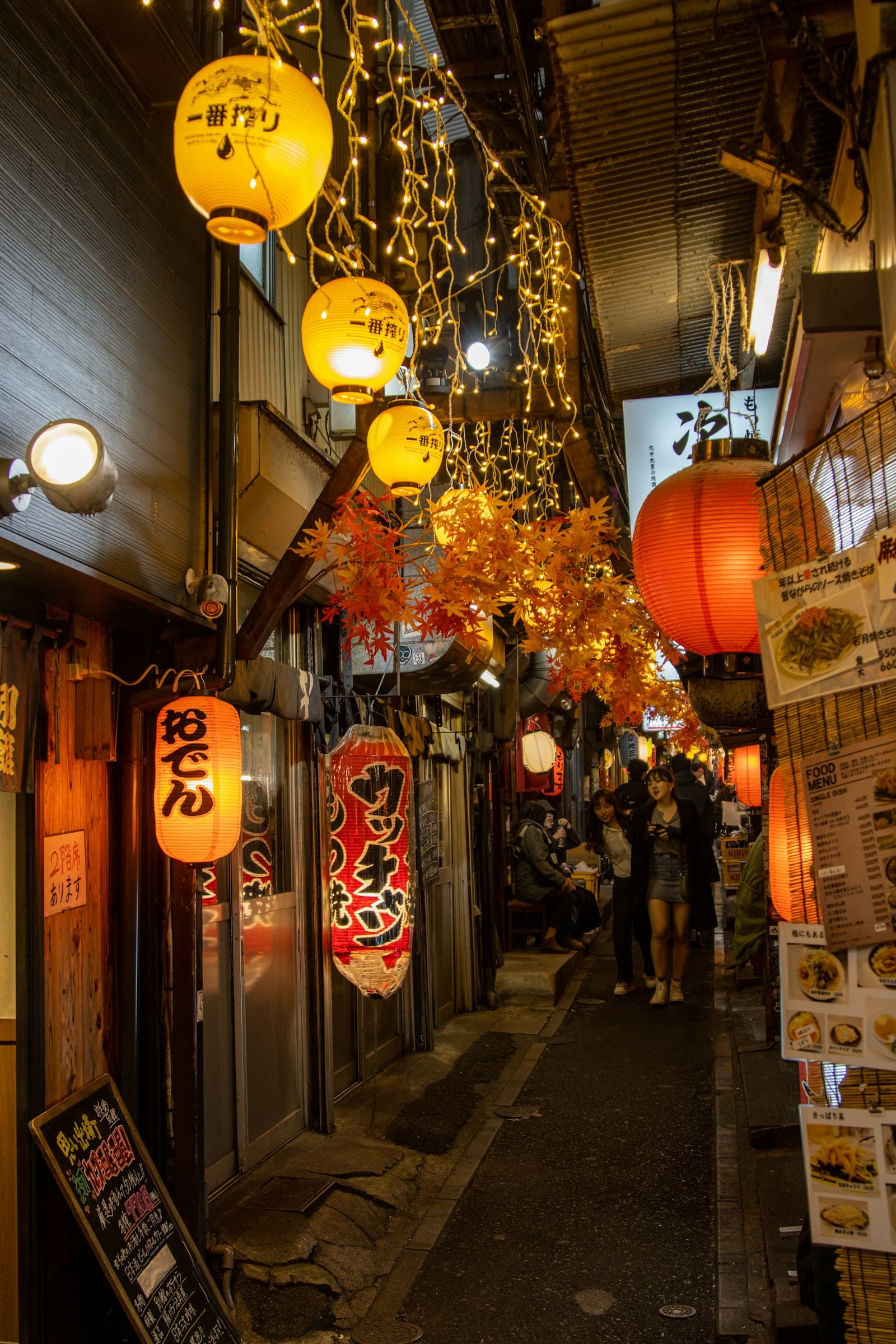
The one transfer worth knowing is Kita-Senju, where the JR Joban Line meets the Tokyo Metro network and the rest of the city opens up. Coming home, you land back in a shitamachi neighbourhood (Tokyo's old downtown) where the shopping street is still lit and dinner is family-run rather than queued for. The Kameari area guide covers the neighbourhood itself.
How does Tokyo open up from Heiwajima?
From Heiwajima everything runs through Shinagawa, six minutes up the Keikyu Line, and from there the Yamanote Line puts the west side of the city in reach: Shibuya is 23 minutes door to platform, Tokyo Station 19. The ginkgo avenues and landscaped parks on that side of town are the classic late-autumn walk, and most years they are the last thing to turn.
The move Tokyo-only itineraries miss is Yokohama in 14 minutes, which makes a garden afternoon there a half-day rather than an expedition. And Haneda Airport is 10 minutes away, which is the whole argument for this building on the first and last night of a trip: see the Haneda area guide. The honest limit is size. Heiwajima is one studio for two people, so it is a solo or couple base, not a family one.
When should you book an autumn stay?
For November, six weeks ahead is the realistic line, and earlier if your dates touch a holiday weekend. Across our own six rooms over the twelve months to July 2026, the median gap between booking and arrival was 42 days, so half of our guests had already decided more than six weeks out (measured August 2026, method published on our operating data page).
Autumn is also when our Tokyo rooms are fullest: 95.2% occupancy in October 2025 and 93.3% in November 2025, against a twelve-month Tokyo average of 85.4% (operating data). Those are our own rooms rather than the market, but the shape is the same everywhere in the city, and it is the reason late October dates disappear first.
Two public holidays bunch the demand further. Sports Day falls on the second Monday of October and Culture Day on 3 November, and each turns the weekend around it into a three-day one.
What do you do on a rainy autumn day?
You decide the indoor option before you need it, because an unplanned rainy day in a city this large is how an afternoon gets lost. From Kameari that is the Ueno museum cluster at 15 minutes, or Ario Kameari, the mall within walking distance, for the practical version. From Heiwajima it is Shinagawa and Yokohama, both indoors-heavy and both under 15 minutes.
The apartment is the other half of the answer. A kitchen means one meal you do not have to go out in the rain for, the washer means wet clothes are not a problem, and luggage can be dropped off around check-in, so a rainy arrival day does not have to be spent carrying a suitcase.
Which room should you pick?
It follows from your group size and which half of the city you are aiming at. Check-in is from 16:00 and check-out is 11:00, except the Kameari upper floor, which checks out at 10:00.
| Room | Sleeps | Suits |
|---|---|---|
| KAMEARI 101 (ground floor) | up to 4 | Stairs-free, couples and small families |
| KAMEARI 201 (upper floor) | up to 10 | Three bedrooms, groups travelling together |
| KAMEARI whole house | up to 14 | Large groups, rare in Tokyo |
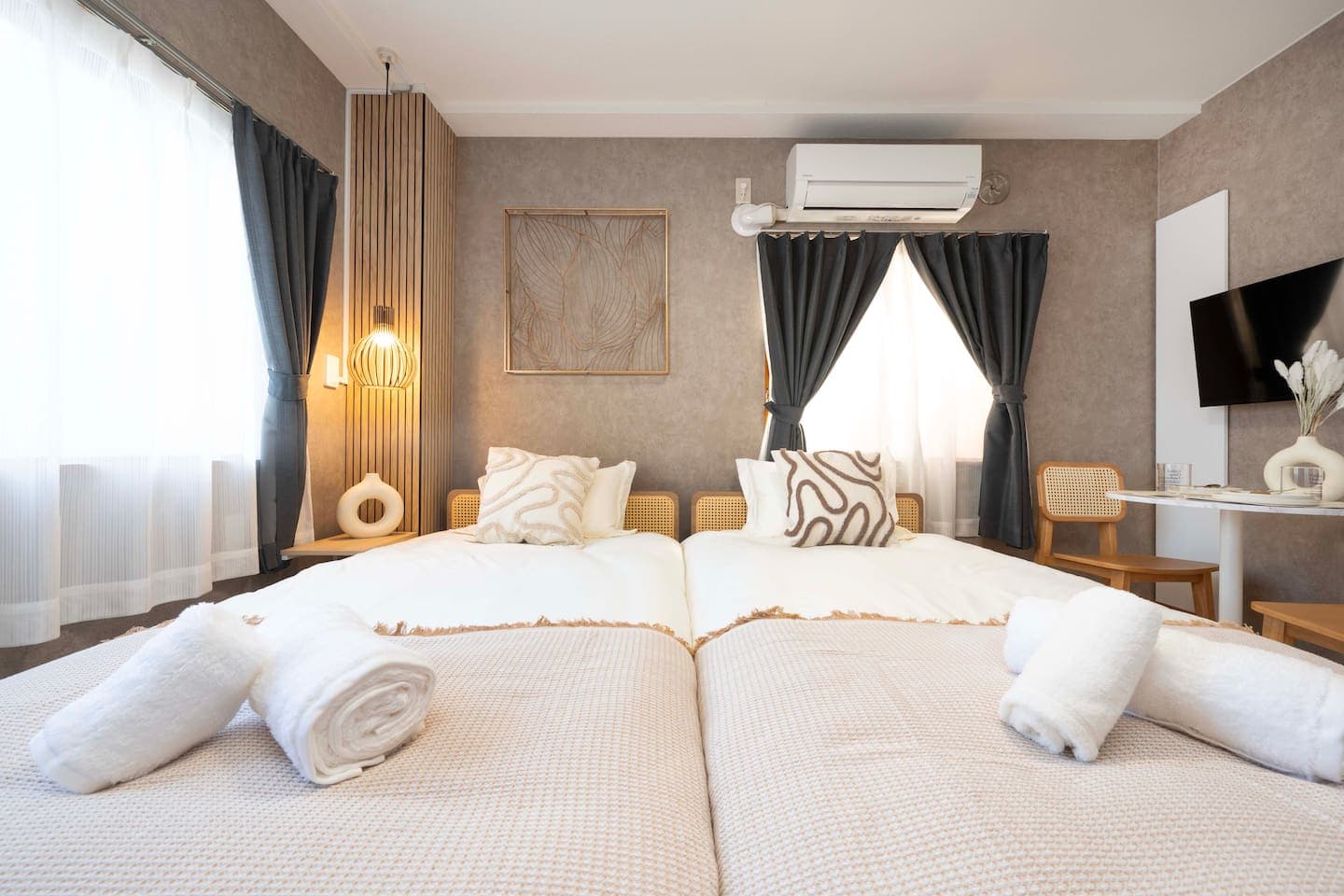
| HEIWAJIMA studio | up to 2 | Solo or couple, Haneda and the Shinagawa side |