
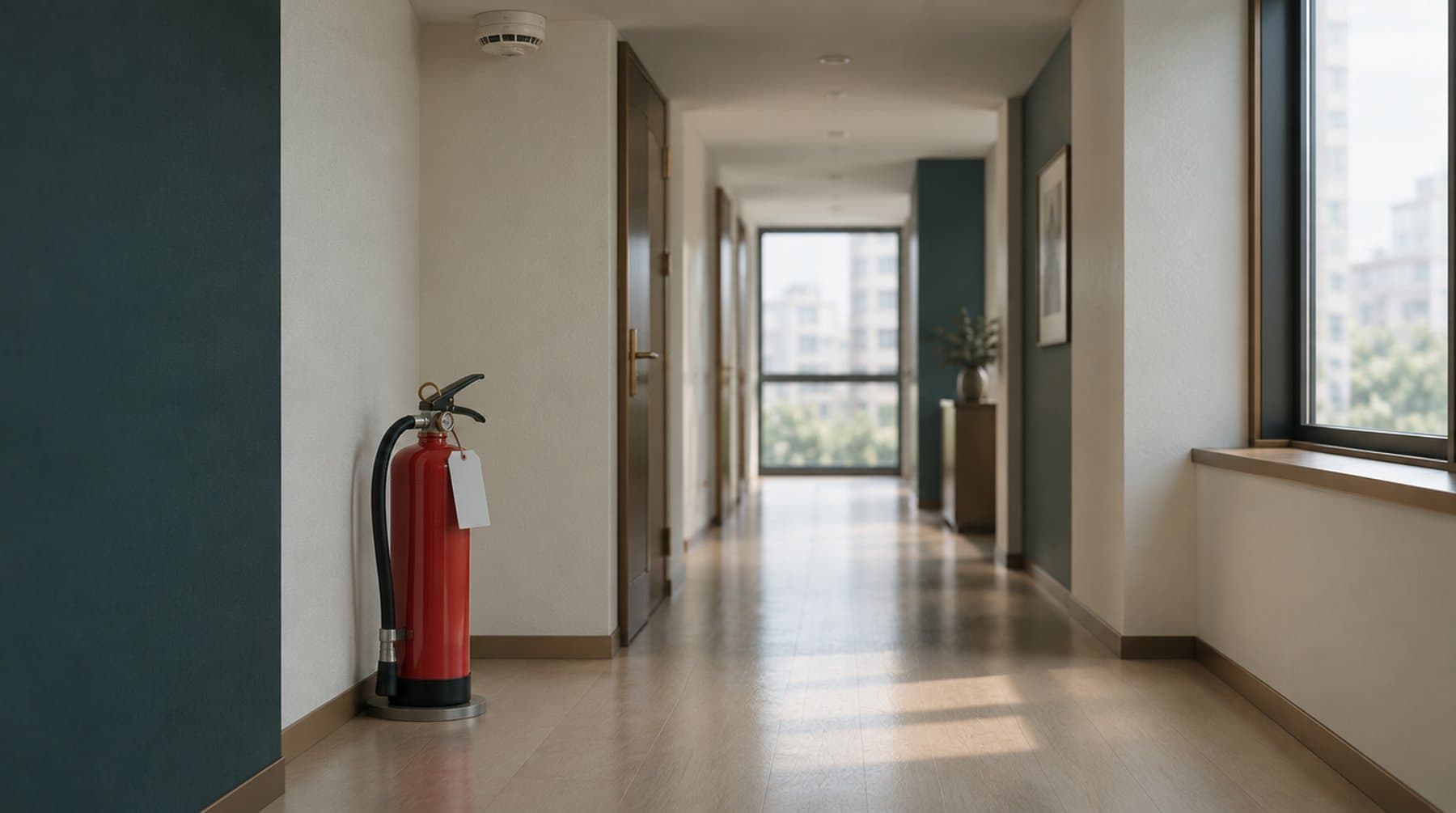
Getting a lodging permit in Japan ends with a fire inspection: the fire department checks the building and issues a compliance certificate (消防法令適合通知書), without which the health centre will not license the property. We described that stage in the permit article. This piece is about what comes after, because the day the permit is issued is the best condition the fire equipment will ever be in. From then on batteries age, lamps fail, and extinguishers creep toward their expiry dates.
What the rules ask of a given building depends on its use classification and size, so read this as an operating record, not legal advice. The reliable move is to ask the fire department that covers your address at opening, then fix the answers into an annual calendar. Here is what that calendar looks like across our three permitted buildings in Ota, Katsushika and Sapporo's Kita ward.
What happens after opening, and how often?
At our three buildings, a qualified inspection company tests the fire equipment twice a year, the results are reported to the fire department once a year, and our own cleaning team runs a visual fire check at every turnover (as of August 2026). In Japan this is a statutory system: installed fire equipment must be tested on a fixed cycle and the results filed, with the cycle and the reporting duty set by the building's category and size.
| Check | Frequency | Done by |
|---|---|---|
| Equipment inspection (does it work) | Twice a year | Contracted inspection company |
| Report to the fire department | Once a year | Papers by the contractor, filed by us |
| Visual check | Every cleaning turnover, about seven times a month per room | Our own cleaning team |
Those frequencies describe our own simple-lodging (簡易宿所) buildings, not a universal rule: confirm your building's requirements with the local fire department. Then book the inspection dates for the whole year in one sitting. If you wait to fit them around bookings, the inspection is the thing that slips.
What does the inspection cover?
The equipment installed for the permit. In our buildings that means the automatic fire alarm system, the guide lights and the extinguishers, the set fixed at the fire-department consultation before opening.
- Automatic fire alarm: do the detectors respond, does the signal reach the panel. It is tested by actually setting it off
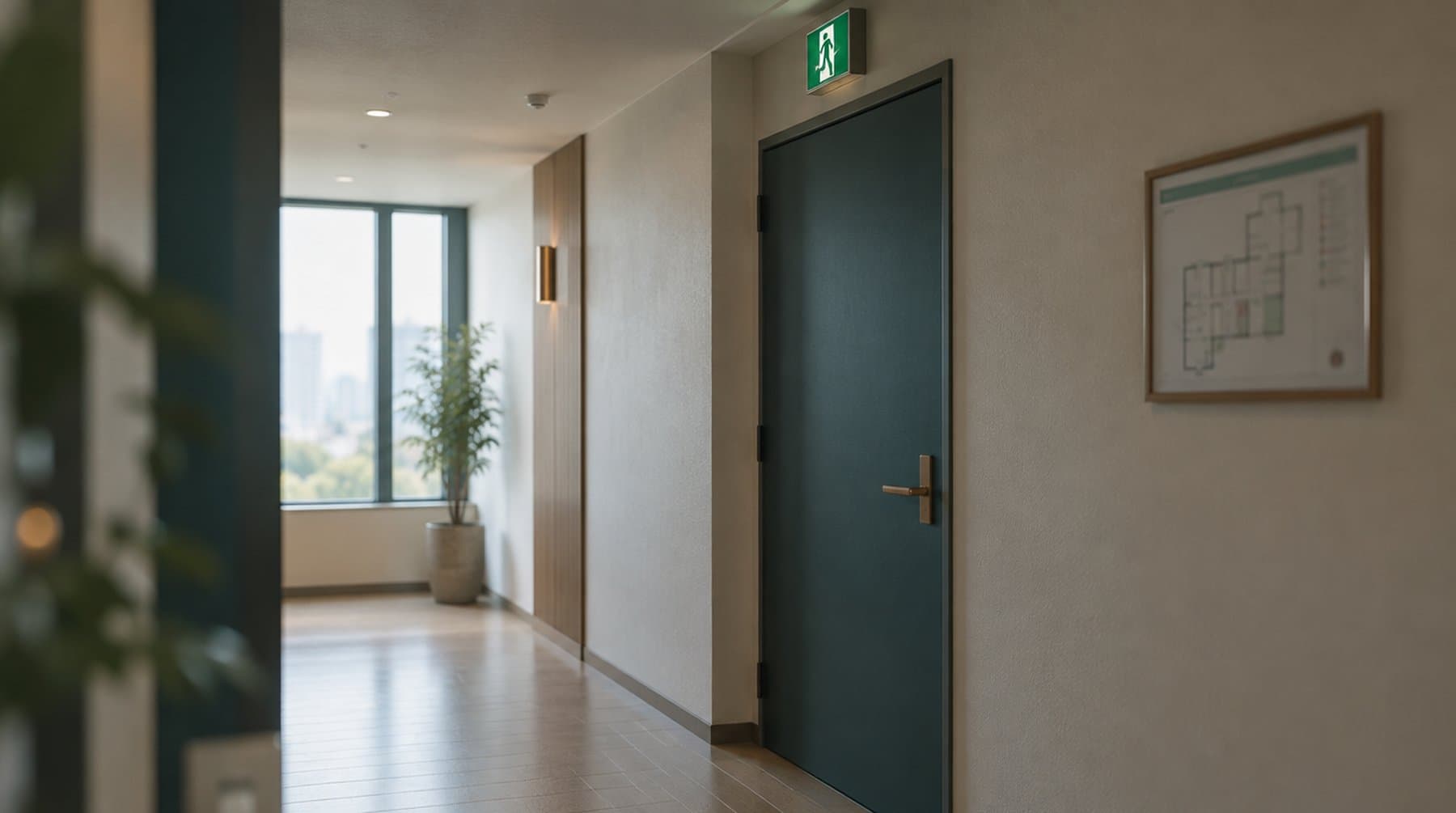
- Guide lights (the green exit signs): are they lit, and do they stay lit on battery when the power is cut. Worn-out batteries are the most common replacement
- Extinguishers: pressure gauge, corrosion, expiry date. The date is printed on the body, and anyone can read it
Who performs the inspection, and what does it cost?
We contract a fire-equipment inspection company. Some buildings may be inspected by the owner, but whether yours qualifies depends on size and use, so once again the fire department answers faster than the internet. As a market estimate, a visit starts from a few tens of thousands of yen and moves with the building's size and equipment; that is an estimate of the market, not our contract price.
The value of the contractor is not the test itself. It is that the report paperwork is prepared correctly, and that parts nearing the end of their life are flagged before they fail rather than after.
What does the operator check between inspections?
Two visits a year cannot protect a building that runs unmanned in between, so we fold fire items into the final walk of every cleaning turnover.
- Escape routes: no suitcases or spare bedding blocking corridors and stairs. The item that drifts most after group stays
- Guide lights: the lamp is actually lit. A dead lamp otherwise waits unnoticed until the next inspection
- Detectors: not covered, not removed
- Extinguishers: in their marked place and visible to a guest
Do alarms go off by mistake, and what happens at night?
Yes. Cooking smoke and steam are the leading cause. In an unmanned property the risk splits in two: the guest who panics when it sounds, and the guest who quietly drapes a towel over the detector so it will not sound again.
Our in-room guide says at the top: an alarm set off by cooking stops with ventilation, and the detector is never to be touched. Night messages land on our 24/7 first response. And because an alarm is audible outside the building, the neighbours are part of the system too: the contact card we handed out before opening is what keeps a false alarm from turning into a complaint.
Starting from a long-empty building: what should you look at first?
In a house that has stood empty for years, expired extinguishers and detectors past their service life are a normal starting point. Equipment condition flows straight into the launch budget, which is why the akiya article treats it as a purchase-stage question. Reading an extinguisher's expiry label and checking that the guide lights turn on takes minutes at a viewing, and those minutes lighten the whole calendar after opening.
Ask us about the fire side of your property