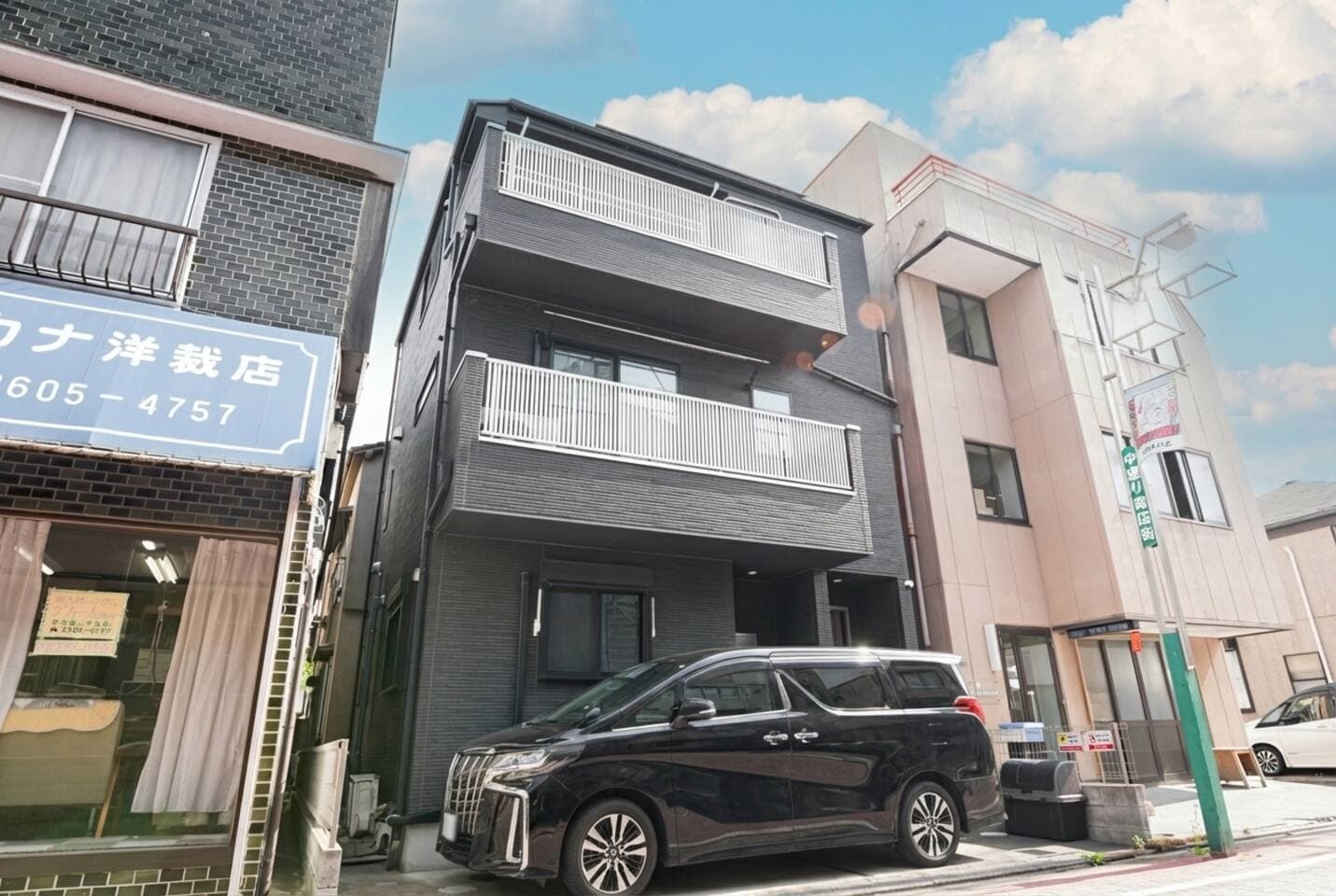
We hold simple-lodging (簡易宿所) permits under Japan's Hotels and Inns Business Act in Ota City, Katsushika City and Sapporo's Kita ward, and we still run those apartments ourselves. The permit numbers are published on our company page. Not all three went smoothly: on the first we did things in the wrong order and paid for it in time.
This is written for an owner about to turn a property into a rental, in the order the work actually happens. Requirements differ by municipality and change over time, so treat everything here as the shape of the process, and confirm the specifics with the health centre and fire department that cover your address.

What is decided the moment you see the property
Some things are settled before any money is spent. A property that fails these does not become a permitted rental at any budget.
- Zoning: hotel businesses are not permitted in residential-only zones, nor in industrial and exclusively-industrial zones. Your city's urban planning map will tell you
- Building use: whether a change of use from residence to lodging is required. Above 200 square metres of floor area, a building confirmation application becomes mandatory
- Access, stairs and escape routes, judged under both the Building Standards Act and the Fire Service Act
- Local ordinances: some municipalities add distance rules or consultation requirements near schools and childcare facilities
Our own first mistake was getting interior quotes before talking to anyone official. The order is the other way around: health centre and fire department first, interiors after. Being told at the consultation stage that a structure will be difficult is a cheap sentence to hear, and an expensive one to discover after the drawings are paid for.
The actual order
Room area standards, and the required number of washbasins, baths and toilets, depend on your guest capacity and on the municipality. The front-desk requirement can often be satisfied by ICT alternatives, again on locally-defined conditions. Do not plan around general rules found online, including these: ask the health centre that covers the address.
- 1. Visit the property; confirm zoning and total floor area
- 2. Pre-consultation at the health centre, ideally with draft drawings in hand
- 3. Pre-consultation at the fire department. This is where the required equipment gets decided: automatic fire alarm system, guide lights, extinguishers
- 4. Change-of-use building confirmation, if required
- 5. Drawings, construction, fire-safety installation
- 6. Talking to the neighbours. A formal requirement in some municipalities and a practical one everywhere
- 7. Fire department inspection and the fire-safety compliance certificate (消防法令適合通知書)
- 8. Permit application to the health centre: application form, facility and equipment summary, drawings, water quality test, company registration certificate
- 9. Health centre site inspection
- 10. Permit issued. Only now can the property be sold as accommodation
Time and money
| Item | Typical | Notes |
|---|---|---|
| Whole process | 3 to 6 months | Longer with a change of use, or substantial fire-safety work |
| Fire-safety equipment | From several hundred thousand yen | The automatic alarm system dominates; varies with size and what exists |
| Drawings and change of use | Several hundred thousand yen upward | Older buildings with no surviving drawings cost the most |
| Application fee | Around ¥20,000 | Set locally |
| Administrative scrivener | ¥100,000 to ¥300,000 | Optional. You are buying back weekday hours at a counter |
Four things that go wrong
- No existing drawings, which is common in older houses. Redrawing adds both time and cost
- Leaving the fire department until after the interior is decided, which means doing parts of it twice
- Treating the neighbours as a formality. Objections delay a project longer than any office does. Going round before construction, with a contact number for after opening, is the shorter path
- Forgetting the water quality test. In buildings with a storage tank it takes time, and it is the document people forget
Permit or notification?
A 旅館業 permit has no annual cap on nights. The 住宅宿泊事業法 notification caps you at 180 nights a year, which is to say it removes half your potential occupancy by rule rather than by demand. Against that, the notification route is faster, lighter and much cheaper to complete.
Our own apartments all run on permits, and as managers we take on notification properties too. Which one fits depends on the building, the zoning, and how much an owner can put in up front. The frameworks themselves are explained in minpaku vs hotel.
Ask whether your property qualifies