

Of all the operating costs we publish, insurance is the smallest line: 0.4% of revenue across our own three buildings and six rooms, over the twelve months from August 2025 to July 2026 (measured August 2026, published on our operating data page). Next to cleaning at 17.5%, it barely registers.
It is also the one line we refuse to judge by the same yardstick. Cleaning and utilities buy this month's revenue; insurance buys survival of the worst day. This piece is how we, operating permitted buildings in Ota, Katsushika and Sapporo's Kita ward, think about coverage, and how broken things actually get paid for. It is not product advice and not legal commentary: policies differ contract by contract, and the only reliable answer comes from the insurer in writing.
What is the insurance actually for?
Three separate layers: damage to the building itself, liability to guests and neighbours, and damage to the contents of the rooms. They are three different questions, and no single policy necessarily answers all of them.
| Layer | What happens | Where to check |
|---|---|---|
| Building | Fire, water leak, snow damage | The property (kasai hoken) policy |
| Liability | A leak into the flat below, a guest injury | The liability coverage and its limits |
| Contents | Guest breakage and stains | The contents rider and its deductible |
Two terms worth knowing. In Japan the standard property policy is sold under the name fire insurance (火災保険) even though it can cover far more than fire. Facility liability insurance (施設賠償責任保険) is the type that covers compensation when a defect or lapse in managing the premises injures someone or damages their property: for a rental in a residential street, that is the layer protecting the relationship with the neighbours. In Sapporo we read the snow-damage clauses of the building layer with the same attention.
Can you keep running on the home-use policy the house already has?
In our view this is the single most dangerous state to operate in, because the moment the building starts working as lodging, the premise the policy was priced on, who uses this building and how, has changed.
There is exactly one way to be sure: tell the insurer or the agent that the property holds a lodging permit and operates as accommodation, and get written confirmation that the policy is valid for that use. A verbal 'should be fine' does not exist on the day of the accident.
A guest breaks something: who actually pays?
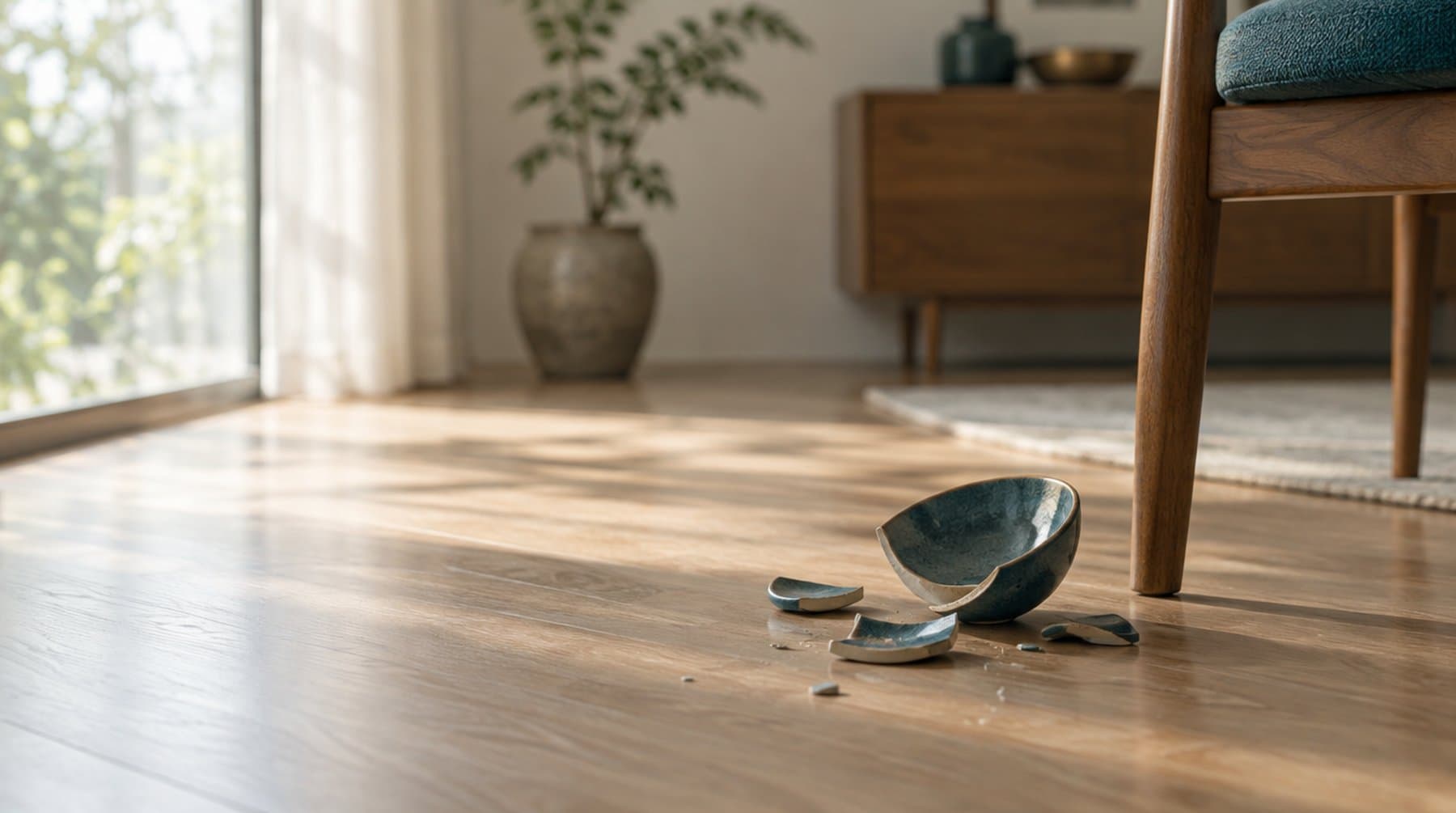
In practice, most small damage is absorbed into operating costs without touching either the insurance or the guest (as of August 2026, our own six rooms).
Across 449 bookings in twelve months at an average stay of 3.3 nights, a chipped glass, a wobbly chair leg or a stained sheet is routine, not an incident. Weigh the paperwork and the deductible of a claim, and what a small invoice does to the relationship with a departing guest, and it was rational for us to let repairs at 1.1% of revenue and consumables at 4.2% carry it. The structure is laid out in our monthly P/L article.
For large damage, the decisive asset is being able to prove when it appeared. Our team photographs every room after every cleaning turnover. Without that record you cannot tie the damage to a stay, and neither a claim against the guest nor an insurance claim moves.
The booking platform offers damage protection. Is that enough?
We do not think so. A platform programme is not a policy you hold: its conditions and scope change at the platform's discretion, not yours.
There is also a structural gap. Platform protection applies, as a rule, to bookings made through that platform, and does nothing for direct bookings. We take direct bookings on our own site, so a setup that leans on platform protection alone was never available to us. Read the current original conditions rather than summaries, and do not treat this article as a substitute for your own contract either.
What should you ask the insurer before signing?
Before the premium, these five questions. The item that stays vague is the item that gets argued about on the day of the accident.
- Is use as licensed lodging (旅館業) stated in the contract?
- Who is the insured party: the owner, the operator, or both?
- How far does third-party liability reach, such as a leak into the unit below?
- Is guest damage to contents covered, and what is the deductible?
- Is there any cover for the period a room cannot be sold after an incident?
As for shaving the premium: on our numbers that is an exercise in making 0.4% of revenue slightly smaller. The same hour spent on cleaning quality or pricing moves the P/L far more.
If a management company runs the property, who insures what?
Under our management model the permit and the building stay with the owner, so the building's insurance remains the owner's contract. What we record during operations and how costs are shared is fixed in the management agreement before launch.
When we visit a property before taking it on, the current policy's stated use is on the checklist next to the building's condition: it is a one-line question that regularly surfaces the home-use problem above.
Ask us about the insurance side of your property