
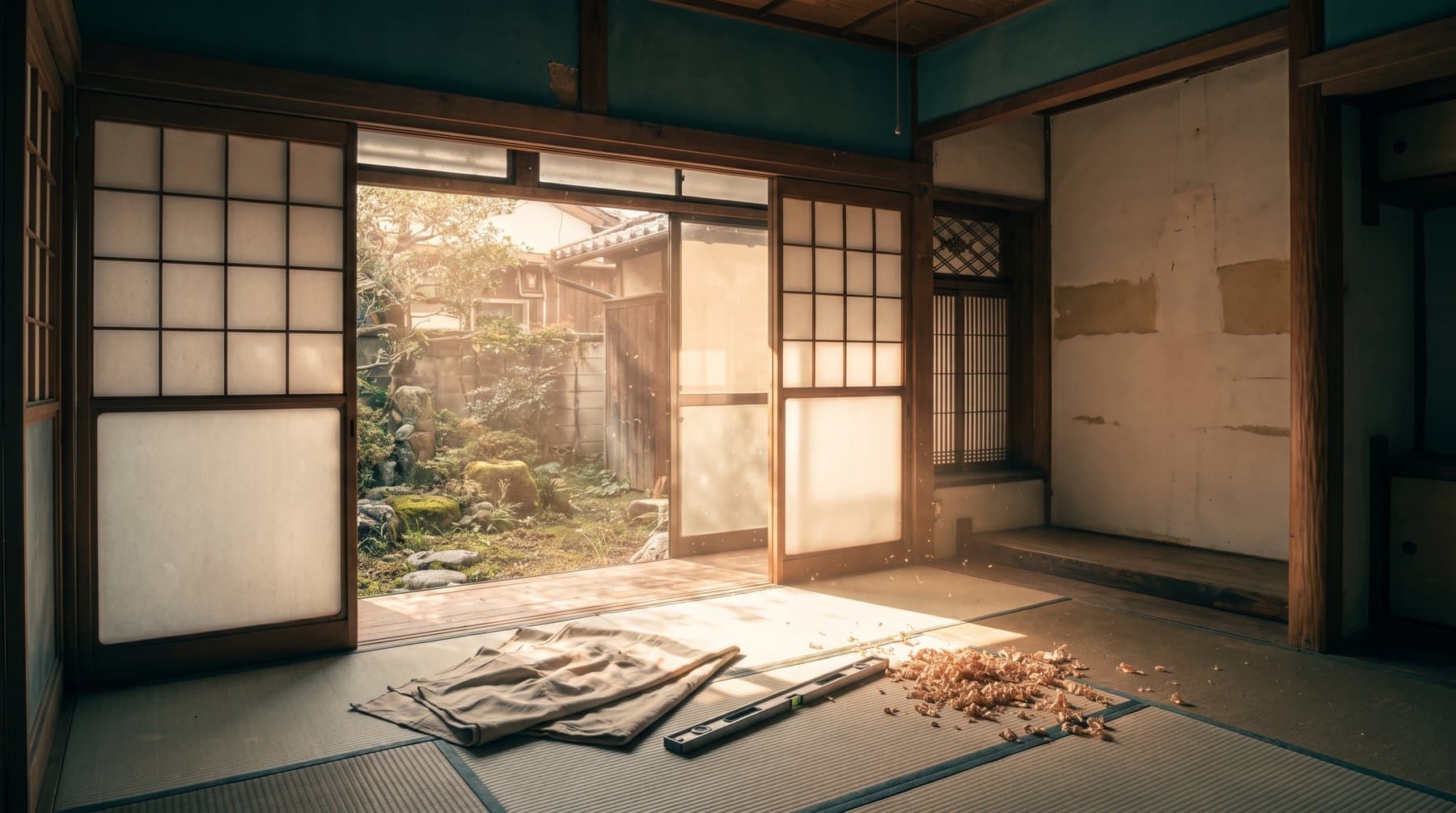
An inherited house, a flat left empty by a transfer, a property that produces nothing but a tax bill. Wondering whether it could earn as a short-term rental is the natural next thought. Of the empty properties owners bring to us, fewer than half get a yes.
The reason is simple: conversion costs real money, and whether that money comes back is mostly decided by location and structure before anything is spent. Check the decided part first and you get your answer for free. This article runs in that order.
What the first thirty minutes decides
- Zoning: in residential-only zones a hotel-business permit is not issued, while the 180-night notification route often still works there. Your city's planning map answers this
- For condominiums, the building rules: a no-minpaku clause ends the conversation. Detached houses have no such constraint
- Station distance and demand: past ten minutes on foot, bookings fall visibly. Whether rentals actually operate nearby is public information on the Airbnb and Booking.com maps
What suits, what does not
Two or more entries in the right-hand column, and another use of the property will beat minpaku. The alternatives are at the end of this article.
| Suits | Does not | |
|---|---|---|
| Location | Within 10 minutes of a station, in a city with tourist or business demand | Anywhere guests would need a car — inbound guests rarely rent one |
| Building | Structurally sound, drawings surviving | Anything needing seismic or roof work before it needs furniture |
| Size | Sleeps four or more, where family demand lives | Too small to differentiate, or so large the cleaning eats the margin |
| Surroundings | Convenience stores and food in walking range, tolerant neighbours | Dense quarters where noise friction is structural |
What it costs
Timeline: three to six months on the permit route, less on the notification route. Which framework fits is the first fork in the road — see minpaku vs hotel.
- Permit-related: fire-safety equipment from several hundred thousand yen, more if drawings must be redrawn — detail in getting the permit
- Interior: walls, plumbing, air conditioning. From nearly nothing to millions of yen depending on state
- Furniture and equipment for a four-guest house: roughly ¥500,000 to ¥1,000,000
- Photography and listing build: around ¥100,000
- Contingency: old houses always hold one surprise. Budget 10 to 20 percent on top
How to estimate the numbers honestly
Optimistic forecasting is the main failure mode, so work backwards instead. Take the real occupancy and rates of comparable listings nearby, assume you achieve seventy percent of it, subtract cleaning, utilities, consumables, accommodation tax and the management fee, and see how many years the setup cost takes to return.
Past five years, the property is telling you no. Under three, and it usually looked good in the first thirty minutes anyway.
When minpaku is the wrong answer
When an owner comes to us, this judgement is where we start, because spending launch money on a property that suits a tenancy better serves nobody. Properties that do qualify go through the launch plan: permit to first guest.
- Far from a station with thin tourist demand: a normal long-term tenancy earns less per month and infinitely more per hour of your attention
- Major repairs needed first: recovering renovation costs through nightly rentals is a long road, so compare against selling before committing
- You want zero involvement: even fully managed, an owner makes decisions every month. 'Rent it and forget it' describes a tenancy, not a rental business