
Across our own three buildings and six rooms, small breakage and wear is absorbed rather than charged to guests or to insurance. Over twelve months, consumable supplies came to 4.4% of revenue and repairs to 1.0% (October 2025 to September 2026, measured 1 October 2026, published with the method on our operating data page).
We only pass something on as a claim when we can show which stay it happened in. That line is drawn less by the price of the broken item than by whether a record exists from the few hours after checkout.
What actually breaks or goes missing at a short-term rental?
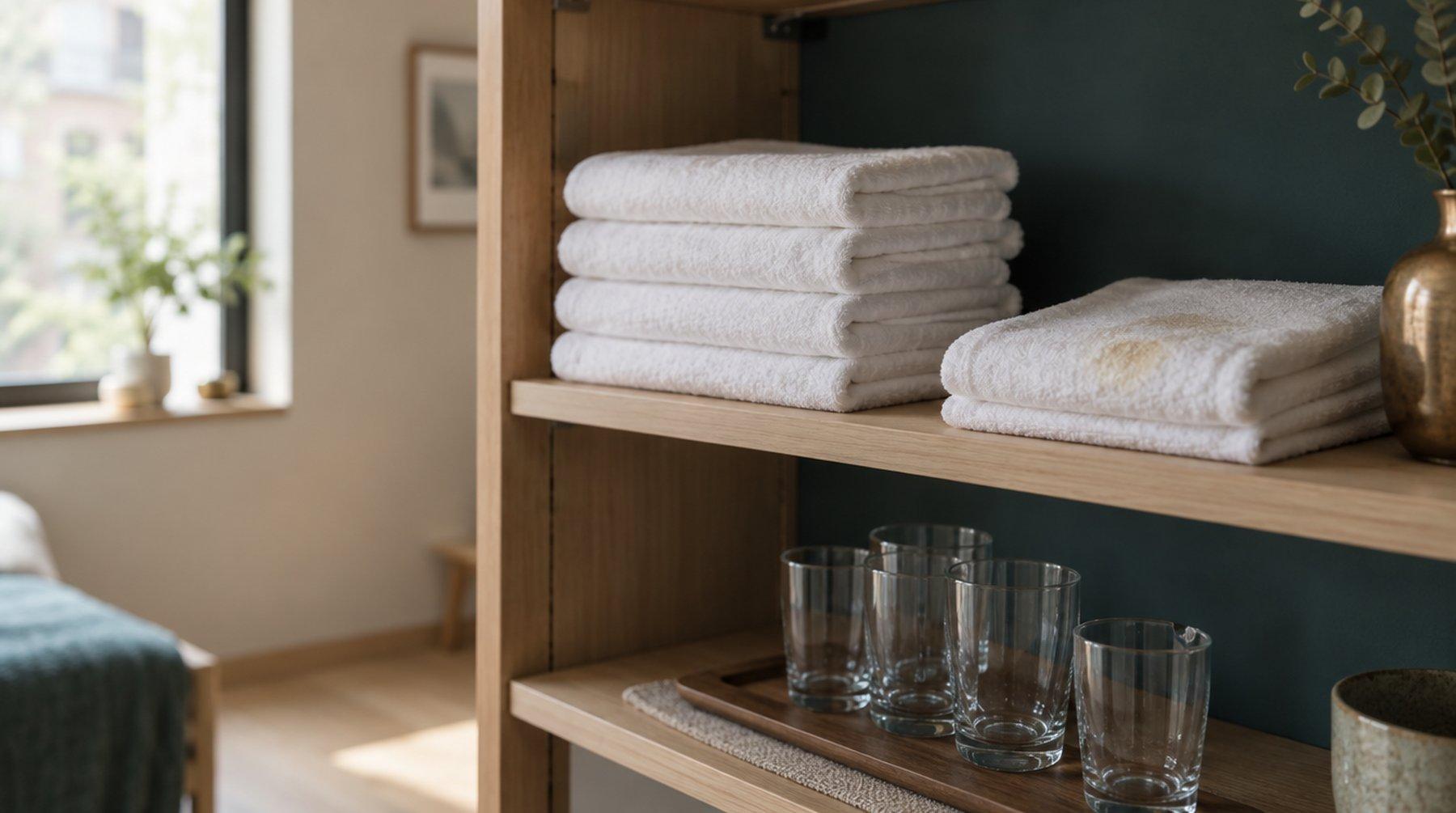
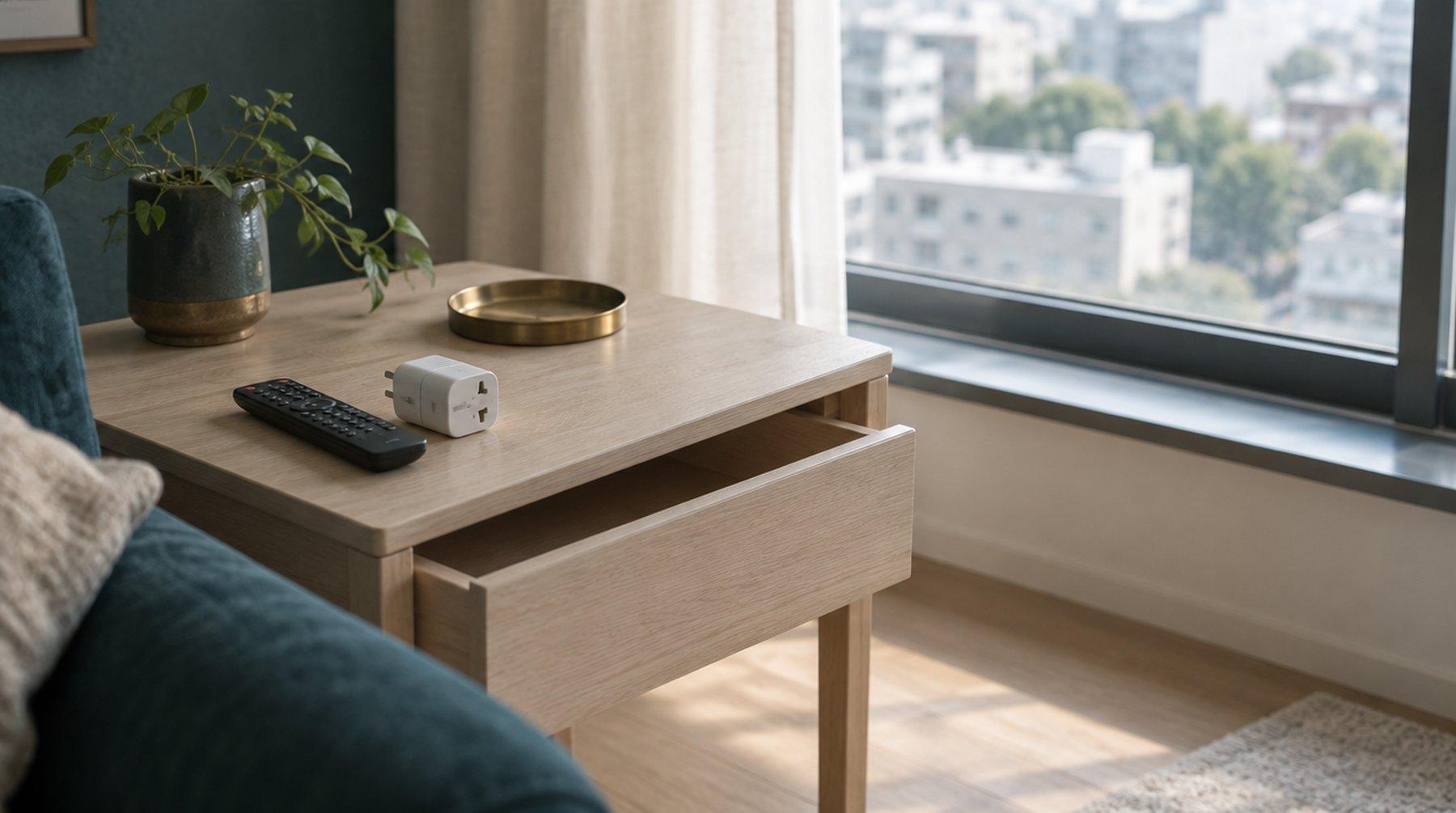
Mostly not expensive things, but the things every guest handles. Stained towels and sheets, chipped glasses and plates, remote controls and plug adapters that disappear, a slowly shrinking supply of hangers.
We do not publish counts, because we never recorded breakage in a form we could count and publish. What we can say is that at 3.3 nights a stay and 83.7% occupancy each room turns over seven or eight times a month, and there were 489 checkouts in the twelve months. Used that often, things wear out. The table shows which cost line each kind of item lands on in our books.
| Item | Typical problem | Cost line |
|---|---|---|
| Towels and sheets | Stains that will not wash out, fraying | Supplies |
| Glasses and plates | Chips, breakage | Supplies |
| Remotes, plug adapters | Cannot be found | Supplies |
| Furniture, appliances | Loose legs, faults | Repairs |
| Serious soiling of walls, floors, bedding | Vomit, smoking, heavy mess | Considered for a claim |
When is damage found, and by whom?
By the cleaner, during the clean after checkout. If it is not found before the next guest arrives, there is no longer any way to say which stay it belongs to.
Checkout is 11:00 and check-in 16:00 (10:00 checkout at one unit), so the window is five hours. Every clean includes a check that the equipment works and nothing is broken, and the room is photographed when the work is done (how our cleaning runs). The photographs are a record of the room at that moment, not a keepsake: if the next checkout finds a mark in the same place, the cause narrows to the one stay in between.
Towels and glasses are set out to match the number of guests on the booking. With a fixed count, a shortfall shows up on the spot. Without one, a missing item is not even noticed as missing.

Once something is found, how is it sorted?
Two questions decide it: can we show which stay it happened in, and is a claim worth the effort it takes?
| Situation | What we do |
|---|---|
| Ordinary wear from use | Replace it; absorbed in supplies |
| Stay identified, but small | Contact the guest; usually absorbed |
| Stay identified, room cannot be sold | Claim through the booking channel's process |
| Damage to the building or a third party | Insurance, and the owner is contacted |
Charging a guest a small amount can cost more than it recovers, in time and in the review that follows. That is a judgement from running six rooms, not a measured figure. Damage that stops a room being sold is a different matter and is not absorbed. The listings of four of our six rooms state in the house rules, before anyone books, that vomiting or serious mess is charged as a cleaning or damage fee. Whether a charge holds up depends far more on what was written before the booking than on negotiation afterwards.
How is damage claimed on a booking-platform reservation?
Through the process that platform sets, inside its deadline, with the record attached. We do not state the terms or the deadlines here.
The reason is that the platform sets them, not us, and they change. The place to check is the current original text in each platform's help centre. Of our 489 bookings, 89.6% came through a single platform (whose name the booking accounts are in), so in practice most of the work follows that one company's process. Platform damage protection does nothing for direct bookings made on a host's own website (insurance for a rental).
Rather than memorising a deadline, we start preparing the claim on the day the damage is found. Photographs, the purchase record of the broken or missing item, and the messages with the guest: all three are put together that same day.
Is a missing item treated as theft?
Not at first. The first step is a polite question to the guest.
A missing item has often been packed by mistake or moved somewhere else in the room. Again, that is experience from running the rooms, not a count. An accusation in the first message tends to lose the item that would have come back, and it ends up in the review.
Anything that might involve the police is not decided by us alone: the owner is contacted first (does guest support need to run 24 hours?). Where a guest's behaviour goes beyond a dispute over an item, the line we draw is set out in difficult guests.
Where do absorbed and recovered losses show up in the owner's report?
What is absorbed sits on two lines, supplies and repairs. Together they were 5.4% of revenue, a little under a third of cleaning at 17.0%.
The detail matters more than the total. Was a replacement due to wear or to damage, if damage then after which stay, and was anything claimed actually recovered? A report where those three facts are not tied to the cost lines leaves the owner no way to see why things keep disappearing. We hand the cost lines over every month as they are (what belongs in the monthly report). Which items to buy at the start is covered in initial furniture and fittings.
What should you ask a management company about damage?
Four questions. The difference shows in whether the answers are concrete.
- At every checkout, who checks what, and where are the photographs kept?
- Where is the line between damage that is absorbed and damage that is claimed?
- Who prepares a platform claim, and within how many days of finding the damage?
- Does the monthly report show replacements due to damage in a way that identifies the stay?
Does this 4.4% apply to my property?
No. A supplies ratio moves with capacity, the quality and quantity of what is in the room, length of stay and the kind of guest. Even among our six rooms, rooms with different capacities do not produce the same figure.
What we can offer is our own measured figures and a monthly record. For a property we manage, supplies and repairs are passed through at actual cost, and the fee is 20% of revenue plus actual cleaning, linen and supply costs (how the fee works). We promise no supplies ratio and no occupancy figure.
Talk to us about your property