
Across our own three buildings and six rooms over twelve months (October 2025 to September 2026, measured 1 October 2026), consumables ran 4.4% of revenue and equipment repairs 1.0%. Together 5.4%, and consumables on its own is the second largest line after cleaning at 17.0% (both published with the method on our operating data page).
That 5.4% does not leave the account as 5.4% a month. Split the same twelve months by month and the figure runs from 1.5% to 12.4%. So the question of how much to spend at the start is, in practice, a question about when the replacement months arrive and how high they are.
Where does money spent on furniture and equipment show up later?
In two lines: consumables and equipment repairs. Over our twelve months those were 4.4% and 1.0%, 5.4% together.
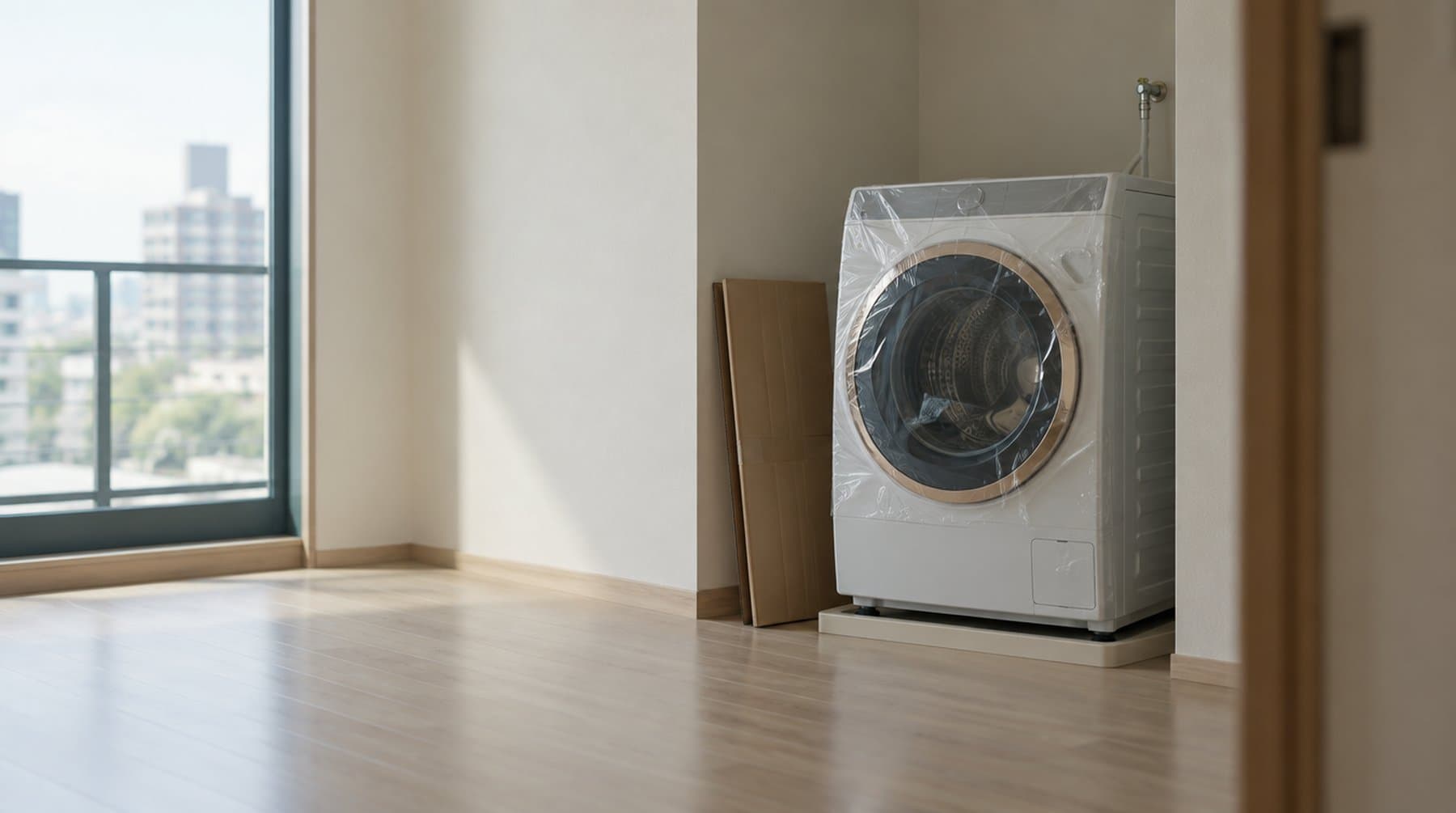
Consumables mixes two things in one line: what a stay uses up (linen, toiletries, batteries, small kitchen items) and the small furnishings replaced when they wear out. Equipment repairs is the machinery that stops a stay when it fails: heating and cooling, hot water, the washing machine.
What you chose at the start does not change the height of these lines so much as the interval between hits. Buying cheap does not lower a monthly average; it brings the next replacement forward.
| Line | Share of revenue (our six rooms, Oct 2025 to Sep 2026) |
|---|---|
| Consumables | 4.4% |
| Equipment repairs | 1.0% |
| The two together | 5.4% |
| For reference: cleaning | 17.0% |
| For reference: the operating costs we publish | 27.8% |
Does the 5.4% arrive evenly, month after month?
No. Over our twelve months the monthly figure ran from 1.5% to 12.4%. Only four months went above the 5.4% average, January, February, March and July 2026, and by amount those four carried about 60% of the whole year's spend.
Equipment repairs is starker still: exactly zero in six of the twelve months. Machinery does not wear out a little each month. It does nothing for a long time and then arrives in a group.
The table below breaks the same two lines out by month. What we publish on the operating data page is the twelve-month total; the monthly split comes from our own internal workbook.
| Month | Consumables | Equipment repairs | Total |
|---|---|---|---|
| October 2025 | 0.9% | 1.2% | 2.1% |
| November 2025 | 1.1% | 1.5% | 2.6% |
| December 2025 | 2.1% | 1.4% | 3.5% |
| January 2026 | 10.2% | 2.2% | 12.4% |
| February 2026 | 1.9% | 4.7% | 6.6% |
| March 2026 | 6.4% | 0.0% | 6.4% |
| April 2026 | 4.6% | 0.0% | 4.6% |
| May 2026 | 3.8% | 0.0% | 3.8% |
| June 2026 | 1.5% | 0.0% | 1.5% |
| July 2026 | 10.1% | 0.0% | 10.1% |
| August 2026 | 3.5% | 1.3% | 4.8% |
| September 2026 | 4.6% | 0.0% | 4.6% |
Why does it bunch up instead of spreading out?
Because things bought on the same day wear out at the same time.
At opening, the linen, pillows, cookware and appliances for every room go in within about the same week. They are then used in much the same way, so their replacements line up too. At 83.7% occupancy and an average stay of 3.3 nights a room turns over seven to eight times a month, so wear runs at nothing like the pace of a home.
The bunching cannot be removed. Only its height can. Stop putting the identical item into every room on the same day, mix in things with different lifespans, and the replacements separate across years instead of landing together.
What should be bought properly at the start?
Whatever every guest uses, has no substitute, and stops the stay when it breaks.
In all six of our rooms we put in a washing machine, a bathtub, heating and cooling, blackout blinds, a rice cooker, an electric kettle, a microwave, a fridge and a full set of cookware (the equipment in each room is listed on its stay page). Five of the six also have a drying function; the remaining one makes do with a drying rack. The rooms differ in character, but this layer is the same in all of them.
The test is not price, it is what happens on the day the thing fails. If the air conditioning stops, the stay stops, and you are arranging a refund and a move. If the dishwasher stops, nothing stops.
And what can be skipped at the start?
Anything only some guests use, and anything a stay works without. We have a dishwasher in exactly one of our six rooms, and a cot and children's tableware in that same one.
That room is the whole-house booking for ten people, where the volume of dishes is in a different league. The two-person room does not have one. Read it as an example of the same company, applying the same test, reaching opposite answers once the capacity changes.
The distinction that gets blurred here is between buying cheap and not buying. Not buying takes the cost to zero. Buying cheap only increases how often you buy, and never reaches zero.
What are the last guests in the capacity count sleeping on?
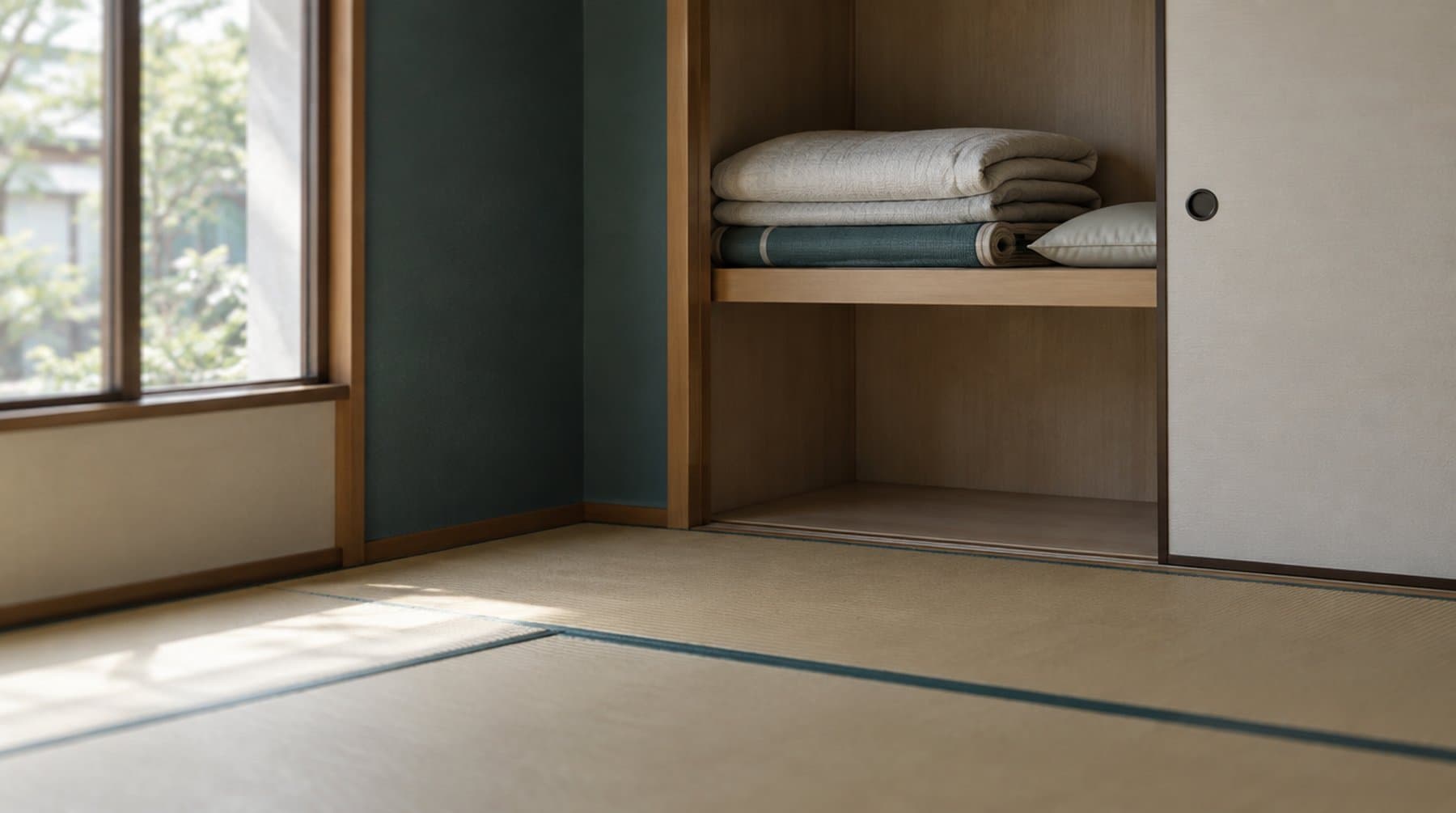
In four of our six rooms, a sofa bed or a futon (a padded mattress laid on the floor, standard in Japanese homes and stored in a closet by day).
The three Sapporo apartments sleep five, five and four, but each has three beds; the last guest takes the sofa bed in the living room. The upper apartment in Kameari sleeps ten against seven beds, with a sofa bed and a futon carrying the rest. It is the cheapest way to add capacity and it uses no extra floor area.
The price of that cheapness turns up in the reviews. Our own rating is 4.9 across 398 reviews, and the reasons rooms run by one team still differ are set out in the piece on ratings; sleeping quality is one of them. Deciding the maximum occupancy you advertise is less an equipment decision than a decision about which reviews you want to receive.
At a viewing, what do you look at to size the initial spend?
Not what we would buy, but what cannot be bought later. Furniture and appliances can be swapped out; where the washing machine stands and where it drains cannot.
- Hot water capacity and the shape of the bathroom: enough hot water for the stated occupancy
- How many heating and cooling units there are, and how old they are
- Where a washing machine can stand, how it drains, and how it gets in
- The consumer unit's capacity, and whether there is headroom to add appliances
- Whether an internet line is already brought into the unit, or needs installation work
- The number and orientation of windows, and how far blackout blinds can take them
- Storage: how many spare sets of linen will fit
- The route in: stair width, whether there is a lift
Does this cover fire and permit equipment?
It does not. That is a separate matter, confirmed property by property with the authority having jurisdiction.
The two lines above are operating cost; equipment installed to obtain the permit belongs to the stage before that. What to confirm, in what order and with whom, is set out as a sequence in getting a hotel-business permit. Because the answer changes with the municipality and with the building, we do not state it as a general rule here.
If you are starting from an empty house, the building decides more than the furnishing does, so turning an empty house into a licensed rental is worth reading first.
What we do, and what we will not promise
We do not publish a total figure for initial furnishing. It moves by multiples with the condition of the building, the occupancy it will take and what equipment is already there, so an average would not help anyone decide. The number comes from competing quotes on that property, and nowhere else.
What we do instead is track consumables and equipment repairs as their own lines for the first months of a property we take on. Our 4.4% and 1.0% are an average across six rooms, not a forecast for yours (the full cost structure is in operating costs, line by line).
We will not promise an owner an occupancy figure or a cost ratio. What we commit to is measuring that property's own two lines and saying in advance when the next replacement month is due. The bunching cannot be removed, but a month you can see coming is a month you can hold cash for.