
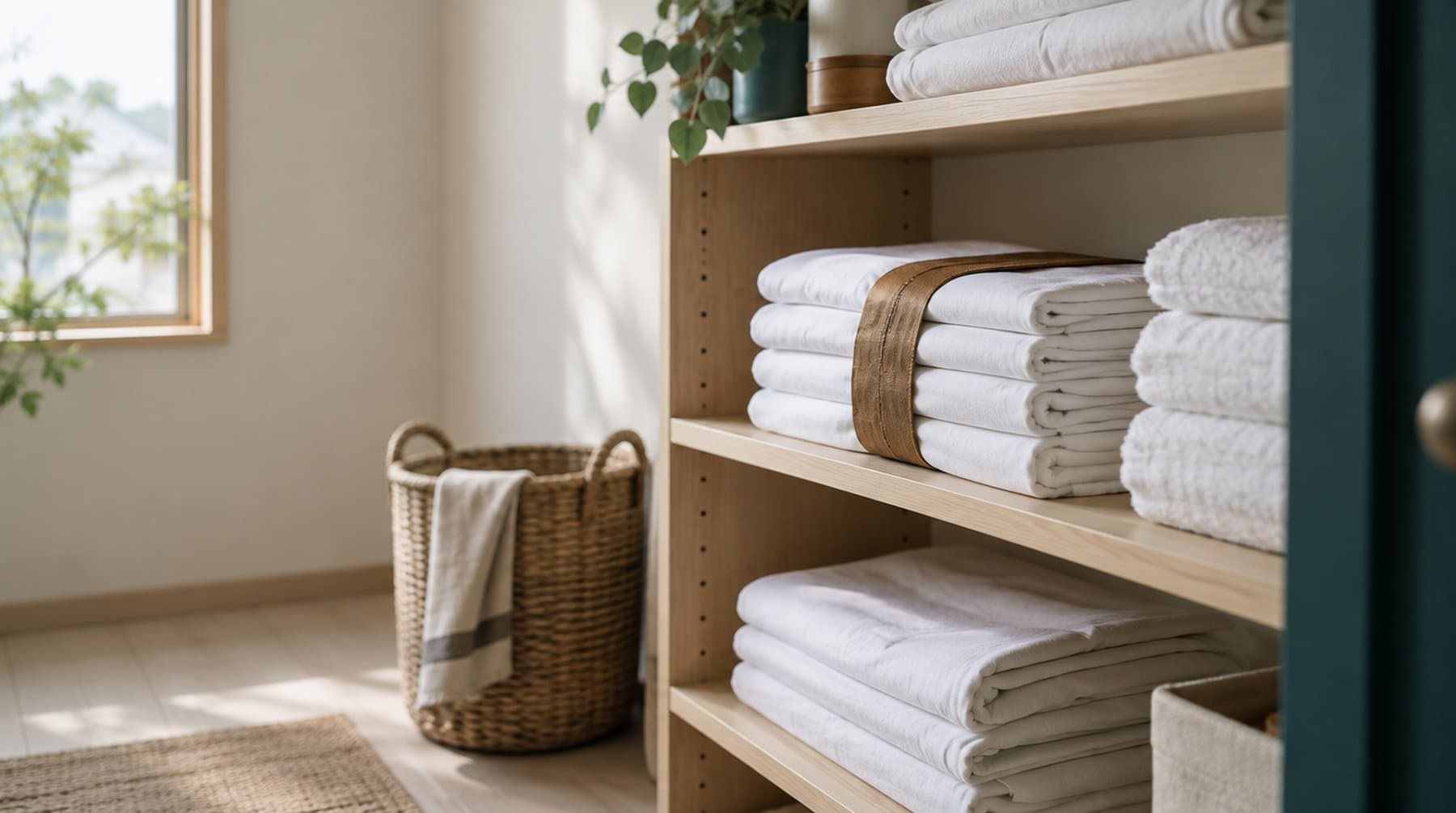
How you handle sheets and towels is decided by how often a room turns over and how many of those turnovers run straight into a same-day arrival, not by what one set costs. Each of our six rooms changes over seven to eight times a month, and 322 of 486 checkouts (66.3%) were followed by a new guest arriving in the same room that day.
The figures are the record of our own three buildings and six rooms over October 2025 to September 2026 (measured 1 October 2026, published as operating data). A changeover as a whole is broken down in cleaning a rental; this article covers the linen alone.
What is the difference between washing in-house, a laundry and linen hire?
Who owns the stock, and how long dirty linen takes to come back. Linen hire (リネンサプライ in Japanese) means borrowing sheets and towels that belong to a supplier, who collects the used ones and delivers clean ones on a schedule.
Whichever method you use, you need more than the set on the bed: there is always one in the wash and one spare. Comparing prices only makes sense once that stock has been counted on the same basis. A quote per set from a supplier and a quote per kilo from a laundry describe different things, and neither tells you how many sets the building has to hold.
| Method | Who owns the stock | Time for dirty linen to return | Where it jams |
|---|---|---|---|
| Washing in the room's machine | The owner | A few hours of washing and drying | Changeovers with a same-day arrival |
| Sending to a laundry | The owner | Days from collection to delivery | Holiday weeks and New Year |
| Linen hire | The supplier | The supplier's delivery days | Checkouts on days with no delivery |
How many sets of sheets and towels does one room need?
If you own the stock, three at the very least: one on the bed, one in the wash, and one spare for the day something fails to dry. A changeover here means everything between one guest leaving and the next arriving: cleaning, fresh linen, restocking and a final check.
Seven to eight changeovers a month is roughly one every four days. If you send linen to a laundry and it takes longer than those four days to come back, another set is out of the building at any moment, so you need a fourth. Our stays average 3.3 nights, so a month of short bookings tightens the interval further. Larger rooms also mean larger sets: our six rooms sleep anywhere from two to ten guests, and the towel count in a set follows the headcount.
Where do same-day changeovers jam?
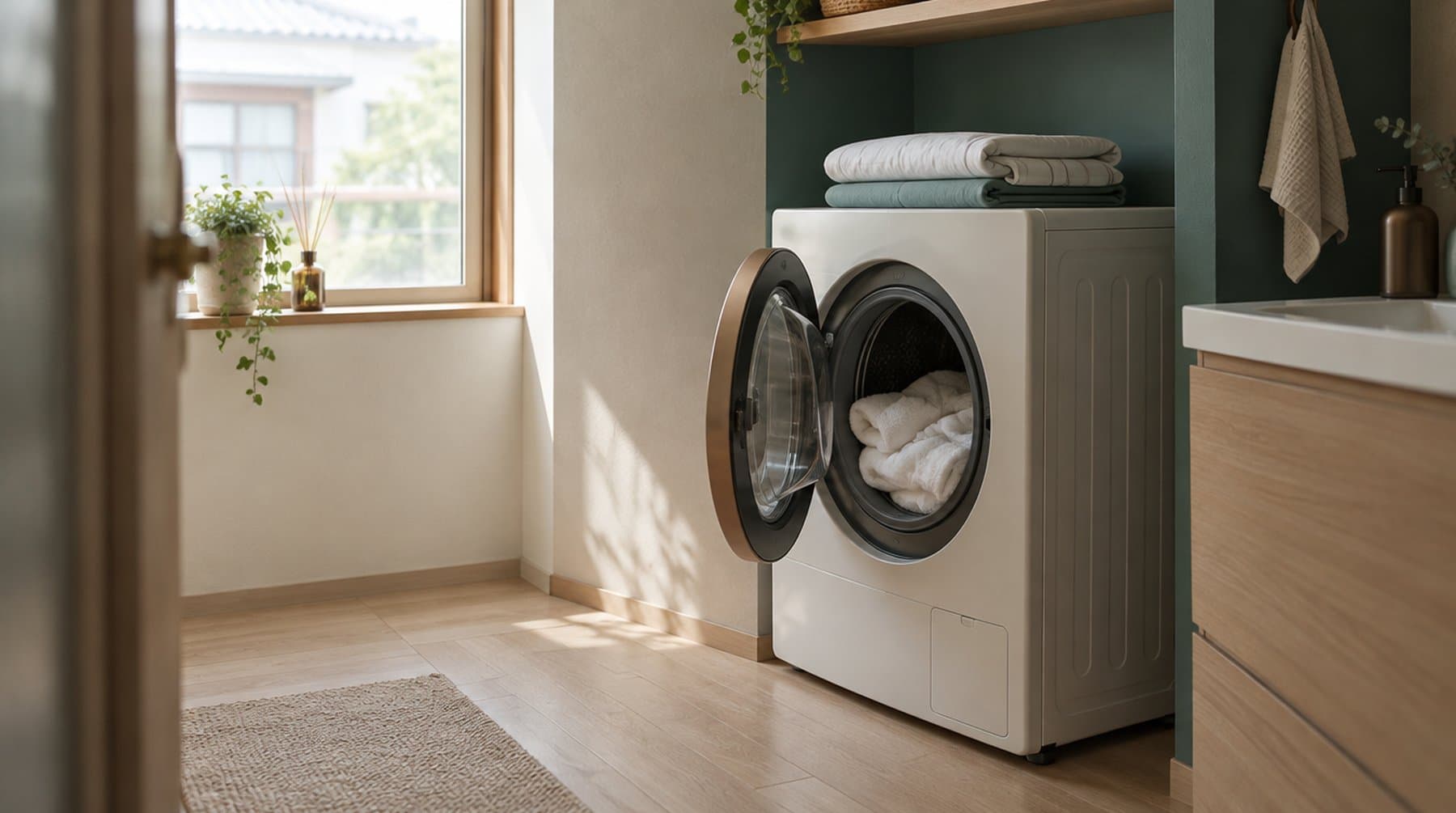
Washing the next guest's linen in the room's own machine does not fit a same-day arrival. Our changeover window runs from checkout at 11:00 to check-in at 16:00, five hours that also hold the cleaning, restocking, the inspection and the photographs.
A domestic washer-dryer takes several hours to wash and dry one load of sheets and towels. With two changeovers in three running into a same-day arrival (how many rooms an operator can run), treat the machine in the room as a way to refill stock, not as the source of the linen for the bed you are making. All six of our rooms have a washing machine and five have a dryer; both are also there for guests on longer stays.
What changes when three rooms check out on the same day?
The dirty linen arrives all at once. Across our six rooms, three or more checked out on the same day on 51 days of the twelve months.
Within one city, two or more rooms checked out on the same day on 46 days for our three Tokyo rooms and 52 days for our three Sapporo rooms. If you use a laundry or a linen supplier, ask first whether they can take the volume of those days, not the volume of an ordinary one. With a supplier that delivers on fixed weekdays, checkouts that pile up on a day without a delivery have to be covered from the spare stock you keep.
Why does a Sapporo winter change the answer?
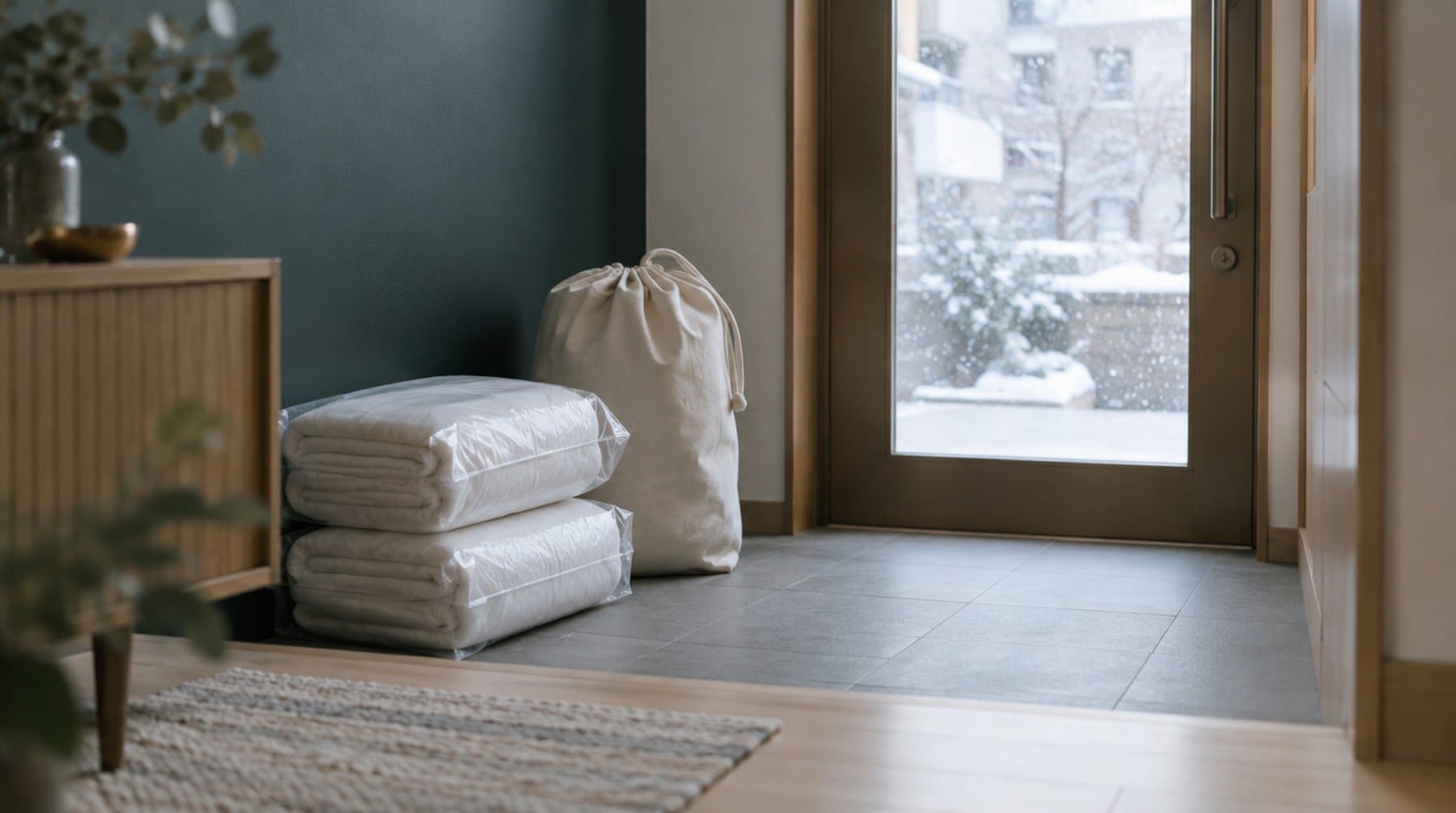
Because the rooms are bigger, winter leaves few empty nights, and snow can delay a collection or a delivery. Our three Sapporo rooms each sleep four or five and have three beds, so one set is larger than in a small Tokyo room.
Sapporo occupancy reached 94.0% in February (measured 1 October 2026). In a month with almost no empty nights to catch up on washing, a delivery one day late lands directly on the next changeover. In snow country it is safer to hold one set more than would be enough in Tokyo (winter in snow country).
Which line of the accounts does linen show up on?
It can sit on the cleaning line or the supplies line, depending on the method. When you compare methods, read the two lines together.
Over our twelve months, cleaning came to 17.0% of revenue and supplies to 4.4% (measured 1 October 2026, operating costs broken down). If the cleaning contractor includes linen, the cleaning line gets heavier; if you buy and wash your own, the weight moves to supplies and utilities. Our published lines have no water figure, because water is missing from the source workbook for this window, so the in-house method costs a little more than these shares suggest. Under our management, linen and supplies are billed at actual cost.
What should you check before choosing a method?
Turnover, stock and delivery. Ask for quotes only once you have all three.
- How many times a month the room turns over, and how many of those have a same-day arrival
- How much the supplier can take on days when three or more rooms check out
- Days from collection to delivery, the weekdays without delivery, and New Year
- Whether there is space in the room or the building for spare sets
- How many towels one set needs when the room is full
When not to hire us
With a single room close to home and few same-day arrivals, washing and turning the linen yourself may well suit you better (self-managing or hiring an operator). We work in the Greater Tokyo area and Sapporo, Hokkaido; for a property farther away, please feel free to contact us, and we will look case by case at whether we can send people to it.
We also consult on properties under the minpaku law (the 180-night notification framework). Its conditions, such as how many nights a property may operate, differ from the hotel-business permit (旅館業許可), so after hearing about the property we suggest the approach that suits it, including a switch to the permit (we do not hold a registration as a residential accommodation management operator, 住宅宿泊管理業者). Our fee is 20% of revenue plus actual costs for cleaning, linen and supplies, which vary with the layout and size of the property. The counts and shares above are the record of our own six rooms, not a promise about occupancy or costs at a property we have not seen.
Ask about your property