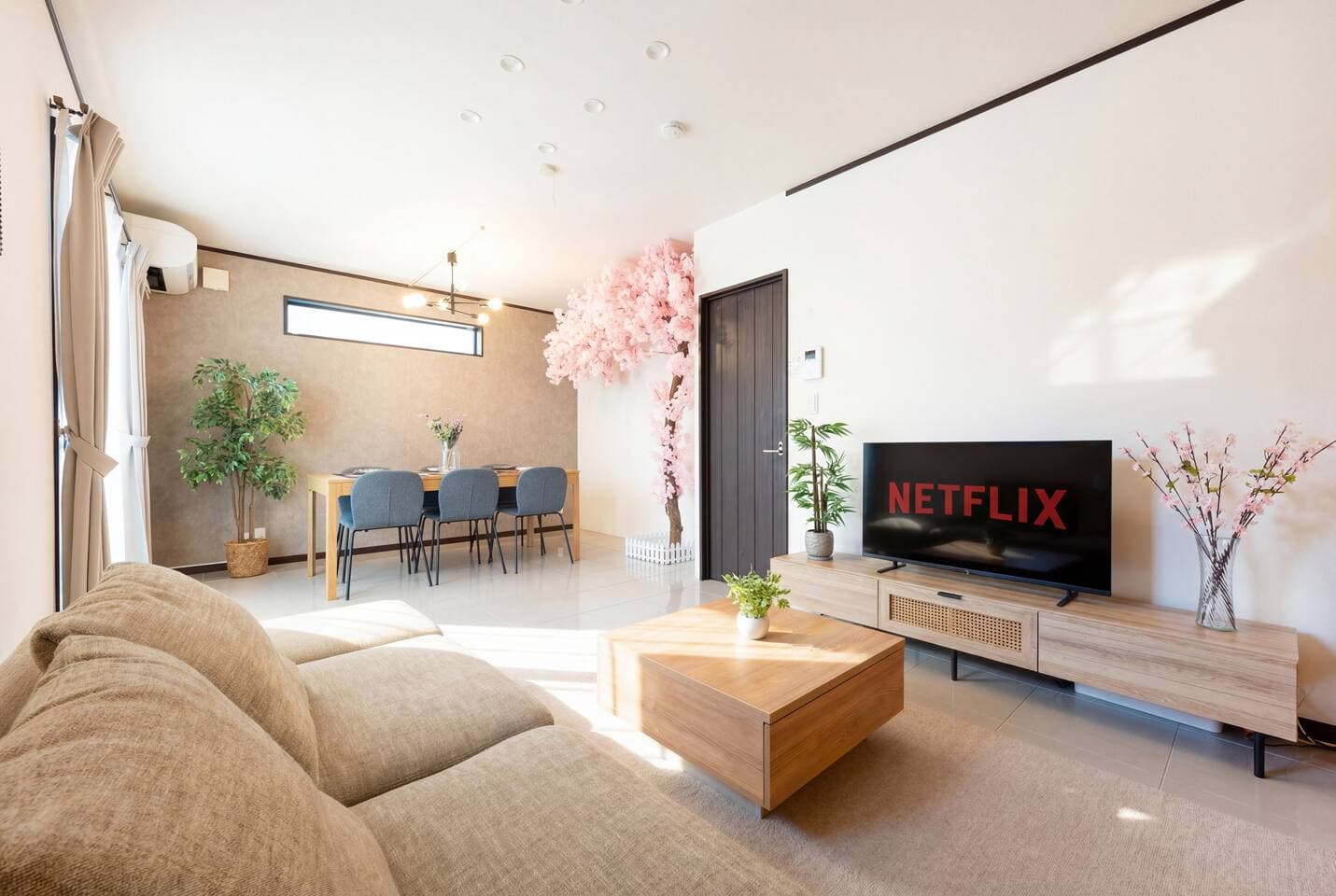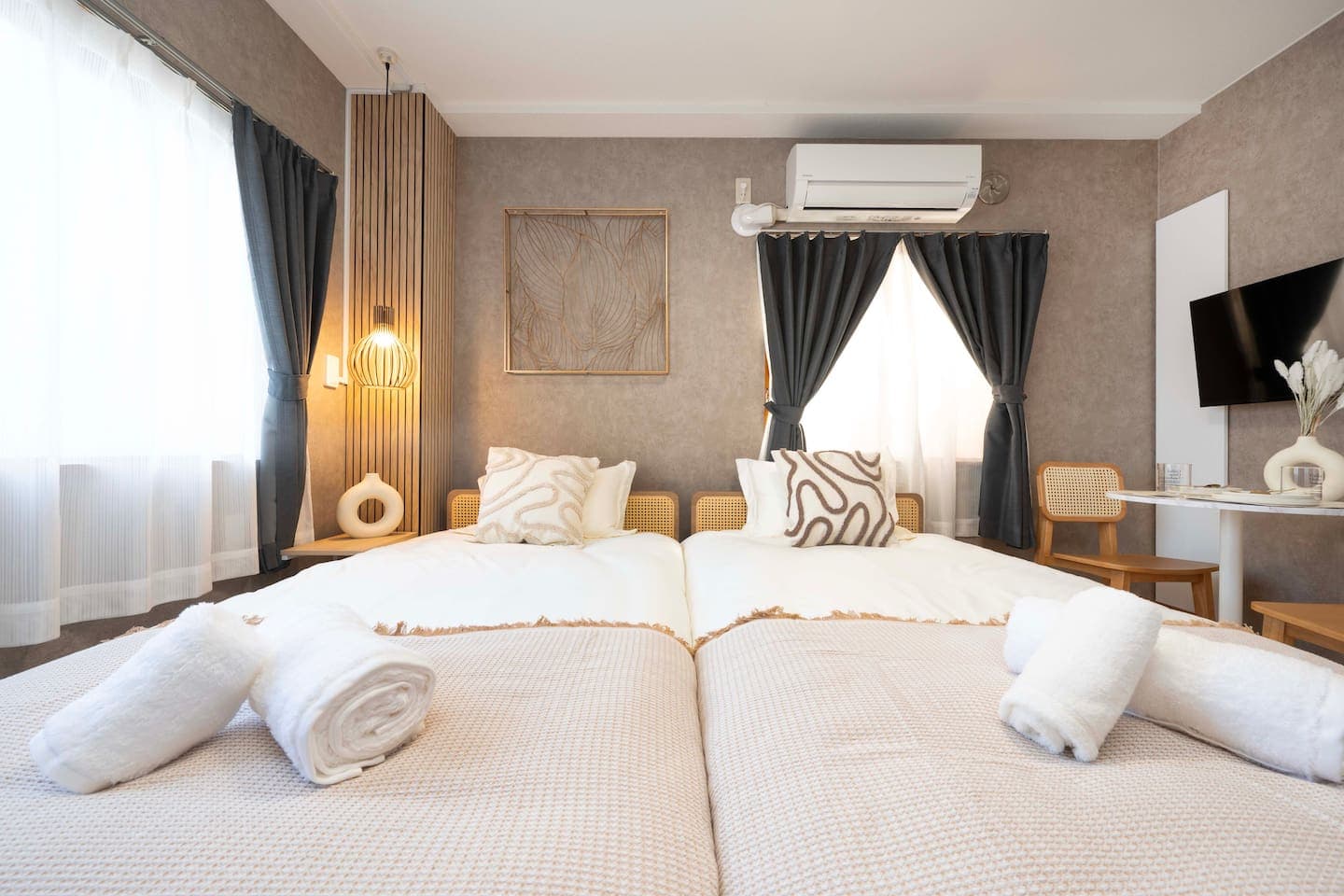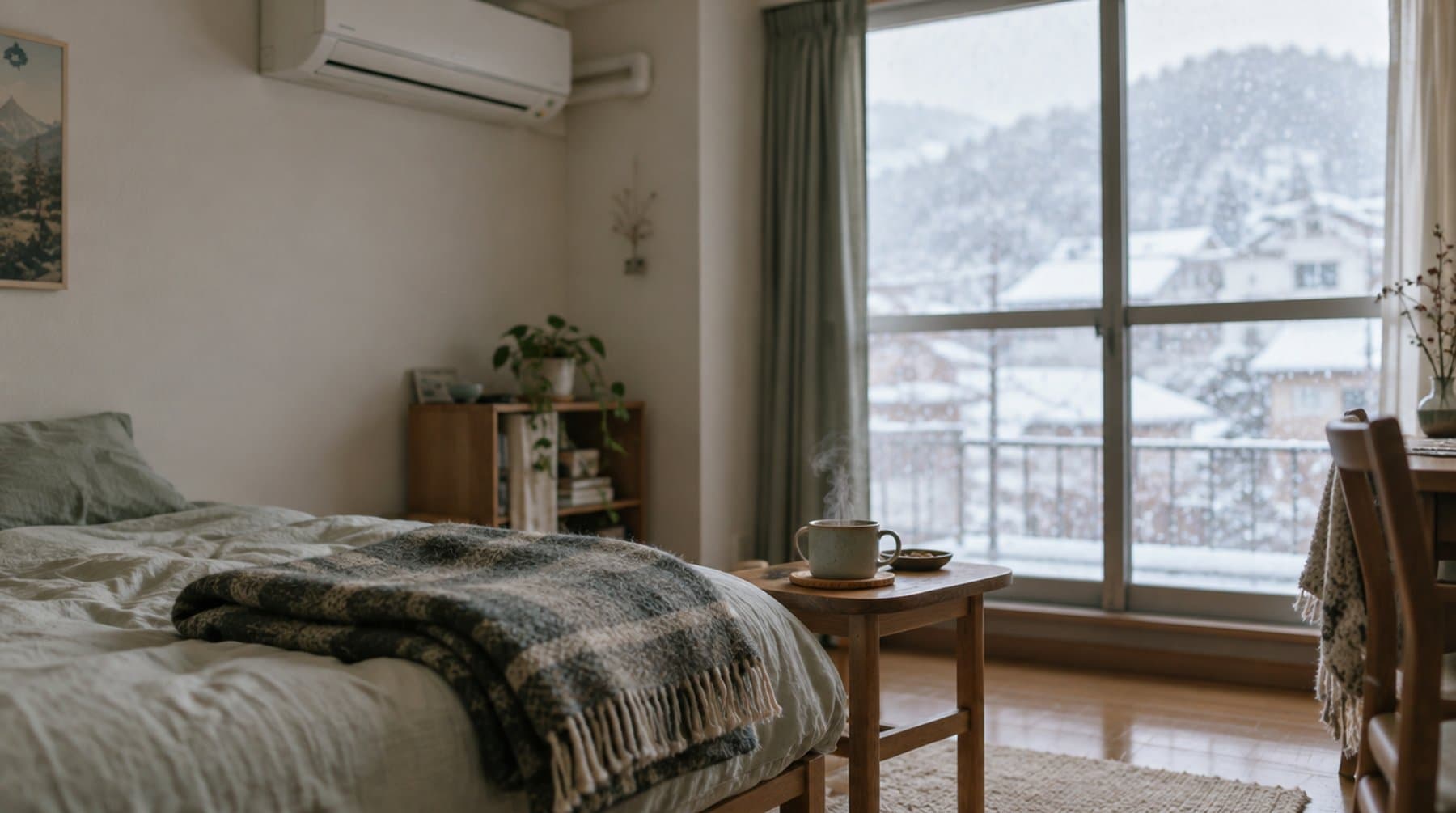

A Japanese apartment is heated room by room, almost always by the air conditioner on the wall, which heats as well as it cools. There is rarely a radiator or a central thermostat. Once you know that, winter in a rented apartment is simple: find the remote, press 暖房 (heating), set a temperature, and close the door of the room you are in. We run six rooms in three buildings, in Tokyo and in Sapporo, and this article explains what is in them and how guests use it.
How are Japanese apartments heated?
With a heat-pump air conditioner mounted high on the wall in each main room. The same unit cools in summer and heats in winter; the mode is chosen on the remote. Central heating, in the European or North American sense of one boiler warming the whole flat, is unusual in Japanese homes, so corridors, the entrance and the bathroom are often cooler than the room with the unit running.
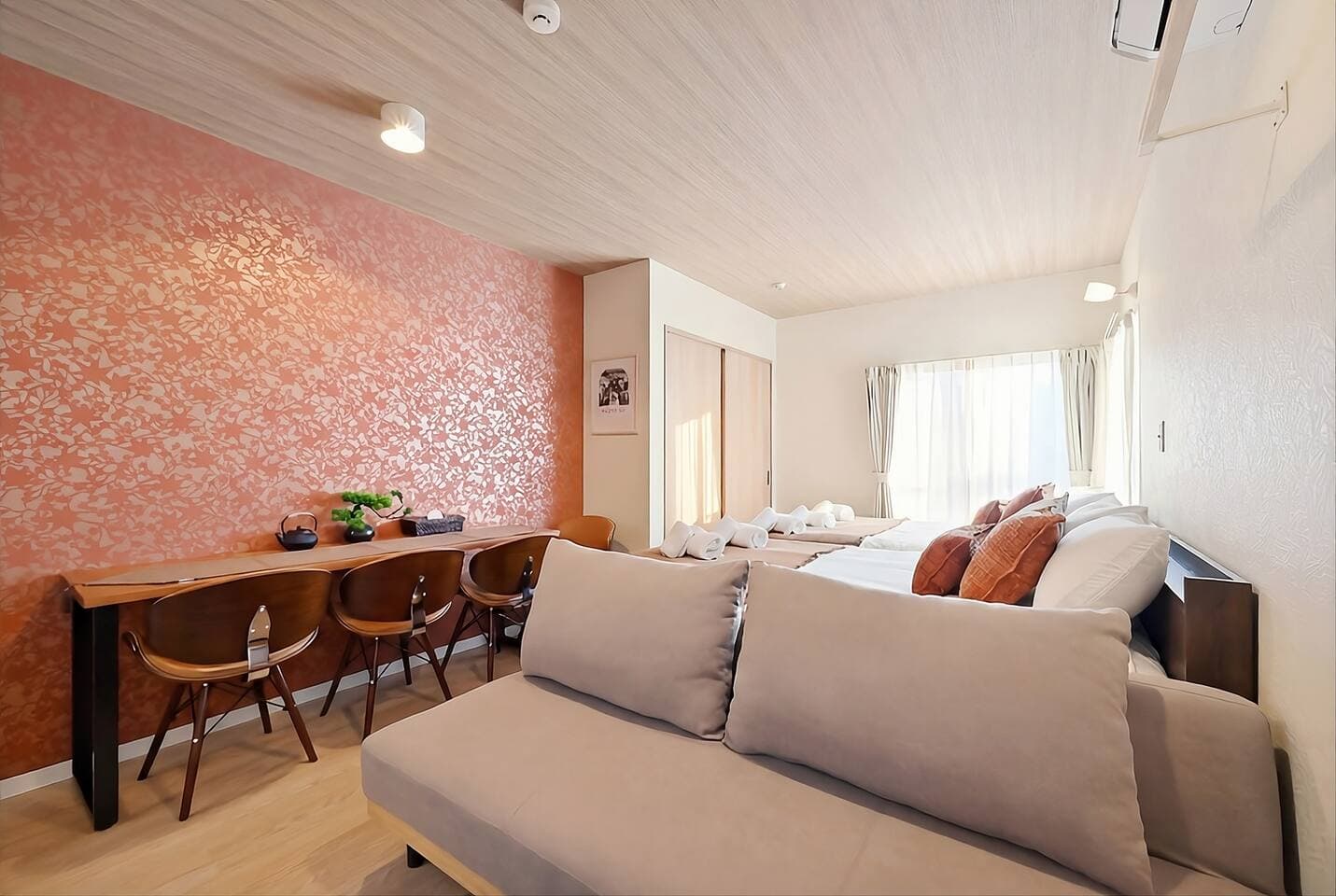
In our apartments every room listing includes air conditioning and heating, and every one has extra blankets and pillows in the cupboard. KAMEARI 201, the larger Tokyo house, has three air conditioners, one per main room, so each group can set its own temperature. In Sapporo, each SAPPORO NORTH apartment also has an oil heater, described further down.
| Apartment | Heating | Also there |
|---|---|---|
| HEIWAJIMA (Tokyo) | Air conditioner on 暖房 | Extra blankets, kettle |
| KAMEARI 101 / 201 (Tokyo) | Air conditioner on 暖房 (three units in 201) | Extra blankets, kettle |
| SAPPORO NORTH 1A / 1B / 1C | Air conditioner on 暖房, plus an oil heater | Extra blankets, kettle |
Which button on the remote is heating?
The one marked 暖房, usually red or orange. Japanese remotes are labelled in Japanese only, but the same few words appear on almost every brand, and on ours 暖房 is the red button and 冷房 (cooling) the blue one. Press 暖房, then raise or lower the temperature with the arrow buttons. To switch off, press 停止 (stop).
The house manual for each of our apartments has a drawing of its own remote with every button labelled in English and other languages. If the remote in the room does not match what you expect, send us a message and we will tell you which button to press.
| On the remote | Reading | Meaning |
|---|---|---|
| 暖房 | danbō | Heating |
| 冷房 | reibō | Cooling |
| 除湿 | joshitsu | Dehumidify |
| 停止 / 切 | teishi / kiri | Off |
| 運転 / 入 | unten / iri | On |
| 風量 / 風速 | fūryō / fūsoku | Fan speed |
| 風向 | fūkō | Airflow direction |
| 自動 | jidō | Automatic |
Is it cold indoors in Sapporo in winter?
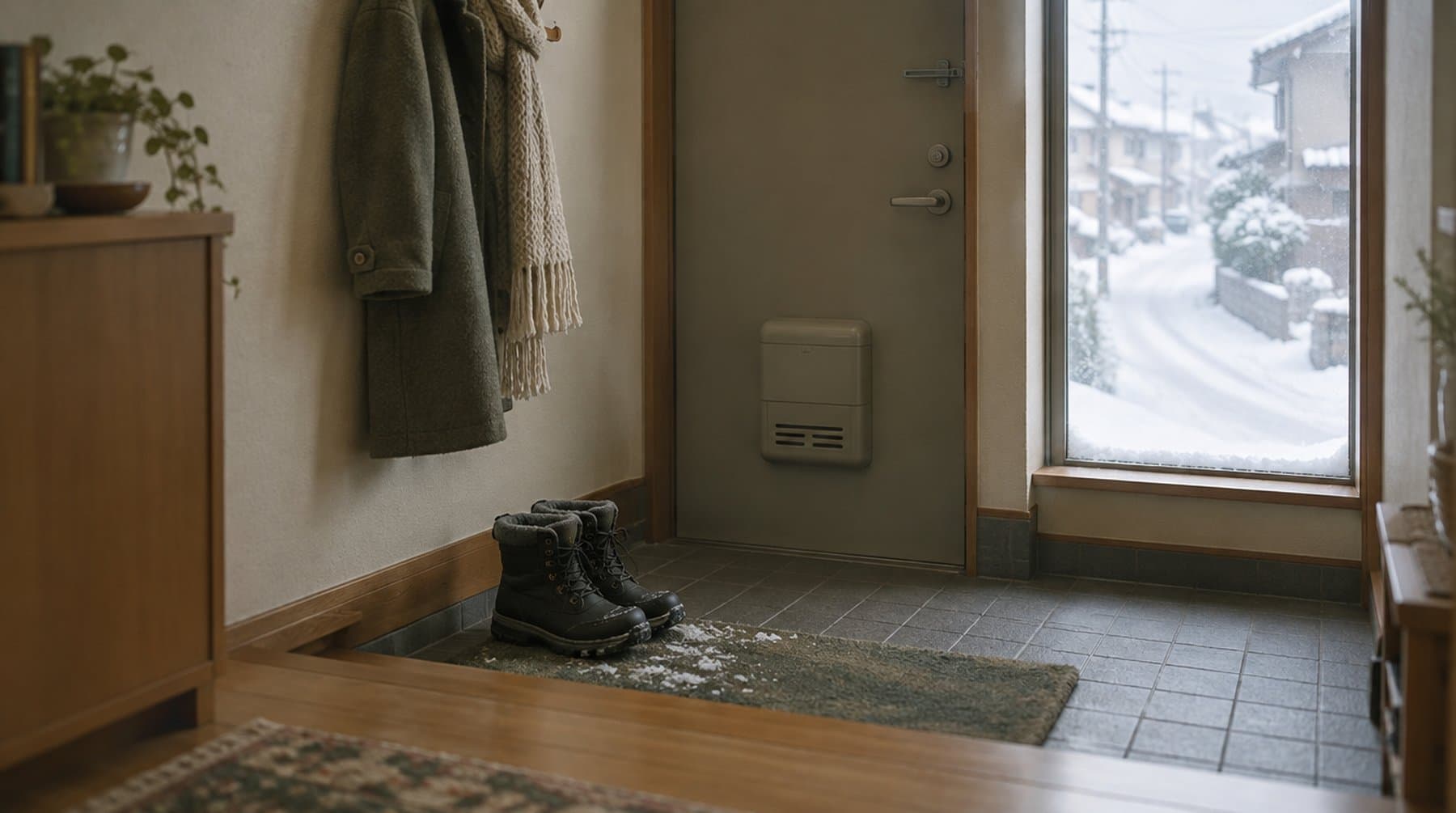
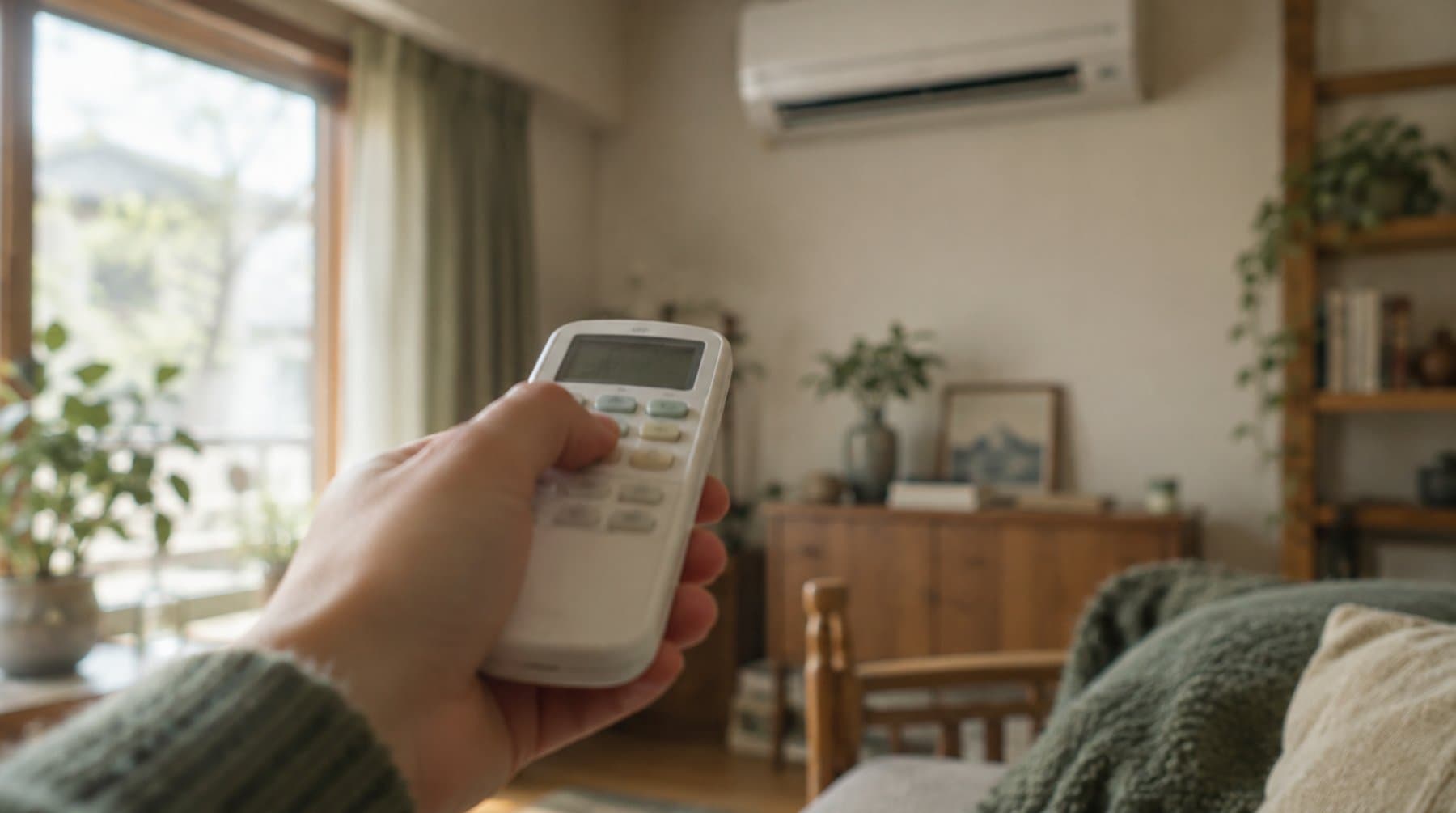
Usually not: Sapporo apartments tend to be warm inside, often warmer than Tokyo ones. Hokkaido buildings are generally built for the cold, with double windows and more insulation than further south, while Tokyo homes are built with humid summers in mind and lose heat more easily. The cold in Sapporo is outside, and the Sapporo winter guide covers that side.
In SAPPORO NORTH the air conditioner does most of the work, and the oil heater is there for steady background warmth. It warms a room slowly and silently, which makes it pleasant to leave on low through the night, and its display shows the current room temperature as well as the one you set. Keep it clear of curtains, bedding and drying clothes.
Is it cold indoors in Tokyo in winter?
Tokyo winters are mild by comparison, mostly dry and sunny, but older Japanese houses can feel cool indoors until the air conditioner has been running for a while. Switch it on when you come in rather than waiting until the room feels cold, close the doors between rooms, and draw the curtains after dark. The extra blankets in the cupboard are there to be used.
Why does the air feel so dry, and what helps?
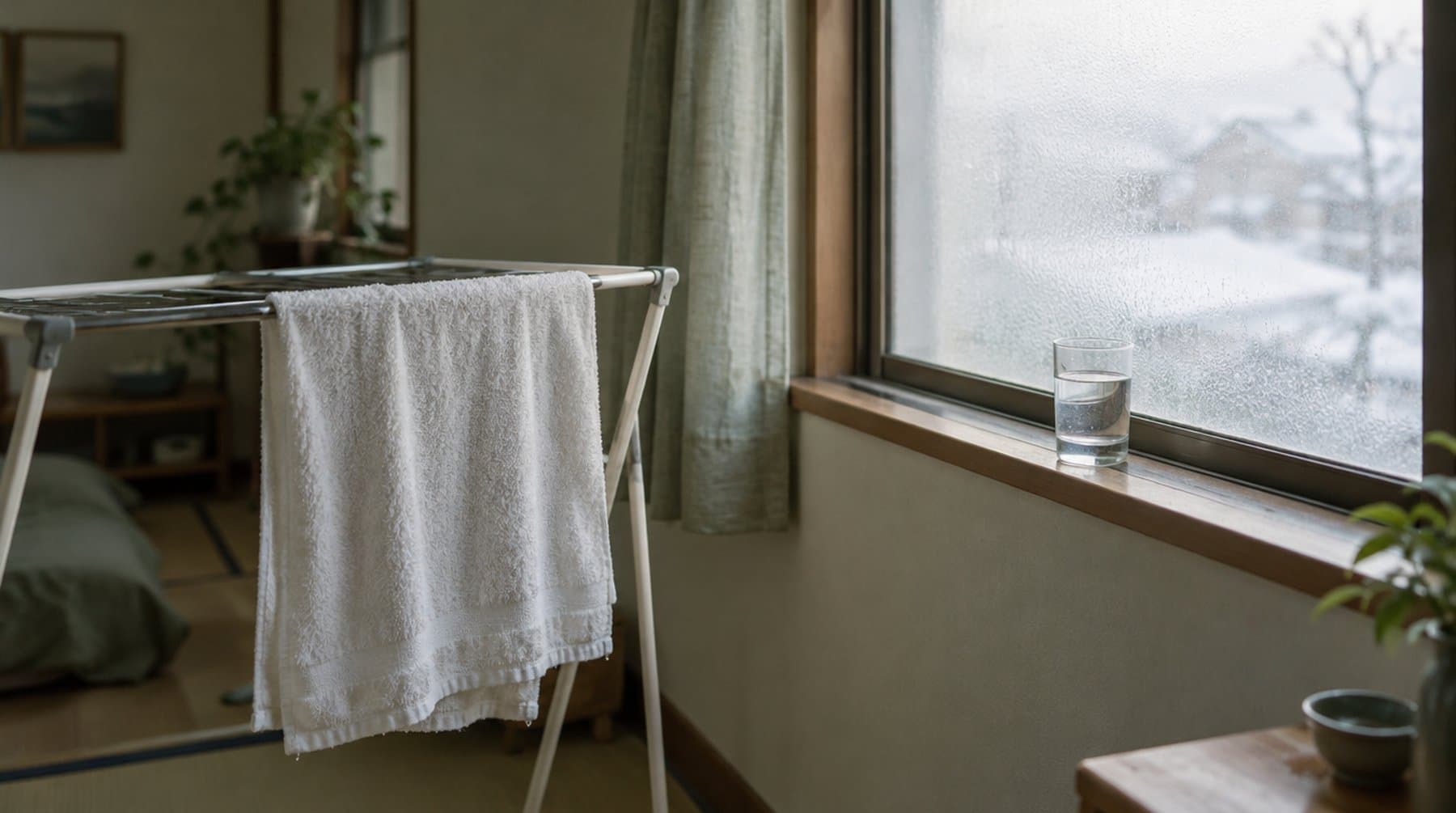
Winter air in Japan is dry, and any heater makes it drier, so dry skin, lips and throats are the most common winter complaint. Our apartments do not list a humidifier, so we would not count on one. A few simple habits help: hang a damp towel or the day's washing on the indoor drying rack in the bedroom overnight, keep a glass of water by the bed, and boil the kettle now and then.
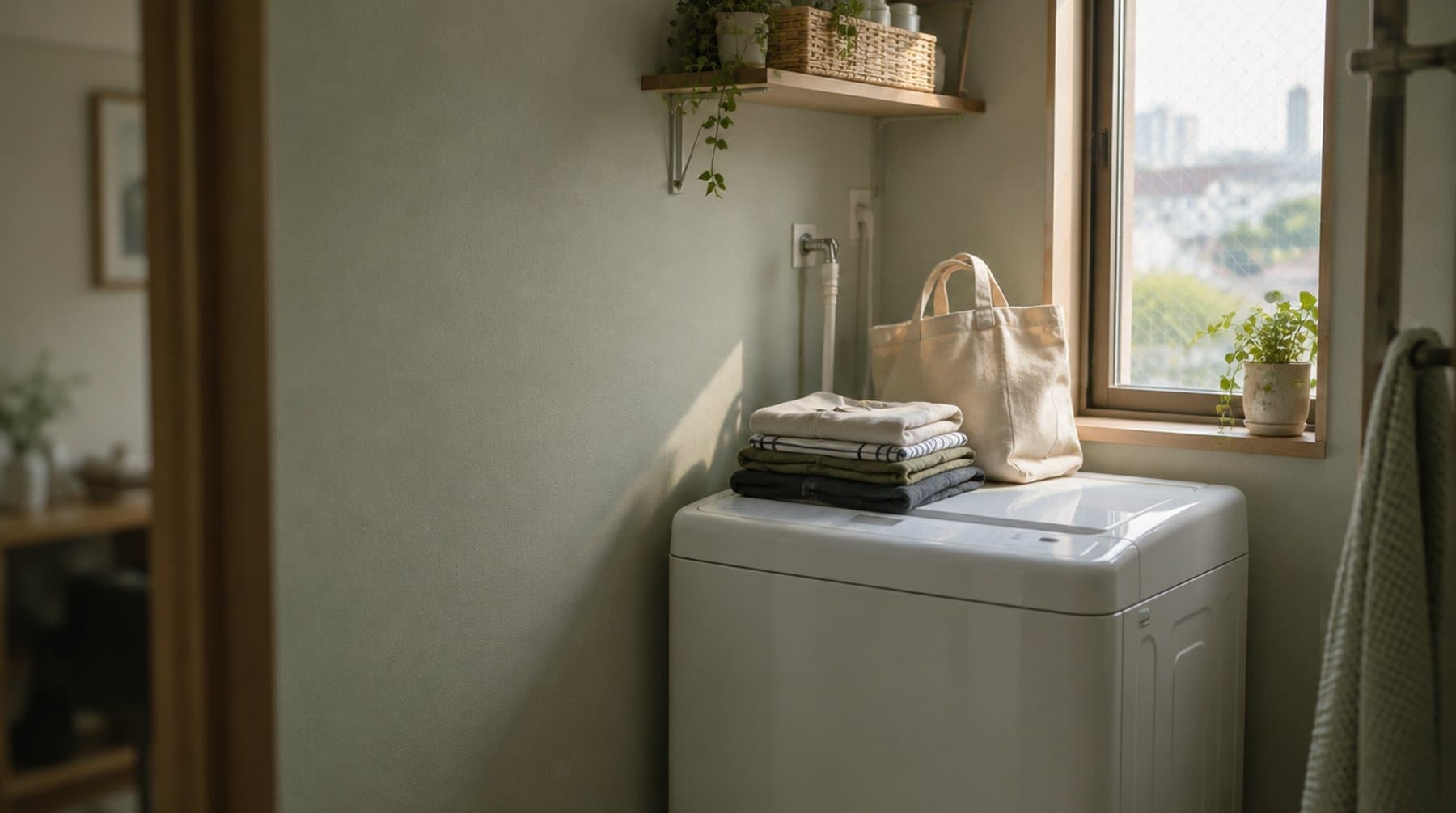
Bring moisturiser and lip balm; they are the two things guests most often go out to buy after arriving. The washing tip doubles up: clothes dry well indoors in heated winter air, as the laundry guide explains.
Can I leave the heating on when I go out?
Please switch it off when you leave for the day and on again when you come back; a wall unit brings a room back up to temperature fairly quickly. The exception is sleeping: leaving the air conditioner or the oil heater on low overnight is normal in Japanese winters. If the power cuts out because several appliances are running at once, send us a message and we will walk you through resetting the breaker.
What should I pack for a heated apartment?
Layers you can take off. Interiors in Japan, on the subway and in shops as much as in the apartment, are warm, so a light layer underneath matters more than a heavy one. Thick socks or slip-on indoor shoes are useful because floors can be cool. The full list for the north is in packing for Hokkaido in winter.
See the Sapporo apartments