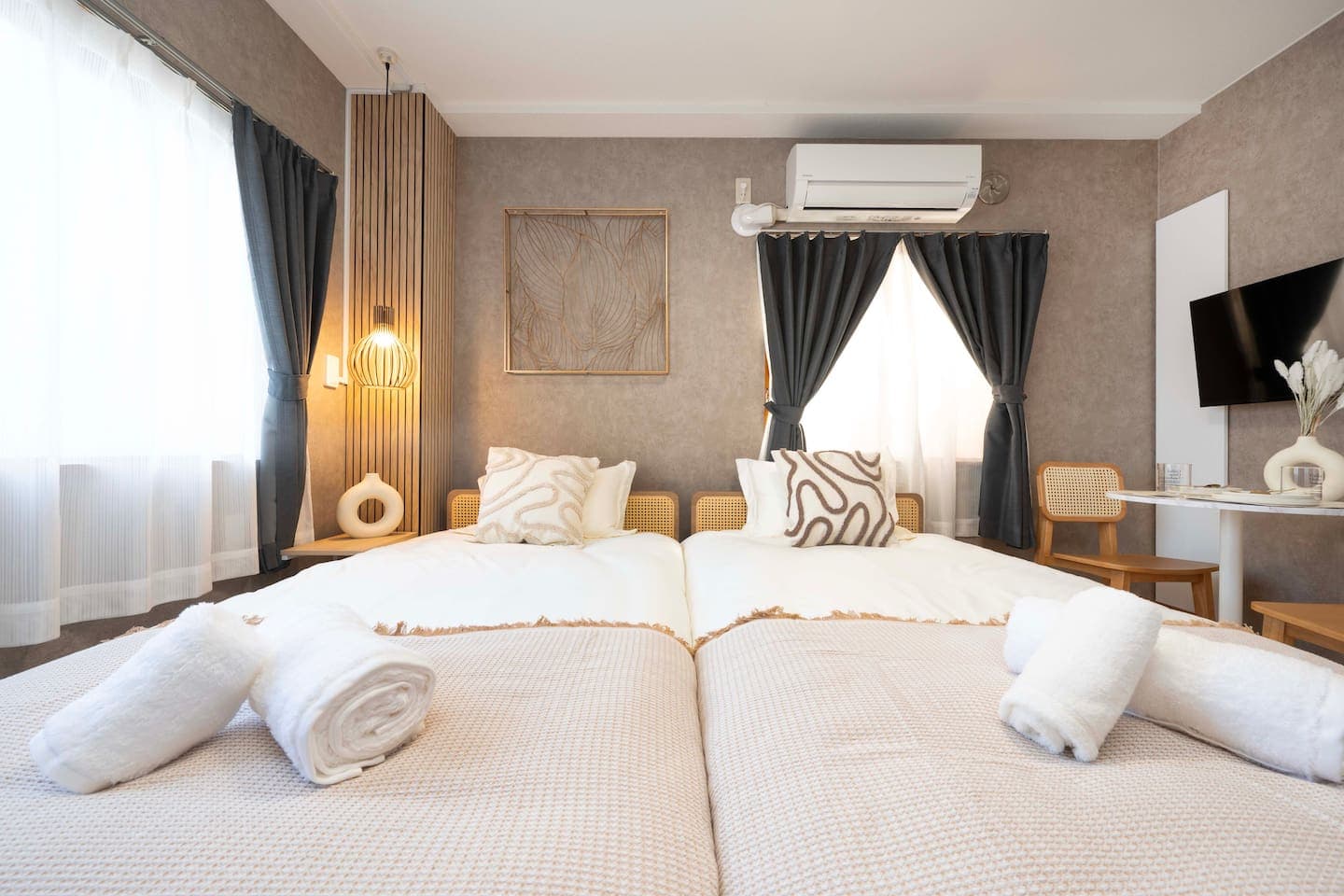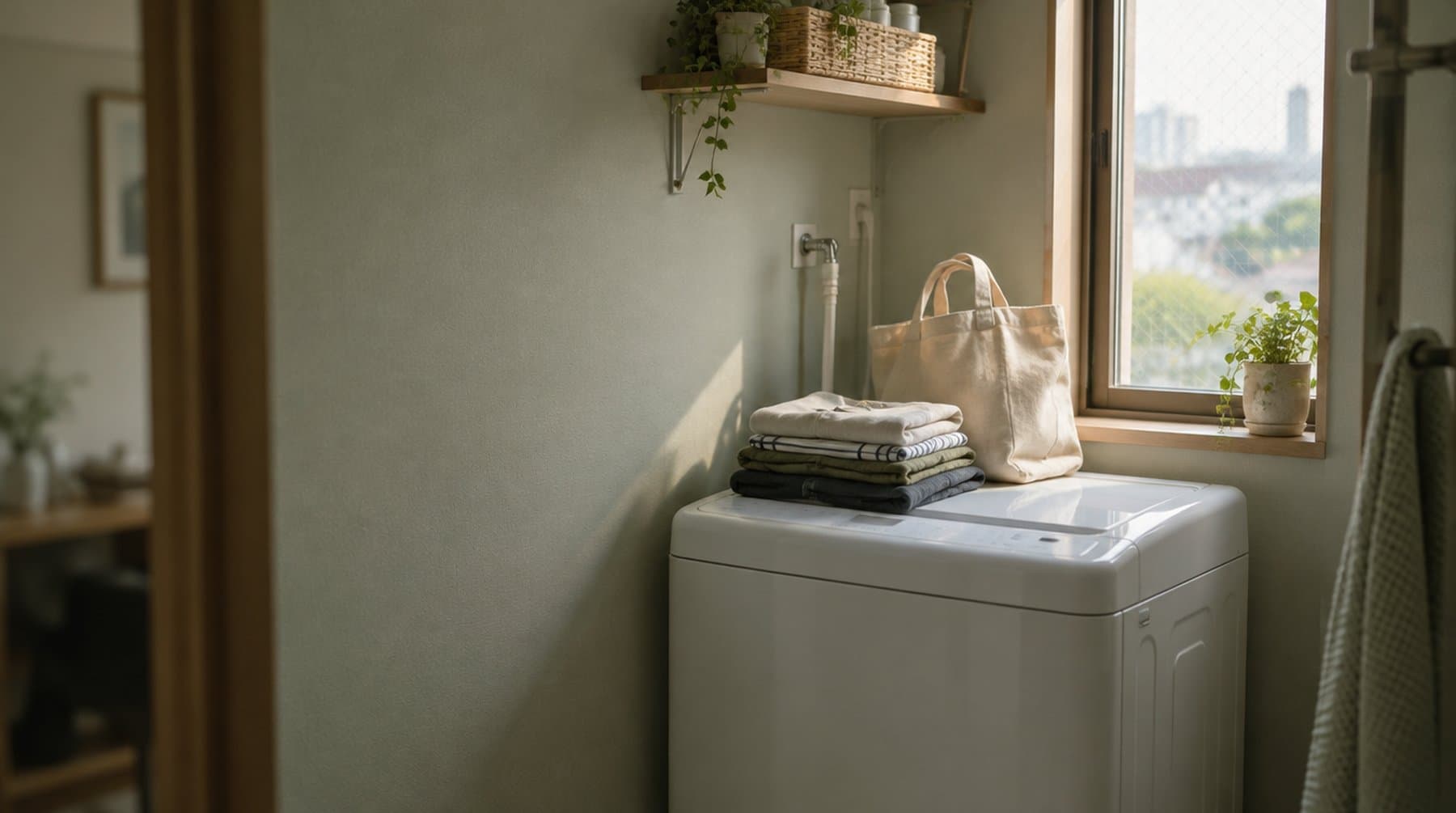

On a trip to Japan longer than about five days, the easiest laundry plan is a washer in the room you stay in; the fallback is a coin laundry, and they are common in every residential neighbourhood. We run six licensed apartments in Tokyo and Sapporo, every one with a washer, and these are the questions guests ask us about it, with the answers we give.
What are your laundry options when travelling in Japan?
There are four, and they differ mostly in how much of your evening they take. A coin laundry, called koin randorī in Japanese, is a self-service shop of large washers and dryers paid in coins, often open late or around the clock. Many business hotels have a few coin machines on one floor; full-service hotels will wash for you at a per-item price.
For a stay under five nights the choice hardly matters. From a week on, choosing the room is choosing the laundry plan: an apartment with a washer makes it a background task, a hotel makes it an evening errand once a week.
| Option | Where | What it costs you |
|---|---|---|
| Washer in the room | Apartments, some long-stay hotels | Nothing extra; run it while you sleep |
| Coin laundry | Residential streets, near stations | Coins and about an hour of waiting nearby |
| Hotel coin machines | One floor of many business hotels | Coins, and a queue in the evening |
| Hotel laundry service | Full-service hotels | Priced per item, usually next day |
How many clothes should you pack for one or two weeks in Japan?
About five days of clothes, whatever the length of the trip, if the room has a washer. Wash on day four or five and you are back to a full set, so a two-week trip fits the same bag as a one-week one, and a carry-on stops being ambitious.
Without a washer, plan one coin laundry visit per week and pack a day or two more. On a short trip of three nights or so you may not need to wash at all. The machine starts to matter from about the fifth night.
How do you read a Japanese washing machine panel?
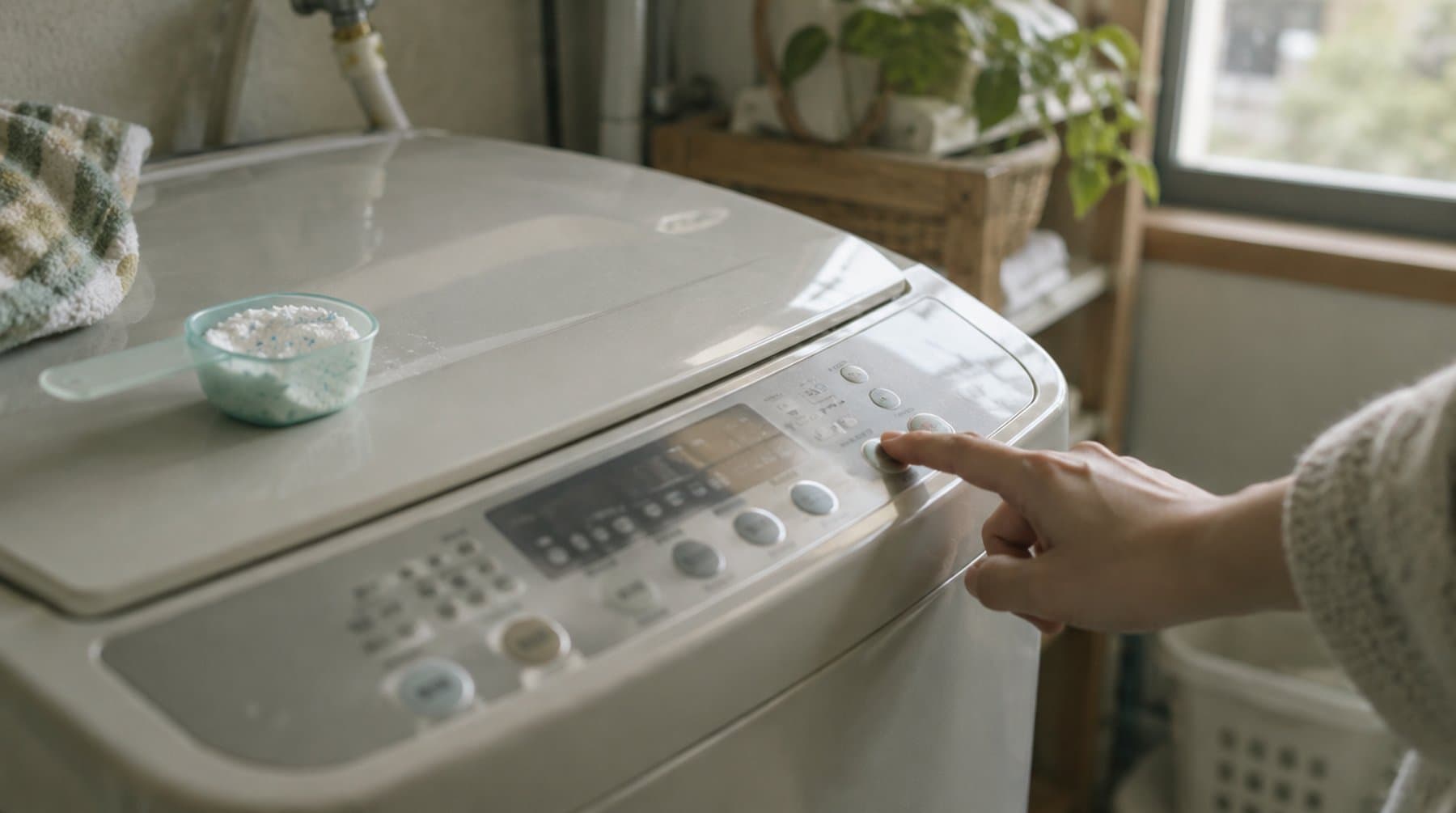
With six words, and the start button. Home washers in Japan are labelled in Japanese only, but every model uses the same few characters, and the ones below are the labels on the machines in our own apartments. Press power, leave the course on standard, press start: for most loads that is all.
One thing surprises visitors. On a top-loading machine you often press start with the lid still open: the machine weighs the load first, then begins to fill, and that is when the detergent goes in. Most Japanese home machines wash in cold water, so treat a stain before the wash rather than counting on heat.
| Label | Reads | Means |
|---|---|---|
| 入 / 切 | iri / kiri | Power on / off |
| コース | kōsu | Programme |
| 標準 | hyōjun | Standard cycle, about 35 minutes on our machines |
| 洗い / すすぎ / 脱水 | arai / susugi / dassui | Wash / rinse / spin |
| 乾燥 | kansō | Dry |
| 水量 / 予約 | suiryō / yoyaku | Water level / delayed start |
| スタート | sutāto | Start, and pause while running |
Does a washer in the listing mean you can dry your clothes?
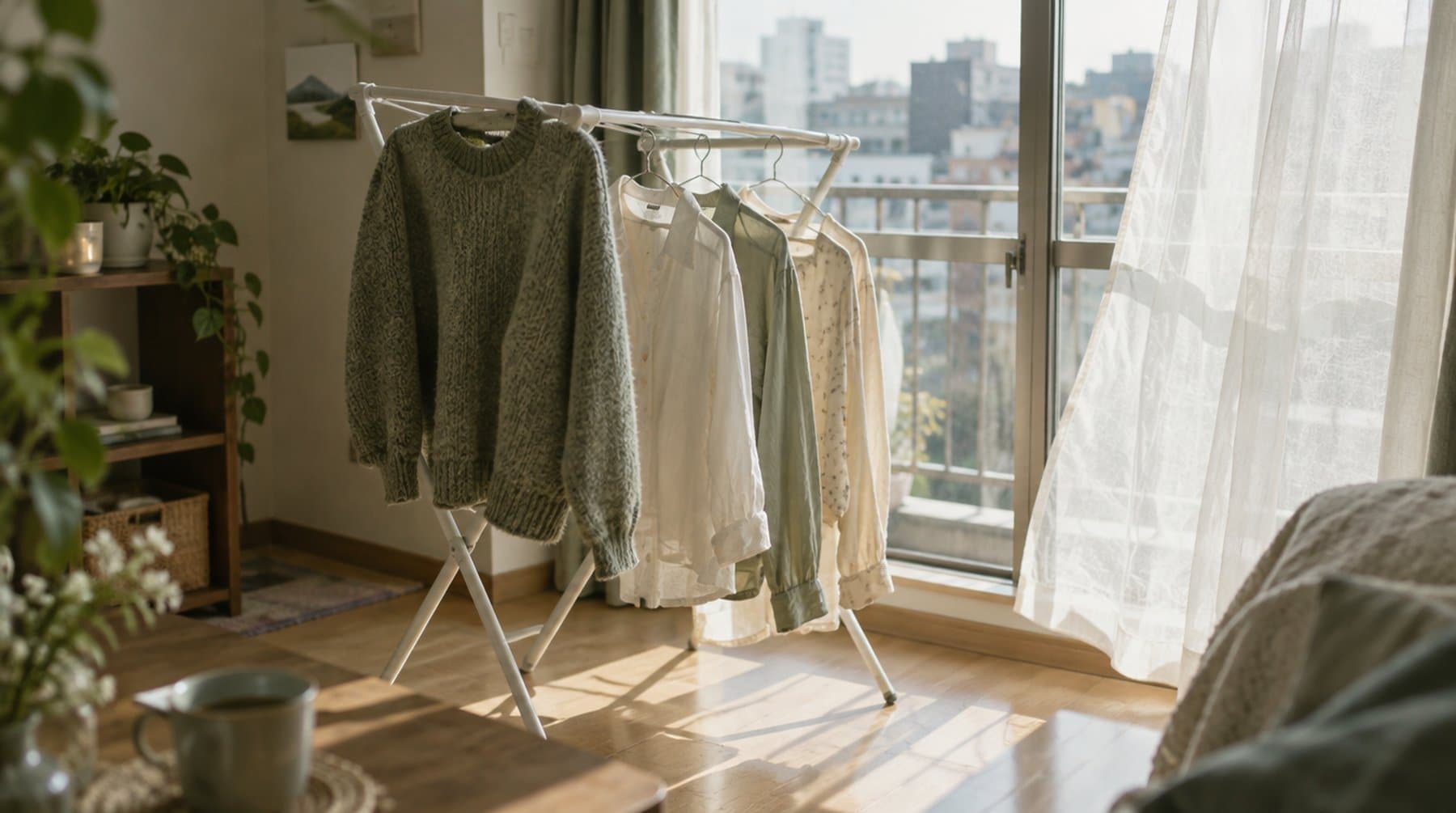
No. In Japanese listings the washer and the dryer are two separate lines, and many apartments have only the first. Japanese homes dry most laundry on a rack or a balcony pole, so a listing that says washer usually means a washer plus a rack.
Five of our six rooms have a washer with a drying function; the HEIWAJIMA studio in Tokyo has a washer, an indoor rack and a coin laundry nearby, and we say so on the listing. All six have a rack, an iron and hangers (our listing data, 23 October 2026). For a week in summer a rack is enough; for a Sapporo winter or a family with small children it is the dryer that matters (travelling with a baby).
What should not go in the dryer?
Wool, anything with elastic you care about, swimwear, and heavy coats. A compact washer-dryer runs hot and tumbles a small drum, so knits shrink and outerwear comes out damp in the middle. Check the care label: the square with a circle inside, crossed out, means no tumble drying, and Japanese clothes use the same symbols as Europe.
Hang those on the rack near the heating or by a window and they are dry by morning in most seasons. A washer-dryer also does better with smaller loads: run it every night or two instead of saving a week of clothes for one cycle.
How does a coin laundry in Japan work?
You load the machine, pay into it, and come back. Most shops are unstaffed, machines take ¥100 coins and some take a prepaid card or a phone payment, and a change machine is usually on the wall. Larger machines wash and dry in one run, which is the easiest choice if you do not want to move wet clothes between machines.
As a rough guide, a wash-and-dry run in a large machine costs somewhere between ¥1,000 and ¥2,000, and a dryer on its own around ¥100 for 8 to 10 minutes. That is our estimate of typical rates in 2026, not a quote: the price is printed on each machine. Many shops sell single-use detergent from a vending machine, and some machines add it automatically. Bring a bag for wet clothes in case every dryer is busy.
What laundry is in each of our apartments?
Every room has a washer, and every building has a coin laundry nearby for big loads such as a family's week of clothes. The table is our own listing data as of 23 October 2026; the full amenity list is on each stay page.
| Room | Laundry | Also |
|---|---|---|
| Kameari, both floors | Washer with dryer in each | Rack, iron, hangers |
| SAPPORO NORTH, 1A, 1B, 1C | Washer with dryer in each | Rack, iron, hangers |
| HEIWAJIMA | Washer, no dryer | Rack, iron, hangers, coin laundry nearby |
Detergent, wet towels and check-out day
If you need detergent, ask us in the booking thread before you buy a box; otherwise supermarkets and drugstores near every building sell small packs, and the ones marked for indoor drying, heyaboshi, are worth picking because they dry without a damp smell. In our Sapporo rooms, leave used towels in the washing machine when you leave, as the in-room guide asks.
Plan the last wash for the evening before check-out, not the morning of it: a drying cycle takes longer than the standard 35-minute wash, and check-out is 11:00, or 10:00 on the KAMEARI upper floor. For a stay of a week or more, the washer is one of the reasons an apartment beats a hotel (long stays in Japan); in winter it is also why you can pack half as much (packing for Hokkaido).
See the Kameari house