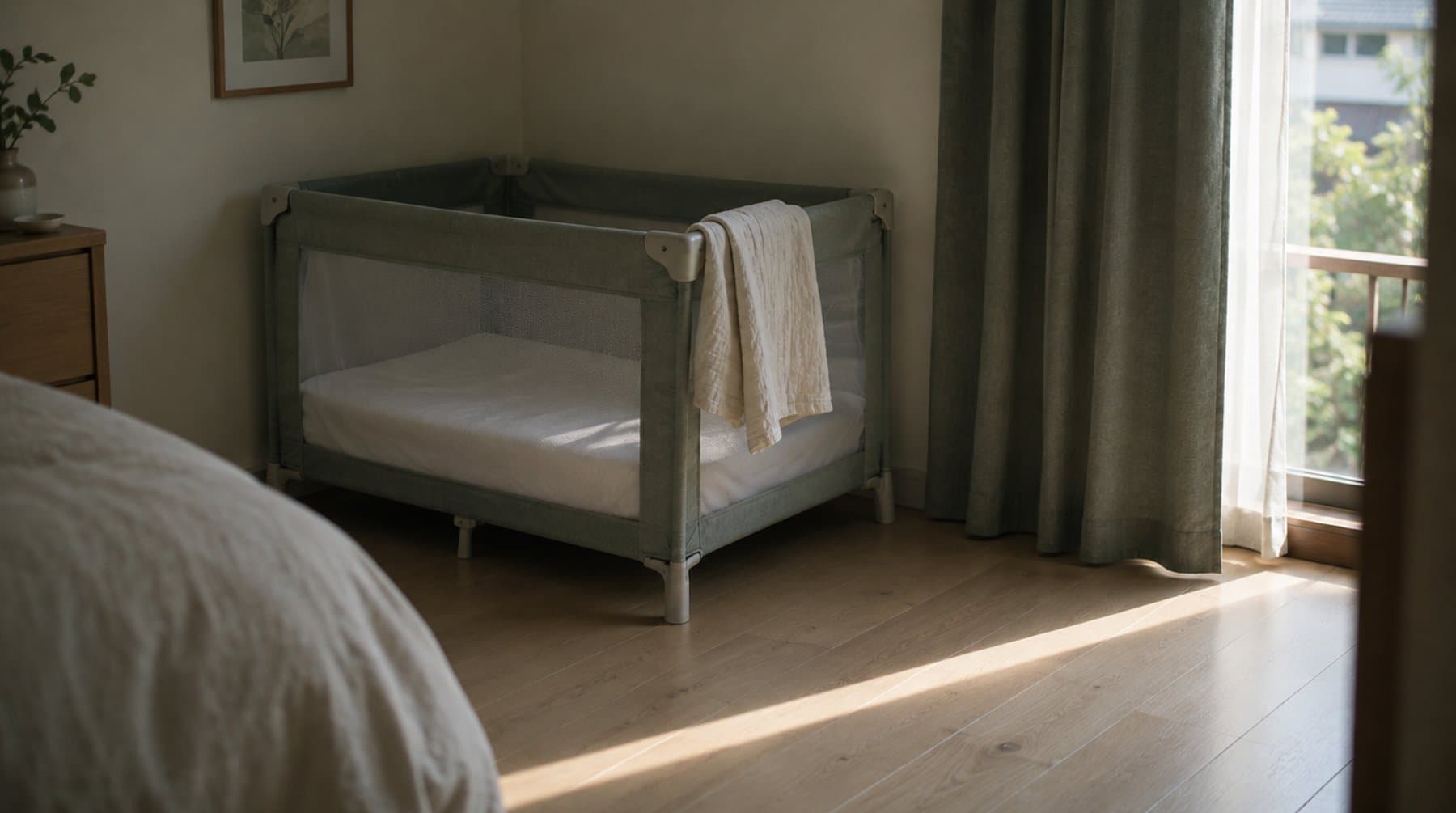

A room works with a baby when seven things are true: a bed for the baby that is not your bed, a door between the baby and the adults who are still awake, curtains that make the room dark, a kettle and a microwave and a fridge with a freezer, a dryer and not only a washer, a bathtub, and a way in you can manage with a stroller. Everything else is comfort. We run six licensed apartments in Tokyo and Sapporo; this is the list we use, and the honest table of which of our own rooms have the gear.
What does a room with a baby actually need?
Seven things, and a listing page can prove every one of them before you pay. One piece of vocabulary first: baby gear is not one amenity. A crib, a high chair and children's dinnerware are three separate lines on a Japanese listing, and a room can have one without the others, so in a building with several apartments ask which apartment they live in.
| What | Why it matters | Where the answer is |
|---|---|---|
| A crib or travel cot | A baby in an adult bed is a bad night for everyone | Its own line, and it does not imply a high chair |
| A door between bedroom and living room | Without one, the adults go dark at seven when the baby does | Count bedrooms, not the guest number |
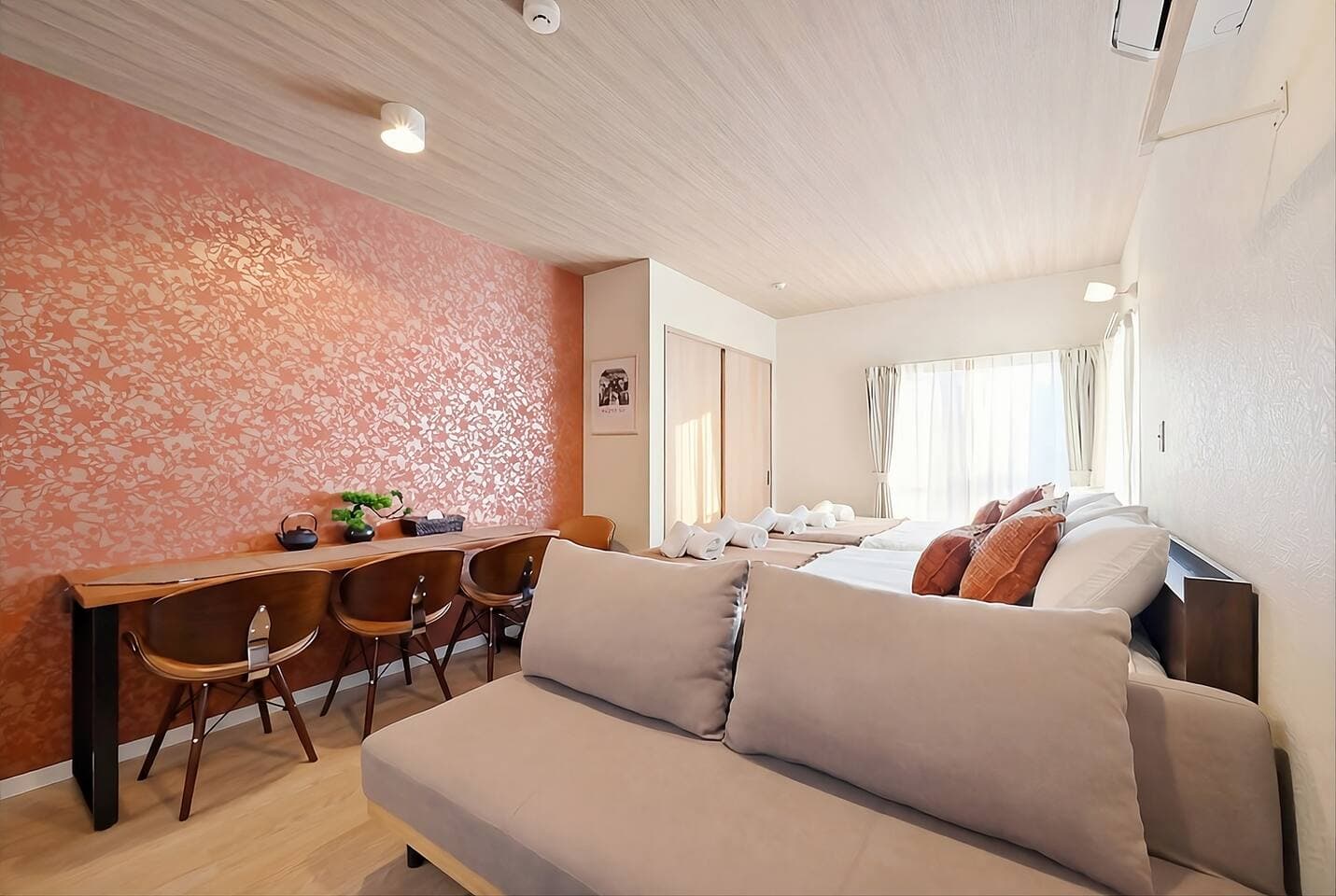
| Curtains that make the room dark | Jet lag is the first three days; daylight at five keeps it going | Room-darkening shades. All six of ours have them |
| Kettle, microwave, fridge with a freezer | Water for formula, warming a pouch, keeping milk cold | Three separate amenities, often in a kitchenette |
| A dryer, and not only a washer | A load a day, and little dries overnight here | Two separate lines. The dryer is the rarer one in Japan |
| A bathtub | You cannot wash a baby standing up in a shower cubicle | Listed separately from the shower |
| Step-free access, or a plan for the stairs | Stroller plus stairs plus a baby is a two-person job | Single-level home or a lift, and the entrance photos |
Where does a hotel room run out?
At bedtime and at laundry, not at the bed. Many Japanese hotels will put a cot in the room if you ask when you book, and that solves the sleeping. It does not solve the other twelve hours: the adults sit in the dark from the moment the baby goes down, the washing machine is a coin laundry on a floor you cannot leave a sleeping baby to visit, and the fridge is sized for drinks.
It depends on the night. For one night near an airport a hotel is simpler, and our own HEIWAJIMA studio is a single room too, so the same is true of it: fine for a night, tiring for a week. From about the third night what you are buying is the door and the dryer (minpaku and hotels compared).
Bottles and baby food: what the kitchen has to do
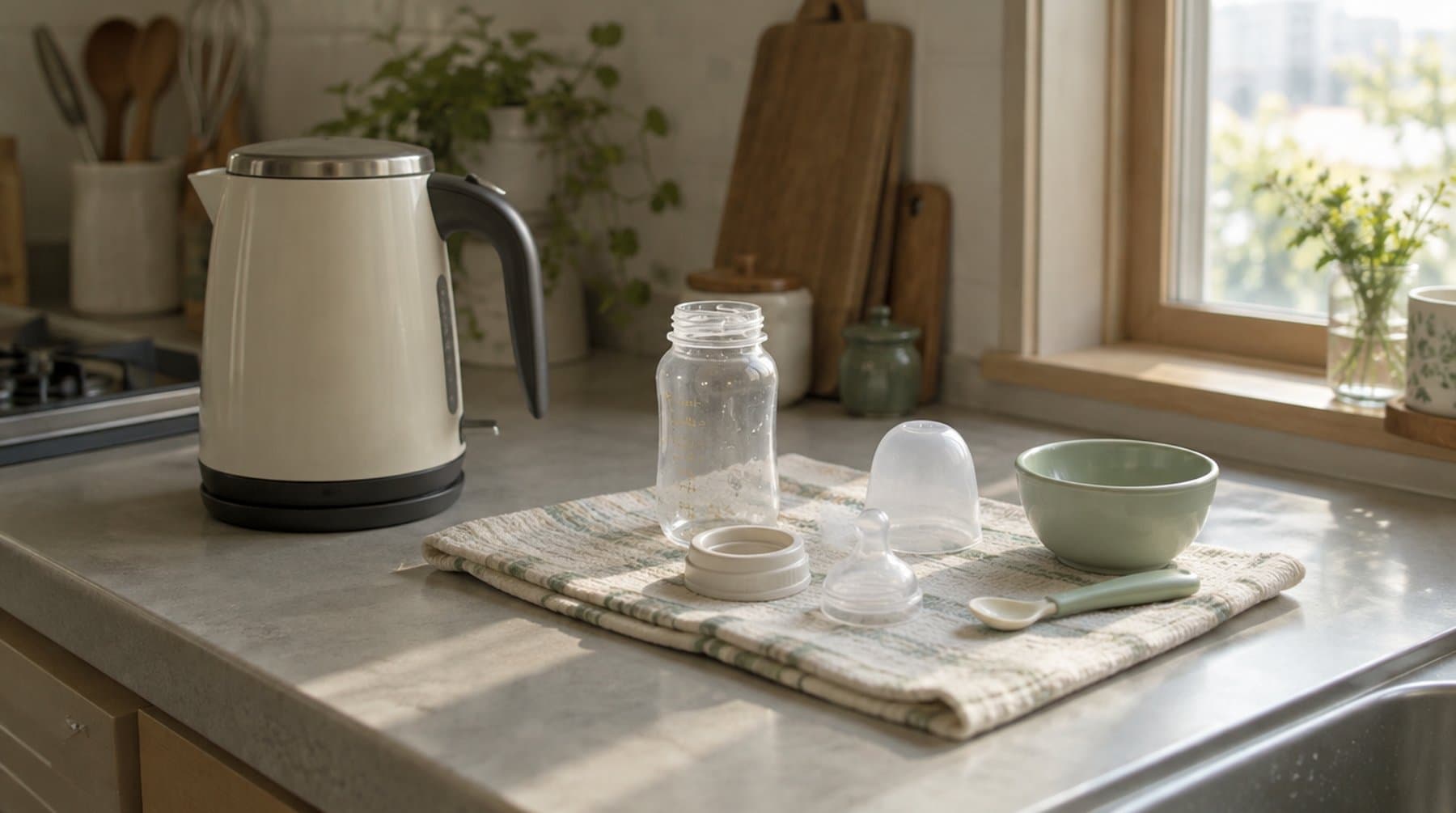
A kettle, a microwave and a fridge with a freezer cover almost everything a bottle-fed or weaning baby needs, and all six of our apartments have all three plus a rice cooker (our own listing data, 8 October 2026). That is a lower bar than a full kitchen, and it is the set to look for.
The kettle boils water for formula, which then has to cool, so a bottle of cold water from the convenience store saves twenty minutes every time. The microwave warms the pouches of baby food the drugstores here sell, and the rice cooker makes rice porridge, the easiest home-made baby food in Japan. Two gaps we will name: we stock no bottle sterilisers, so bring your microwave bags if you use them, and only the KAMEARI upper floor has a dishwasher.
What to buy here, and what to carry from home
Carry what your baby is specific about and buy the bulk here. Nappies, wipes, formula, pouched baby food, baby soap and baby-safe detergent are ordinary drugstore and supermarket stock in the streets around our buildings, and a week of nappies is a quarter of a suitcase. Packs here are usually sized by the baby's weight in kilograms rather than by age, so know the number before you shop.
What is next to our own doors, with the walk times and hours we checked for the in-room guides in September 2026. Kameari: a supermarket and a 100 yen shop 1 minute away (to 24:00), a drugstore and a 24-hour convenience store 2 minutes, and Ario Kameari 12 minutes away, a mall with a kids' play corner and baby rooms. HEIWAJIMA: drugstore, supermarket and convenience store, all 2 minutes. Sapporo: a drugstore 6 minutes from the door, open until midnight every day.
| Buy it here | Bring it with you |
|---|---|
| Nappies, wipes, disposal bags | Your bottles and a spare teat |
| Formula and bottled water | Medicine whose dose you know |
| Pouched baby food, baby snacks | A microwave steriliser bag |
| Baby-safe laundry detergent | A carrier for the station stairs |
| Baby soap, cream, a thermometer | The blanket, the toy, the sound |
Laundry is the part a baby changes most
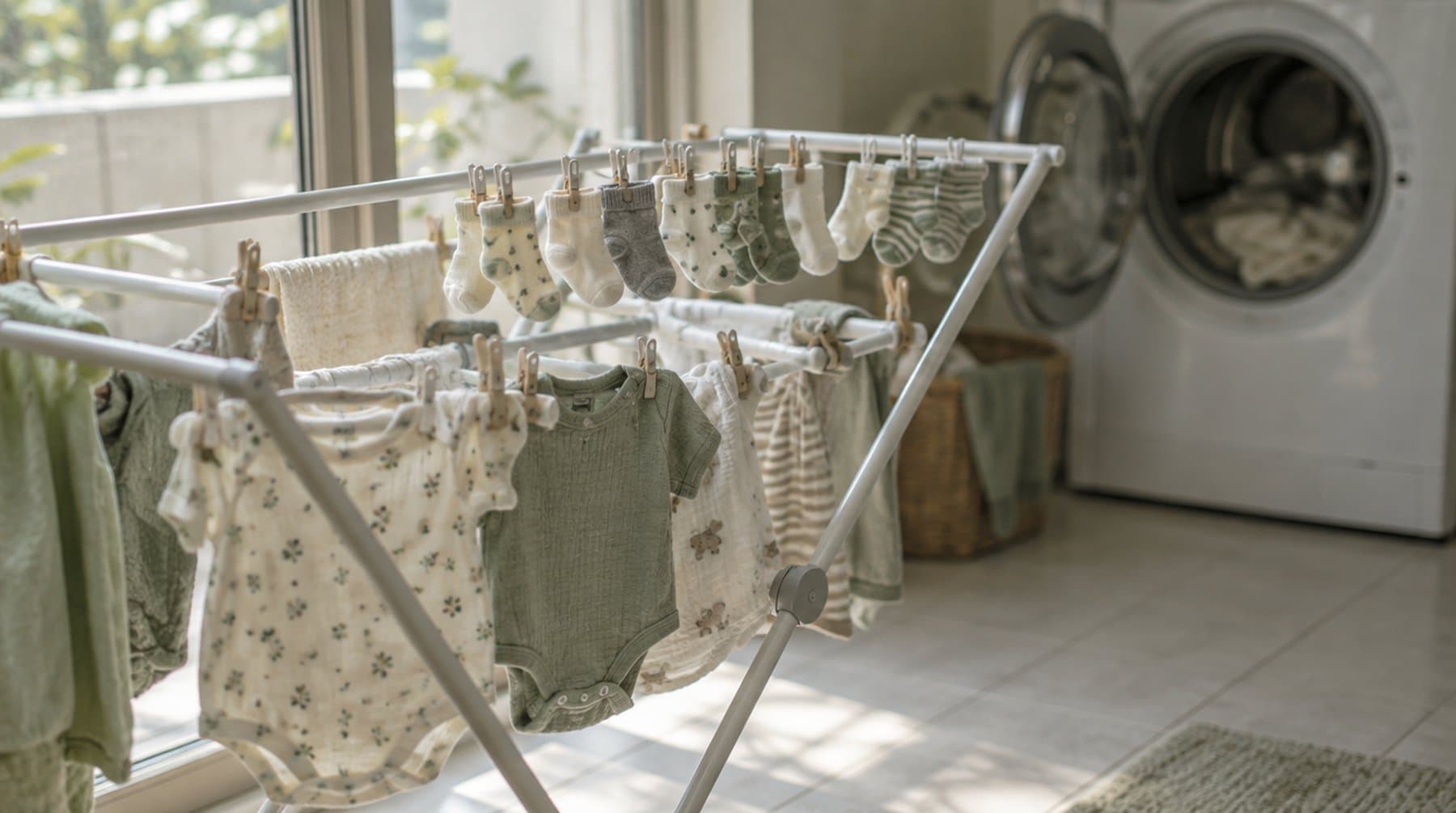
You will run a wash most days, so the amenity to look for is the dryer, and in Japan the washer and the dryer are two separate lines. Five of our six rooms have a washer with a dryer; the HEIWAJIMA studio has a washer, an indoor rack and a coin laundry nearby. All six have a rack, because a rack dries what no machine should get.
This matters more here than at home because of the weather at both ends of our map: a Tokyo summer is humid enough that a hung load is damp the next morning, and a Hokkaido winter is cold enough that an unheated room dries nothing fast (packing for a Hokkaido winter). One load after the baby goes down is dry by breakfast, which is how families who packed for three days stay two weeks on the same clothes.
Bathing a baby in a Japanese bathroom
All six of our rooms have a real bathtub, and the room around it is the most baby-friendly thing about staying in Japan. A Japanese bathroom is a wet room: you wash sitting on the floor beside the tub with a hand shower, and the tub is for soaking afterwards. You can kneel, soap a baby and rinse them without getting in yourself, and nothing you spill is a problem. We keep no baby baths, so if yours still needs one, buy it here or plan on the washing floor.
Which of our rooms suits a baby?
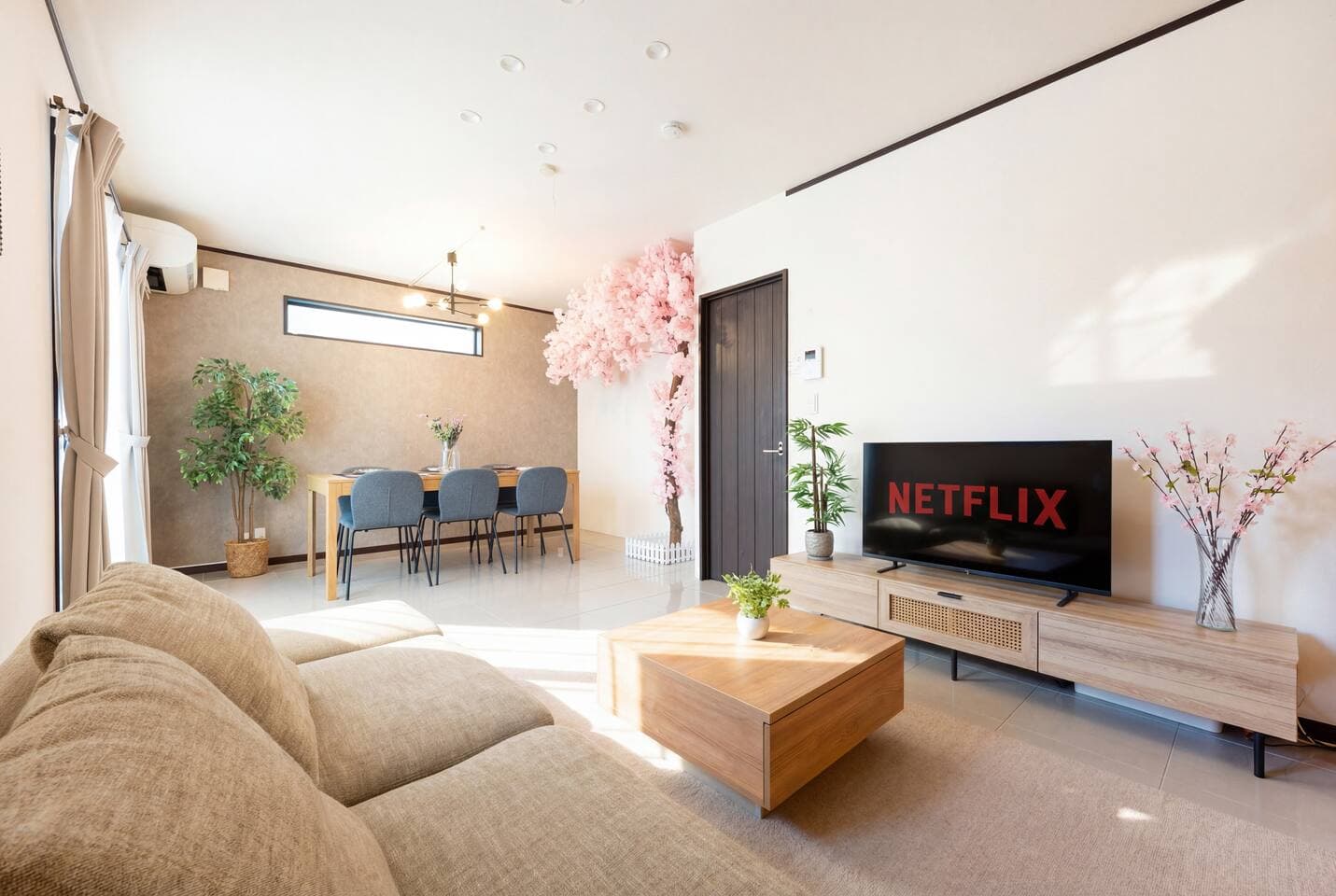
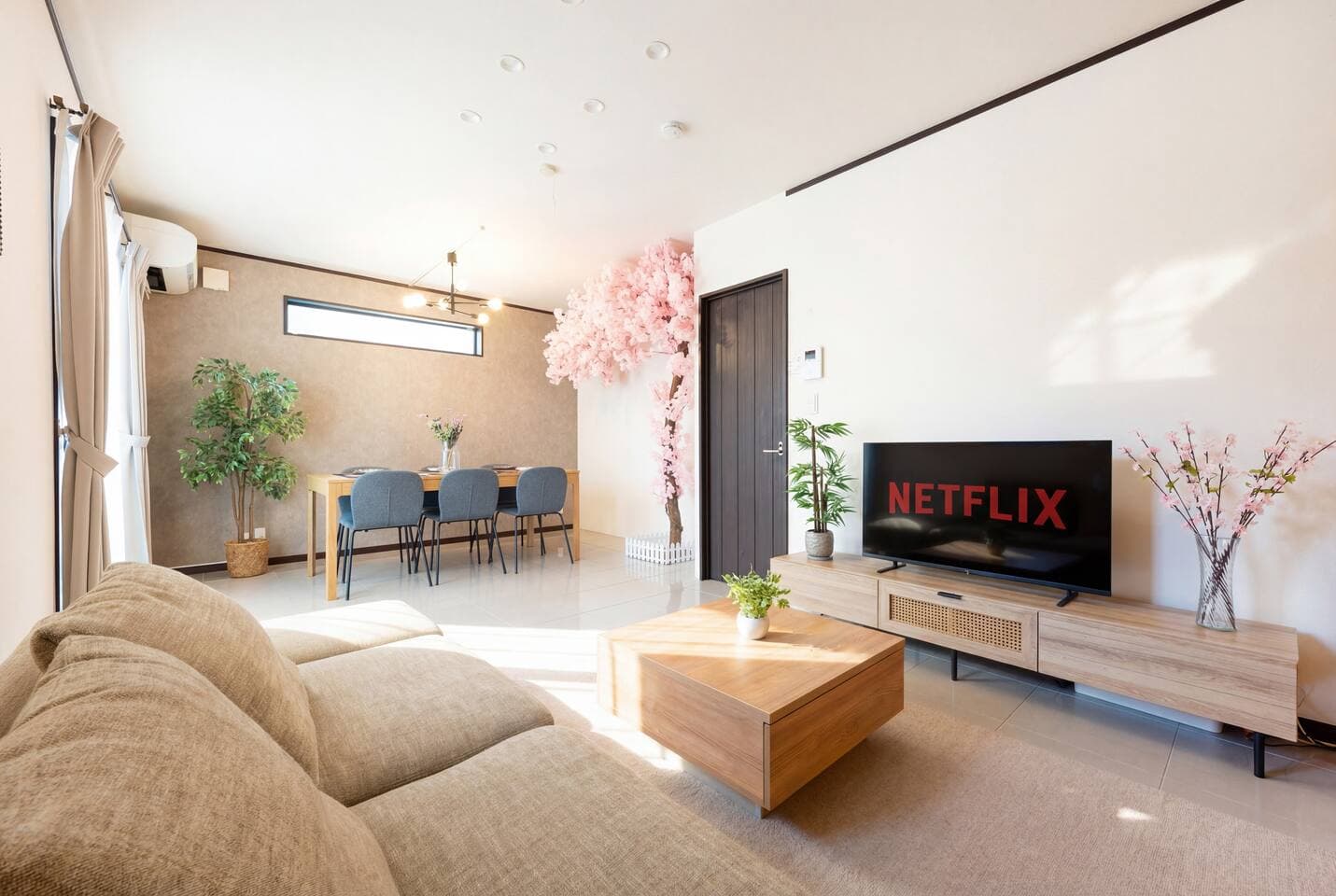
One of the six comes with baby gear: the KAMEARI upper floor, and the whole house, which includes it. The other five have the kitchen, the laundry and the bath but no crib and no high chair, and we would rather you knew before booking than after arriving. The table is our own listing data as of 8 October 2026. A family with a baby and a daughter stayed upstairs and wrote that Kameari was an excellent place for them, with the JR line three minutes away (Kahina, August 2026, published unedited on the property page).
| Room | Baby gear | Laundry | Stairs |
|---|---|---|---|
| KAMEARI upper floor, up to 10 | Crib, high chair, children's dinnerware | Washer and dryer, dishwasher | Stairs, no lift |
| KAMEARI ground floor, up to 4 | None | Washer and dryer | Step-free, own entrance |
| The whole Kameari house, up to 14 | All three, upstairs | One set per floor | Ground floor step-free, upstairs by stairs |
| SAPPORO NORTH, three flats, 4 to 5 each | None | Washer and dryer in each | Single level, ground floor |
| HEIWAJIMA studio, 2 guests | None, but window guards | Washer, rack, coin laundry nearby | No lift |
What to tell us when you book
Tell us the baby's age and whether you want the crib made up, at booking rather than on the day: infants in the crib do not count towards the guest total, but we only know which bedroom to set the cot up in if you say so.
Check-in is self service from 16:00 with no last check-in time, so a delayed flight or a long nap costs you nothing, and the door code arrives in the booking thread. Check-out is 11:00 everywhere except the KAMEARI upper floor, where it is 10:00. Quiet hours run 21:00 to 07:00 in what are ordinary residential buildings, which is not a rule aimed at babies: a baby crying at two in the morning is nobody's fault.
The one room with the gear is one room. Half our bookings arrive 42 days or more before check-in and our Tokyo rooms averaged 85.0% occupancy in the twelve months to September 2026 (measured 1 October 2026, method and numbers), so two to three months ahead is realistic, more for cherry blossom and New Year. A week gets 10% off and 28 nights up to 20% (long stays in Japan).