
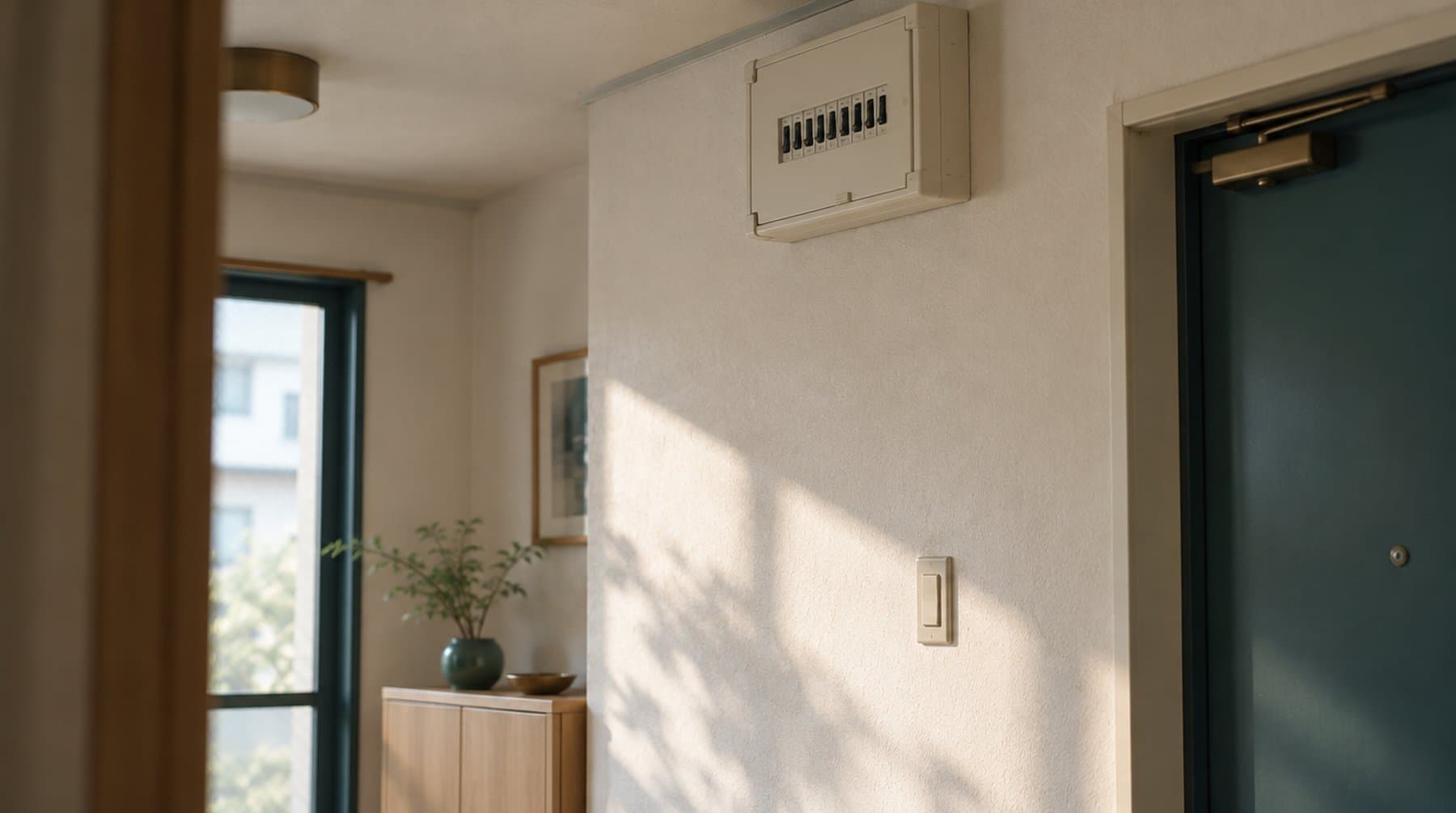
The name on an electricity or gas contract decides less about the price than about two other things: who receives the bill, and who has the standing to stop the supply. So the name should sit with whoever carries the business, and the checking should sit with whoever runs it.
In the management model we offer, the hotel-business permit (旅館業許可, the licence that lets a property take paying guests by the night) stays with the owner or the owner's company. In that arrangement it is simpler, right up to the day the contract ends, to leave the utility contracts on the owner's side and have the operator check the meter readings and bills every month. Which way a given property goes is settled after we have seen it, and written into the contract.
Should the utilities be in the owner's name or the manager's?
Either works day to day; the difference surfaces on the day you change managers. If the contracts are in the manager's name, the manager you have just left is still the party able to cancel them. The power in a room with a guest in it can go off because of paperwork at a company you no longer work with.
If the contracts are in your name, a change of operator moves nothing. The trade is that the bills come to you, so you need to agree how the figures reach the operator for the monthly report. Side by side:
Keeping every contract on the same side matters as much as which side it is. Electricity in the owner's name with the internet line still in the outgoing manager's is exactly the split that gets missed at handover. Put everything in one place and the checklist fits on a single page.
| Owner's name | Manager's name | |
|---|---|---|
| Bill goes to | The owner | The management company |
| The day you switch manager | Nothing changes | Cancellation or transfer needed |
| In the monthly report | Owner shares the bill, operator reconciles | Manager pays and recharges |
| Who can stop the supply | The owner | The management company |
| Fits | Management model, permit with the owner | Sublease, the operator rents and trades |
How much of revenue do utilities take?
Across our own three buildings and six rooms, over the twelve months from October 2025 to September 2026, electricity came to 2.7% of revenue and gas to 0.7%, so 3.4% together (measured 1 October 2026, published at operating data). That is about a fifth of cleaning at 17.0%, and a small line inside the 27.8% published operating total.
Two lines are missing from that figure, and we say so. Water is billed every two months and tracked outside the source workbook, so it is absent rather than zero. Internet has no line of its own among the seven published shares either. Small lines are exactly the ones that vanish from a report that does not name where they went. How to read the whole cost stack is in operating costs, line by line.
And 3.4% is a line that moves with occupancy. Our average occupancy over the same twelve months was 83.7%, and the more nights a guest is in the room, the more the heating, cooling and hot water run. The percentage alone cannot tell you whether a property is wasteful or simply well booked. Read it next to occupancy for the same month.

Do utilities move the same way in Tokyo and Sapporo?
No. Sapporo gets heavier in winter with heating, Tokyo in summer with air conditioning, so an annual figure averaged across both cities matches neither city's month. We do not publish a monthly split by city, so only the direction is given here.
Standing charges also stay when a room is empty. It is a line that does not fall all the way with revenue in a weak month, which is why it belongs in a month-by-month plan rather than as an annual percentage. In a Sapporo January, saving on electricity and freezing the pipes is far the more expensive choice (winter in snow country).
What happens to the utility contracts when you change manager?
In the owner's name, nothing moves. In the outgoing manager's name, the new contract is confirmed as live before the old one is stopped. Reverse the order and a guest mid-stay can lose power during the changeover days.
The full handover sequence is in switching management companies, and utilities slot into its parallel-running period. When we take a property over, this is the order:
What tends to stay behind in the outgoing manager's name is less often the electricity or gas than the internet line. It can involve installation work or returning equipment, so it may take longer to move than the other contracts, and we start on it at the very beginning of the parallel period.
- 1. List every contract: electricity, gas, water, internet, each with its holder and payment method
- 2. Identify what is in the outgoing manager's name, and decide who takes each one before notice is served
- 3. Start the new contracts first, confirm the start date with the supplier, and keep it in writing
- 4. Stop the old contracts last, no earlier than the day after the new ones are confirmed live
- 5. Photograph the meter readings on the switch date: the evidence for where the two companies' bills divide

What should you check on the day you sign?
Who can act when the supply stops matters more than the tariff. Plans and supplier terms change, so instead of comparing them here, this is the list to read off the bills and the contract on the day itself.
- Contract holder: you personally, your company, or the outgoing manager
- Payment method and account: who receives the notice if a payment is missed
- Contracted capacity: will it hold with a full house running heating or cooling and hot water at once
- Meter reading date and billing cycle: how a two-monthly water bill is handled in the monthly report
- Internet: who holds the line and who administers the router, so who can change the Wi-Fi password
- Whether connection or a change of name needs someone present: ask each supplier, and put the date in the handover plan
Which name is better for tax?
That depends on how the property is held, individually or through a company, and on who holds the permit, so we do not answer it here. Ask your tax adviser before you sign.
What the operator can do, whatever the name, is report the monthly bill as its own line. A report that folds electricity and gas into one line with cleaning and consumables hides the winter and summer swings entirely.
Agree on how the bills are checked, too. Compared with the previous month, a bill is lost in the seasonal swing, so compare it with the same month a year earlier. In a first year with nothing to compare against, read the usage on the meter slip instead. If usage holds steady while the amount jumps, suspect a tariff revision or a change to the contract, and ask the supplier.
When not to hire us
If your property is outside the 23 wards of Tokyo and Sapporo, we are the wrong company: nobody from our side can get to the viewing or to the building on the switch date. We also hold no registration as a residential accommodation management operator (住宅宿泊管理業者), so we take on properties under the hotel-business permit or working toward it.
The 2.7% and 0.7% above are the record of our own six rooms, not a figure offered for a property we have not seen. What we promise is a list of which contract sits in whose name, and a switch date on which no guest's room goes dark.
Ask about your property