
Rent a car at New Chitose Airport only if your trip leaves Sapporo: for the city itself, the train and subway are faster, cheaper and do not need a parking space. We run three apartments in Sapporo's Kita ward, and this is the question guests ask us most often before a winter trip. Below is the honest version, including where a car is the right call.
Do I need a rental car in Sapporo?
No, not for the city. Sapporo runs on three subway lines, and the JR Rapid Airport train reaches Sapporo Station from the airport in about 37 to 40 minutes for ¥1,230 (New Chitose Airport to Sapporo). From our apartments at Kita-18-jo, Odori is about 4 minutes by subway and Susukino about 6.
A car in the city mostly costs you. Our building has no parking, and the coin parking two minutes away runs roughly ¥1,200 to ¥1,500 a day, the range we list on our own Sapporo pages. On a week-long stay that is a real line in the budget for a car that may sit still.
When is a car worth it in Hokkaido?
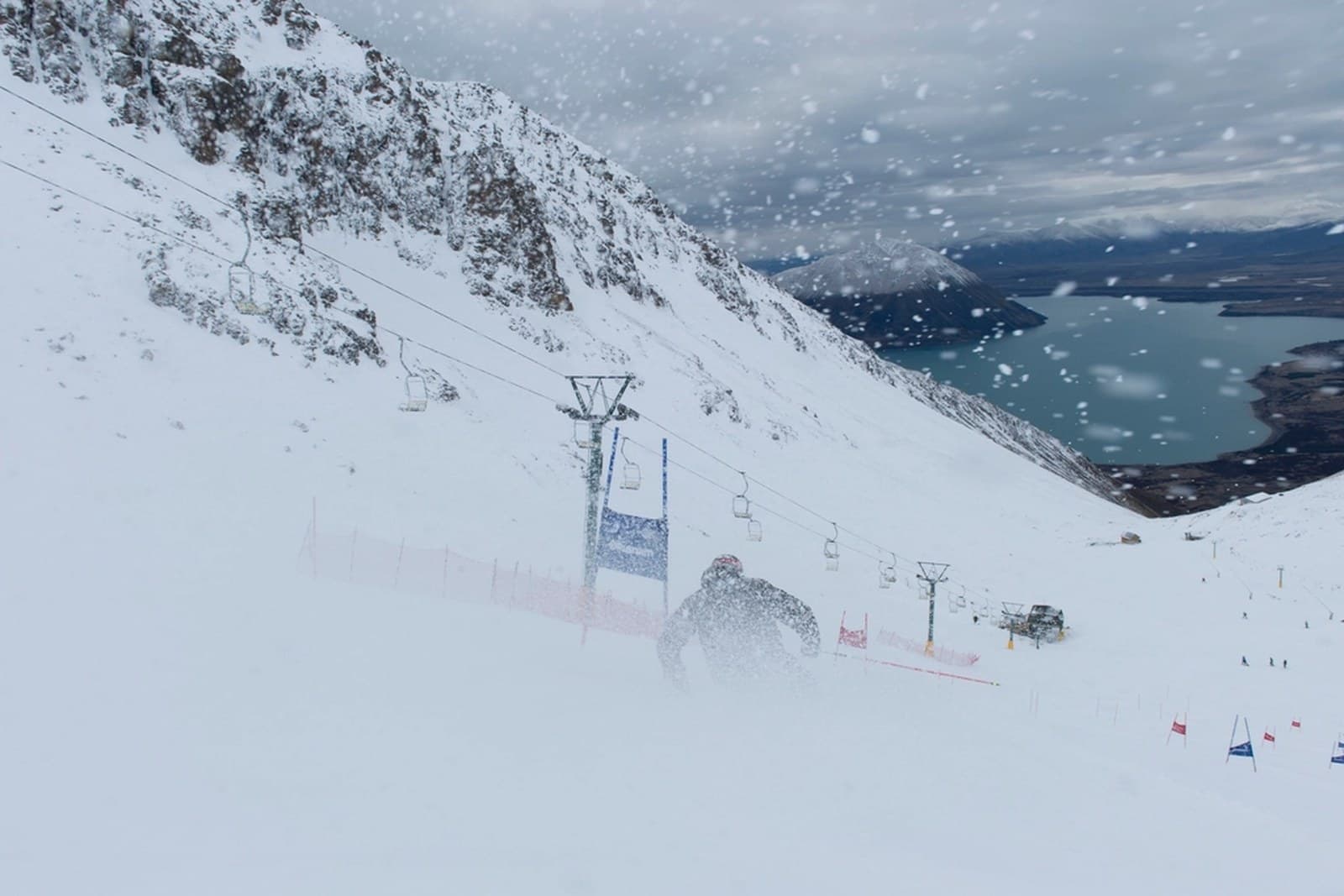
When the places you want are spread out and off the rail map: ski resorts beyond the city, Furano and Biei, the lakes, or a loop of small onsen towns. Hokkaido is large, and once you leave the Sapporo area the bus network thins out quickly.
| Trip | By car or bus from Sapporo | Our view |
|---|---|---|
| Sapporo city, Otaru | Train and subway | No car needed |
| Sapporo Teine, Sapporo Kokusai | about 55 min | Bus works well for day trips |
| Kiroro | about 1 h 5 min | Car or bus, both fine |
| Rusutsu | about 1 h 25 min | Car gives you more freedom |
| Niseko (Hirafu) | about 1 h 50 min | Car or highway bus; overnight is easier |
| Furano | about 2 h | Car makes sense, especially with stops on the way |
What licence do I need to drive in Japan?
Without a Japanese licence you need either an International Driving Permit issued under the 1949 Geneva Convention, or, if your licence is from Switzerland, Germany, France, Belgium, Monaco or Taiwan, that licence together with an official Japanese translation of it. This is how the National Police Agency's leaflet for foreign drivers puts it, which we read on 19 November 2026.
Either document lets you drive for up to one year from the date you enter Japan, and only while your own licence is valid. An International Driving Permit (IDP) is a booklet issued in your home country that translates your licence; it has to be arranged before you fly. If your country is not on either list, or you are unsure which convention your permit follows, ask the rental company before you book and check the National Police Agency's English page. Japan drives on the left.
Do rental cars in Hokkaido come with winter tyres?
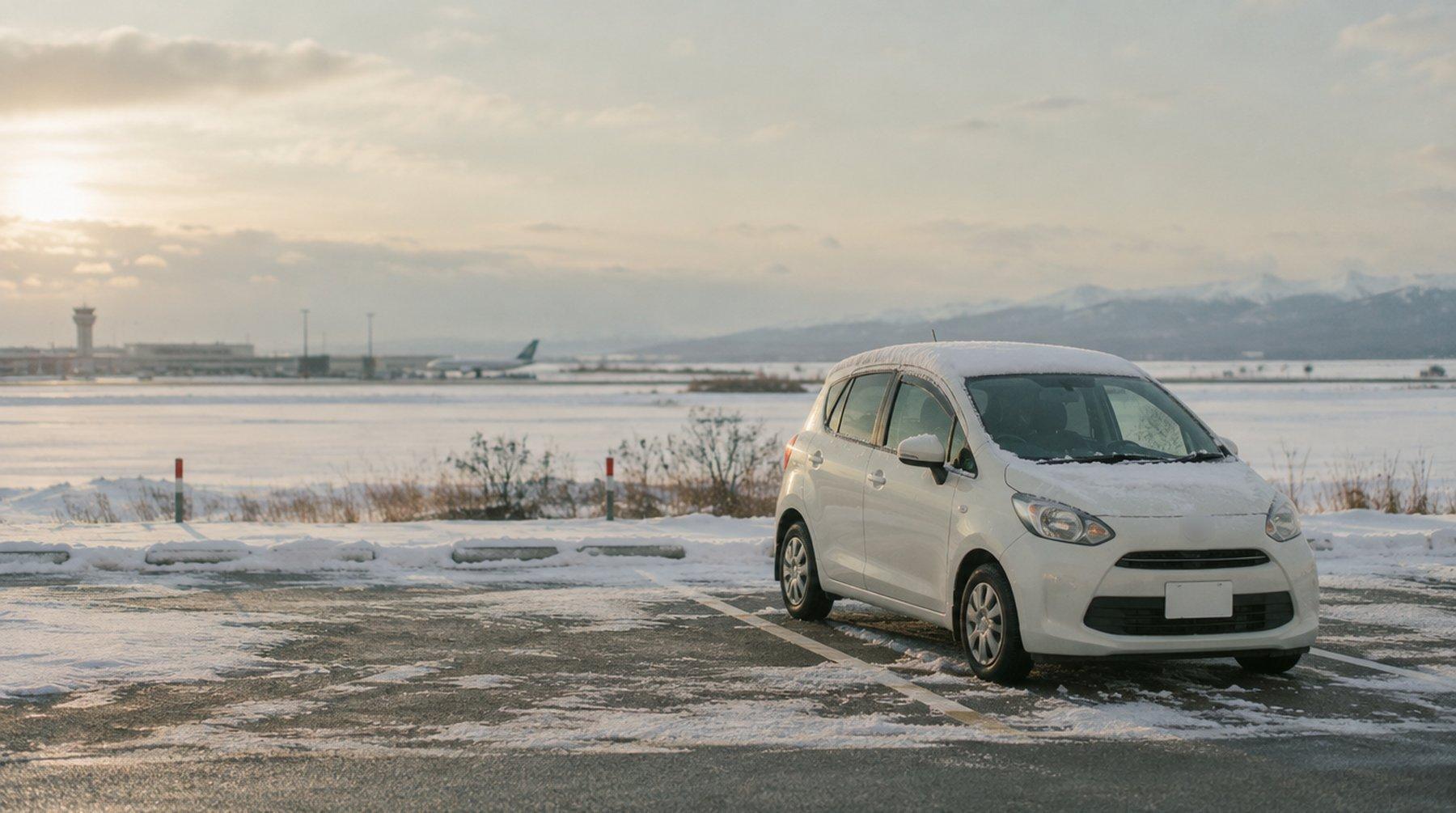
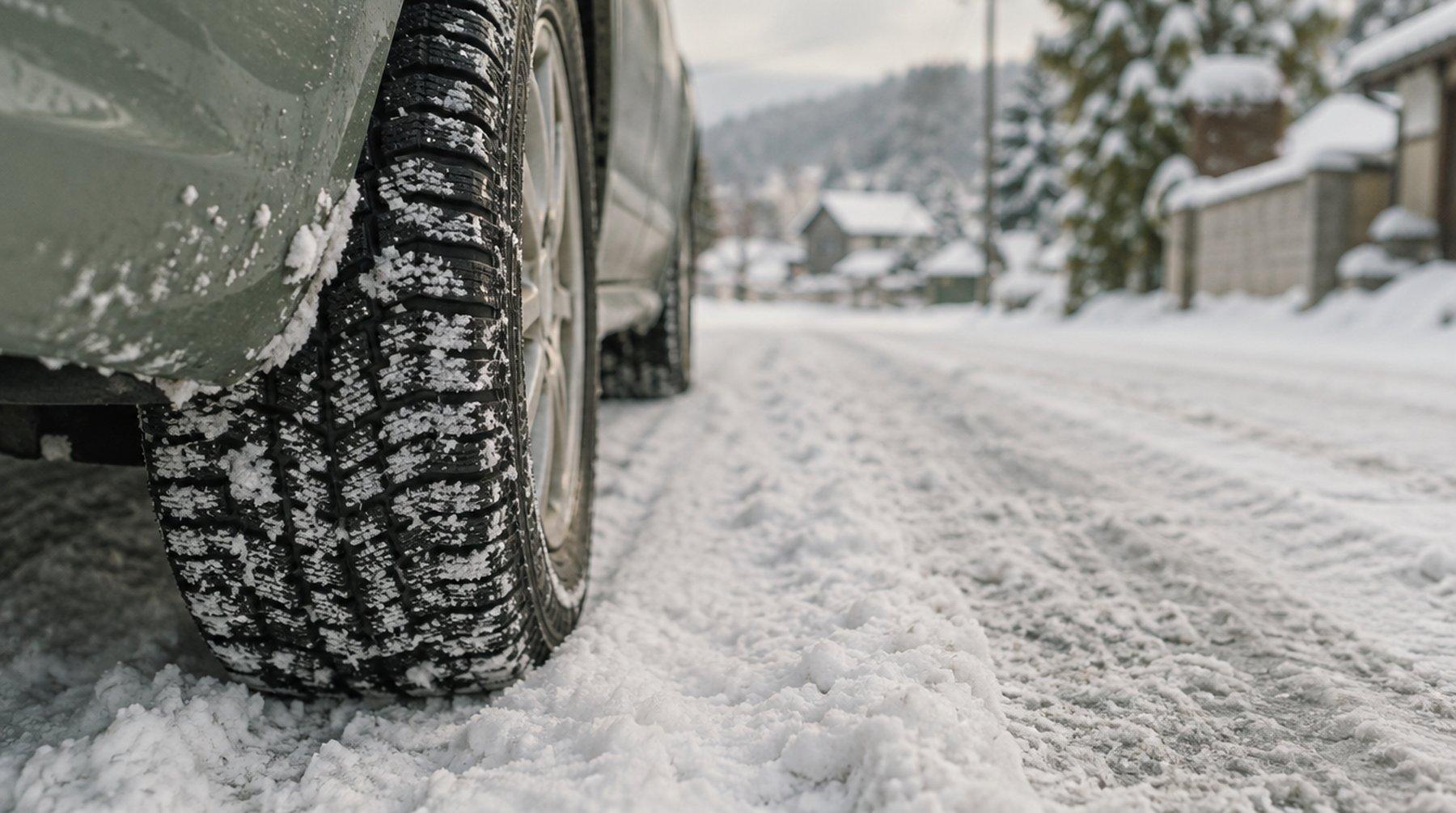
Usually yes, but confirm it when you book. JAF, Japan's motoring association, notes that rental cars are generally switched to studless tyres for the winter and advises checking at the time of booking. Studless tyres (スタッドレスタイヤ) are winter tyres that grip snow and ice through soft rubber and deep grooves rather than metal studs.
Two more things to ask at the counter: whether the car has four-wheel drive, which helps on hills and in deep snow, and whether there is a snow brush in the car. On a winter morning the car will be under fresh snow, and you clear all of it, roof included, before driving off.
What is winter driving in Hokkaido actually like?
Slower and more careful than you expect, mainly because of ice you cannot see. JAF warns about black ice, a road that looks merely wet but is frozen, most often at night and in the early morning, and names bridges, overpasses and tunnel entrances as the most dangerous spots. Its advice is plain: lower speed, longer following distance, and nothing sudden, no hard braking, sharp steering or heavy acceleration.
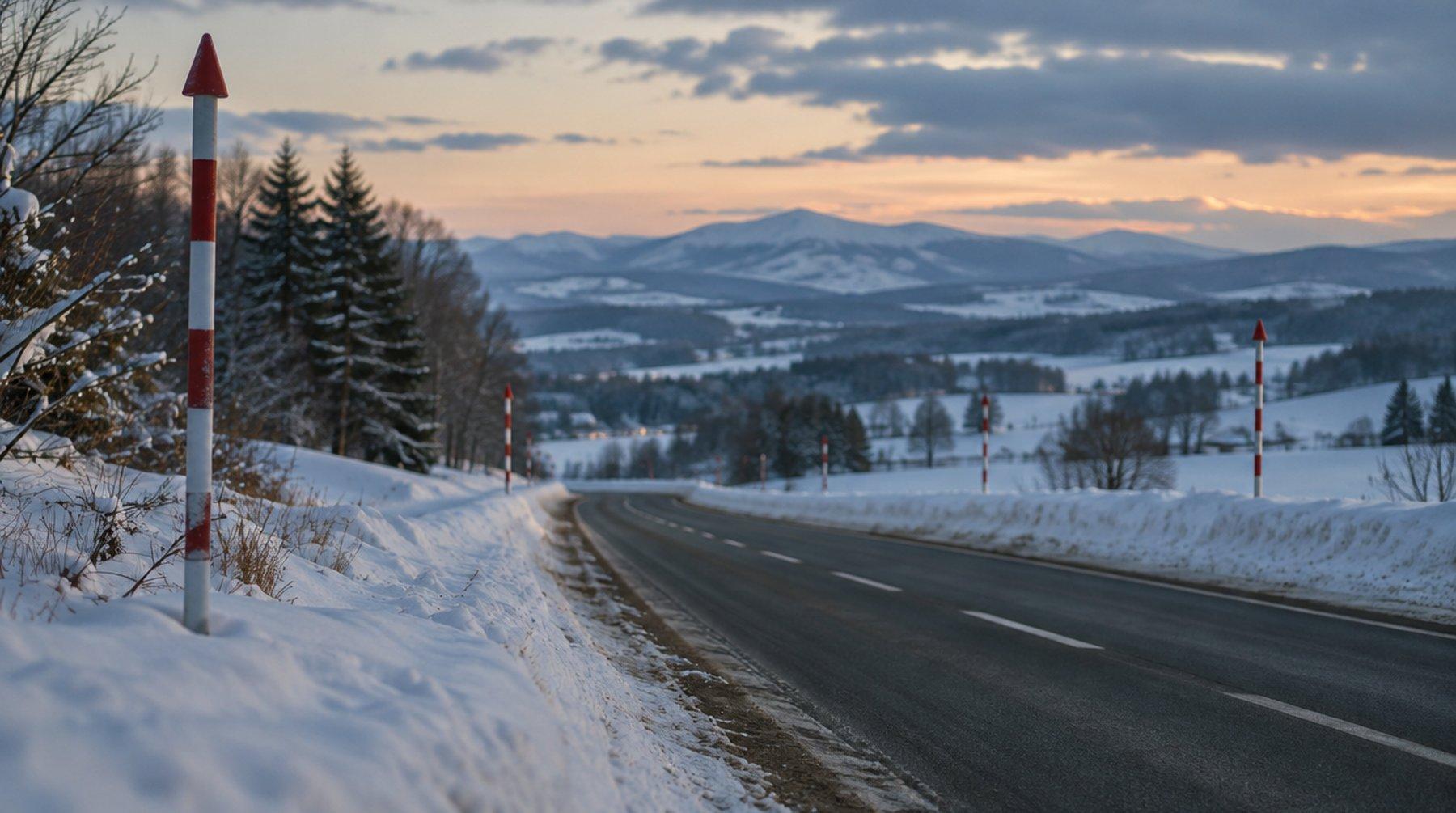
The second hazard is visibility. Wind can lift snow off the fields into a whiteout, and JAF's advice in that case is to turn on the hazard lights and stop. December and January days are short, so plan long drives to finish in daylight. Before setting out, check road closures and mountain pass conditions on 北の道ナビ (Kita no Michi Navi), the Hokkaido road information portal run by the Civil Engineering Research Institute for Cold Region.
Pick up at the airport, or in the city?
If your first stop is a resort, pick up at the airport and drive straight there. If you are staying in Sapporo first, take the train into the city and rent the car only for the days you leave it. That is the split plan we suggest to most of our guests: the airport train, a few days on foot and subway, then a car for one or two days of Furano, Niseko or the lakes.
The split plan saves the parking bill on the city days and avoids your first drive in Japan being an hour on a snowy expressway after a long flight. Many rental companies also have branches in central Sapporo; check whether yours does, and whether returning to the airport instead is allowed and at what charge.
What about a long stay, a month or more?
Compare the monthly rental rate with the parking it needs. Some rental companies offer monthly plans, and on a stay of several weeks a car can make sense if you use it most days. At our building the coin parking alone, at roughly ¥1,200 to ¥1,500 a day, adds up to around ¥36,000 to ¥45,000 over thirty days, a rough figure that varies with the rates on the day. For stays where the car would sit most of the week, renting it for the days you need is usually the better deal (staying a month in Sapporo).
See the Sapporo apartmentsWhat should I do before I fly?
Four things, in this order. Arrange your International Driving Permit or Japanese translation at home. Book the car and confirm winter tyres in writing. If you will park at our building, message us before you book so we can point you to the coin parking. And pack shoes with real grip, because the walk from the car park to the door is on the same ice as the road (what to pack for a Hokkaido winter).
See our apartments