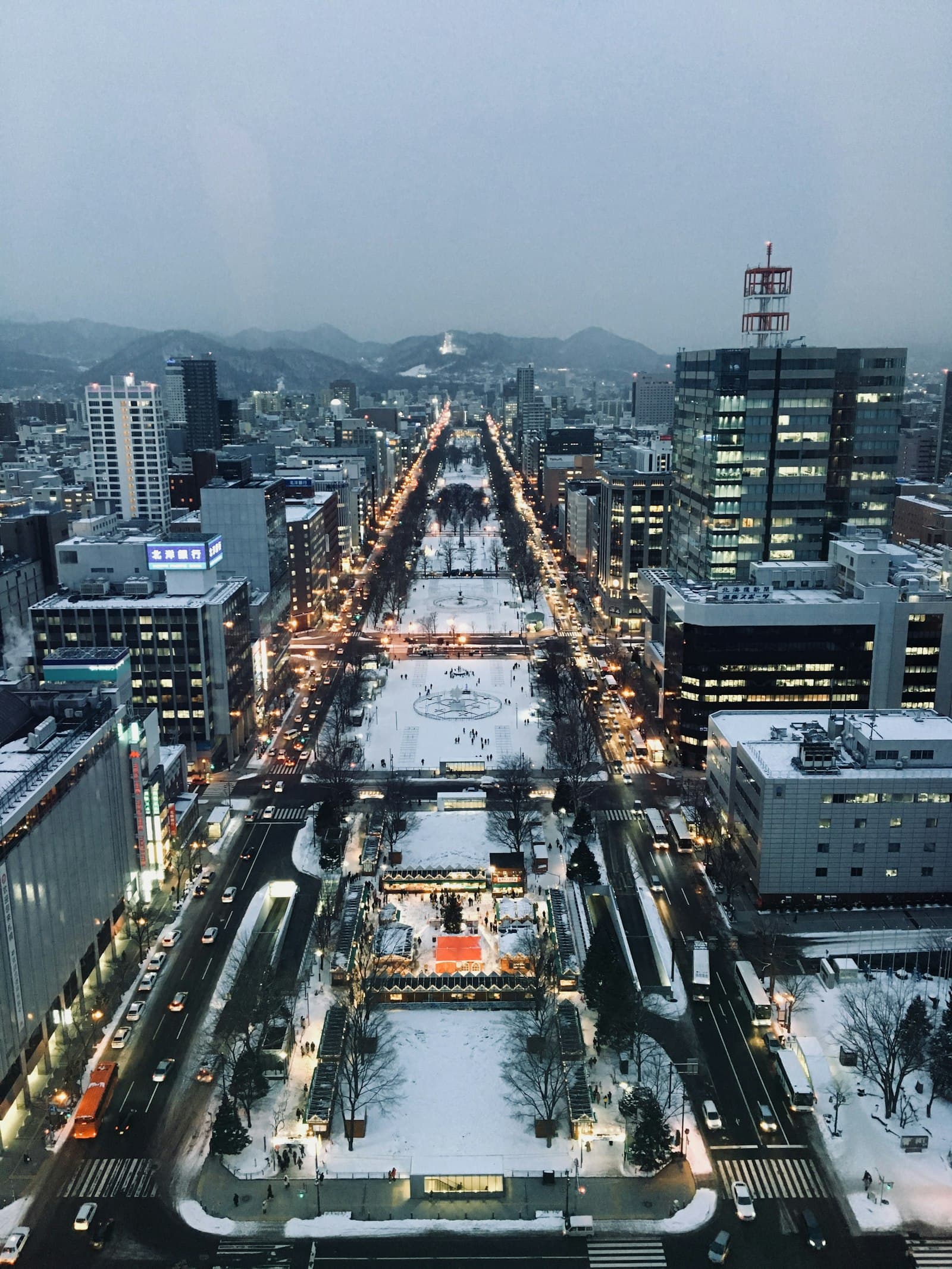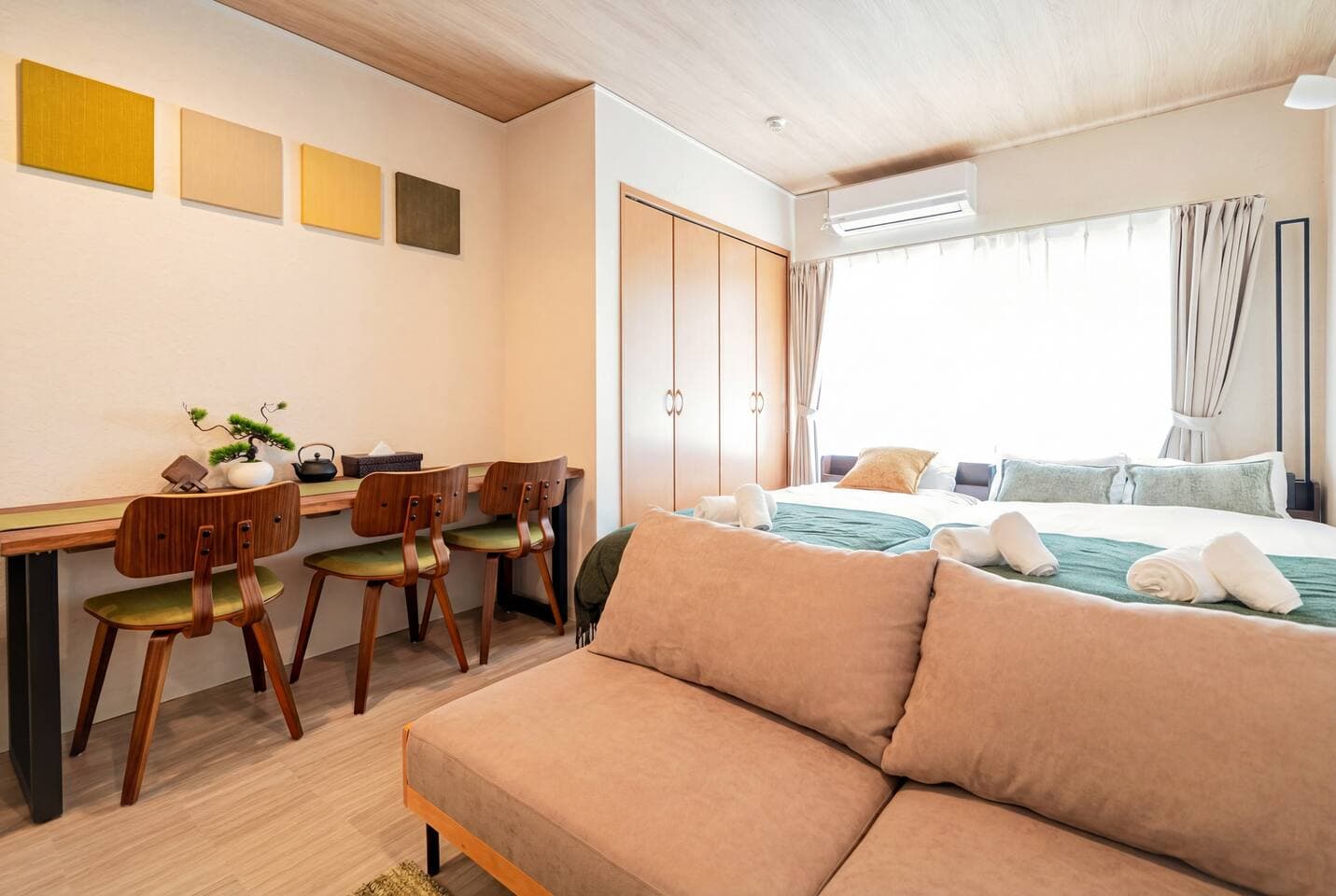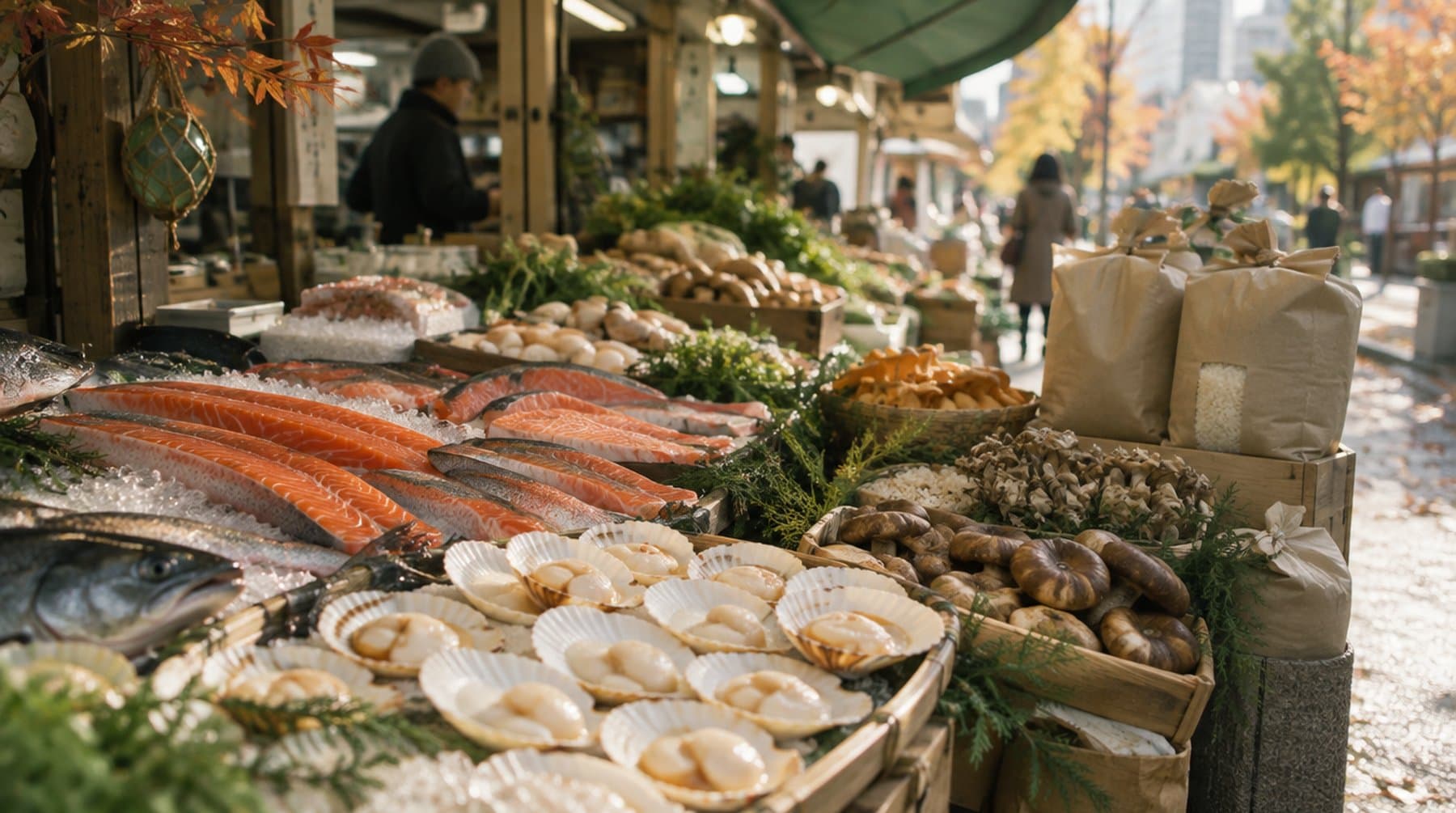

Autumn is the easiest time of year to eat well in Sapporo, because almost everything on the menu was grown or landed within a few hours of the city. Winter is the season Sapporo is famous for, but autumn is the season the island is harvesting, and it is the quietest stretch on our own calendar. This is what we tell guests who arrive between September and November: what is in season, where to buy it, what to cook in the apartment, and where we eat.
When does autumn in Sapporo actually happen?
September and October, and it is shorter than most visitors expect. Sapporo is two to four weeks ahead of Tokyo: while Tokyo is still humid in September, Sapporo has already turned cool and dry, which is why the food festivals here run in September rather than November.
Most years the first snow falls on the city in late October and does not settle, and real winter arrives with lying snow from late November. That gives autumn a clean shape: September is warm days and cool nights, October is jacket weather and the best colour, November is the handover month where you can get either.
Those weeks move every year, so pack for the range rather than a forecast you read in August. A week before you fly, check the Japan Meteorological Agency for temperature and the foliage reports each park publishes for itself. That is exactly what we do before we tell a guest what to expect.
What is actually in season in Hokkaido in autumn?
Autumn salmon and salmon roe, saury, scallops, new-crop rice, potatoes and pumpkin, mushrooms, and the last of the sweetcorn. Hokkaido supplies a large share of what the rest of Japan eats, so this is the one time of year the local supermarket and the tourist menu are describing the same thing.
Shinmai (new-crop rice) means rice from this year's harvest, and it reaches the shops from around October. Rice is the one item where the difference is obvious to anybody, including people who do not think they can taste rice.
| What | Roughly when | Where it is easiest |
|---|---|---|
| Autumn salmon (akizake) and ikura | September into October | Markets and supermarkets, and on every seafood-bowl menu |
| Saury (sanma) | September into October | Supermarket, whole, grilled at home |
| Scallops, squid, octopus | Through autumn | Markets, seafood-bowl restaurants |
| New-crop rice (Nanatsuboshi, Yumepirika) | From around October | Any supermarket, in small bags |
| Potatoes, pumpkin, onions, corn | September, corn ends earliest | Supermarket, roadside stands outside the city |
| Mushrooms, grapes, apples, pears | September into November | Supermarket and the autumn food events |
What should you eat in Sapporo in October?
Autumn salmon with its roe, this year's rice, new-crop soba, and apples: October is the month when all four are at their best at the same time, which is why locals call it the eating month rather than September. The salmon and ikura are at their fattest, shinmai reaches the shops, the first new-crop soba appears on menus (Hokkaido grows more buckwheat than any other prefecture, and new soba is a small October event of its own), and the apple and pear orchards west of the city are picking.
September is a different plate: saury, the last sweetcorn, grapes, and the big outdoor food event at Odori Park. November is different again: the salmon run ends, crab and oysters start to headline the menus, and the cooking turns to hot pots. The table is the version we give guests who ask which month to choose.
The months move by a week or two each year, so treat the table as most years, not a promise. The reliable check is the supermarket: whatever fills the front display the day you arrive is what is in season that week.
| Month | At its best | What it feels like |
|---|---|---|
| September | Saury, the last corn, grapes, potatoes and pumpkin coming in, the Odori food event most years | Warm days, cool nights, the busiest of the three months |
| October | Autumn salmon and ikura, new-crop rice, new-crop soba, apples and pears, mushrooms, pumpkin at its sweetest | Jacket weather, best colour, ginkgo in the second half |
| November | Last of the salmon, crab and oysters starting, root vegetables, hot pots | Handover month, first lying snow late in the month, quietest on our calendar |
Market or supermarket: where should you actually buy food?
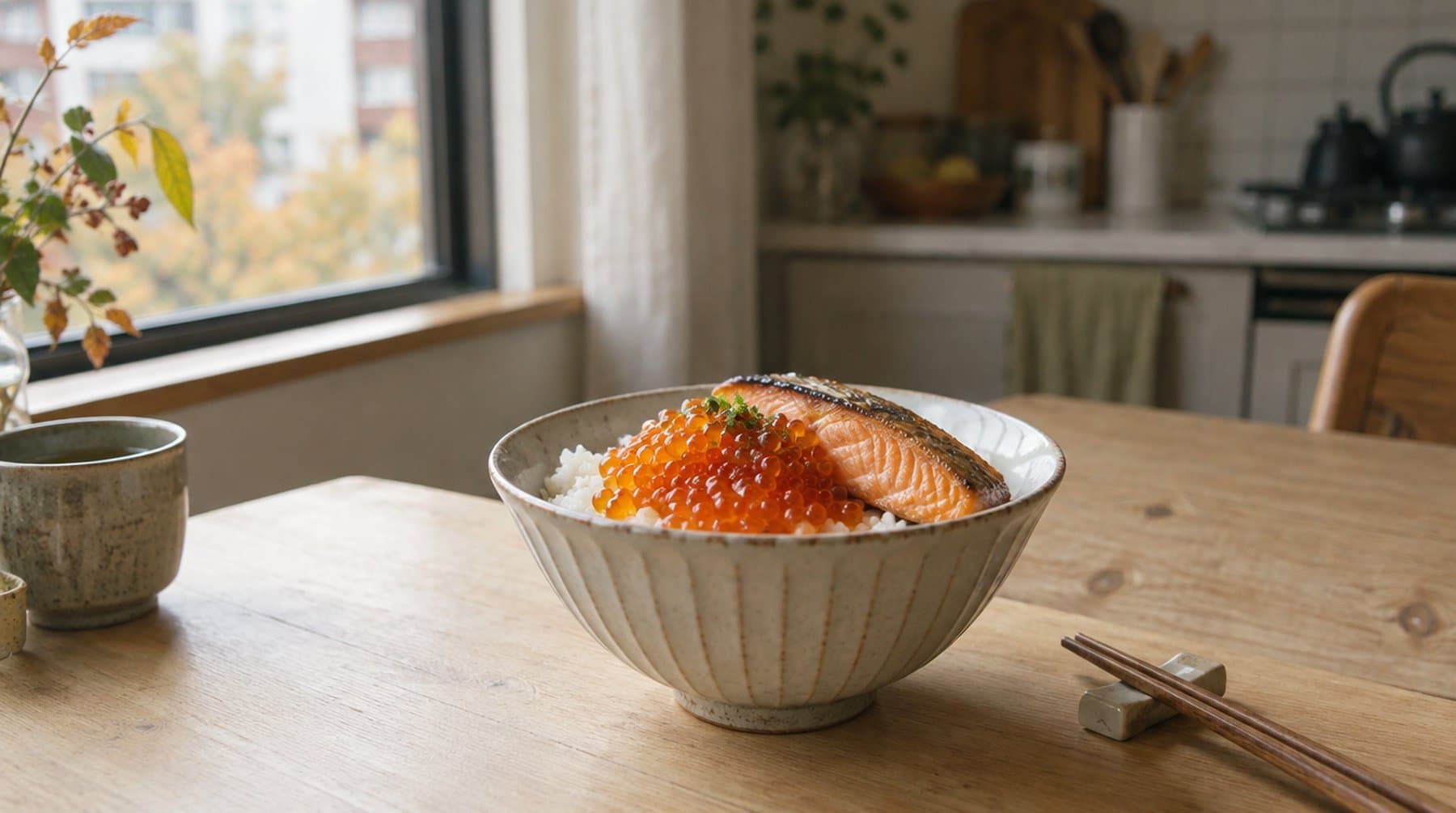
Go to a market to eat, go to a supermarket to cook. This is the single most useful thing we tell guests, and it saves people a lot of money in their first two days.
Sapporo's famous markets, Nijo Market in the centre and the Curb Market beside Sapporo Station, are set up for visitors: seafood bowls, grilled scallops, crab to ship home. They are a good breakfast and a good hour of your trip, but not the cheap way to fill a fridge.
For that, our guests use Dinner Bell, a supermarket five minutes' walk from the building and open 24 hours, which matters more than it sounds when your flight lands late. Two convenience stores sit two minutes away, also 24 hours. Autumn is when a Hokkaido supermarket is at its best: a whole saury, a pack of ikura, new rice and local vegetables cost a fraction of the same plate downtown.
What can you actually cook in the apartment?
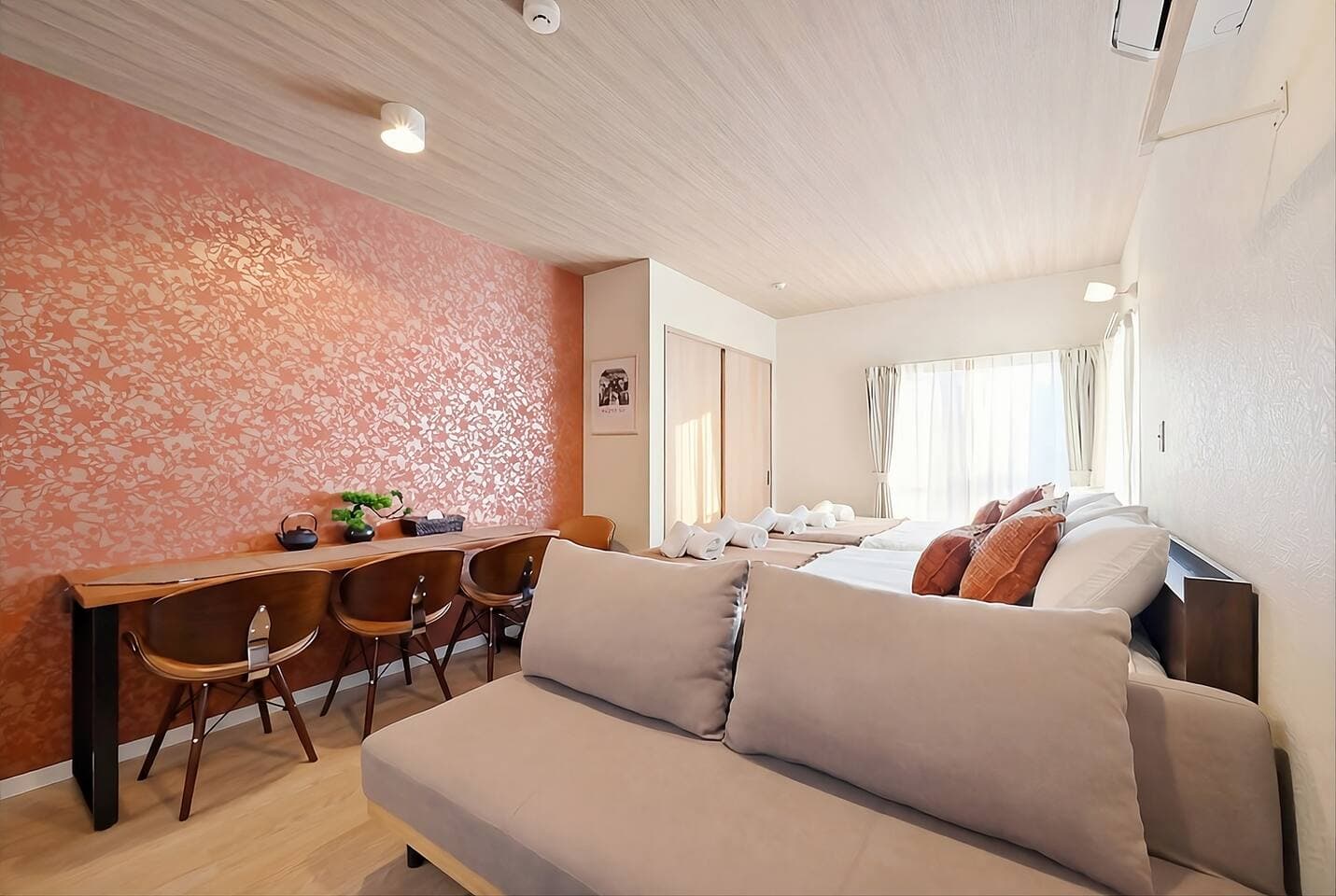
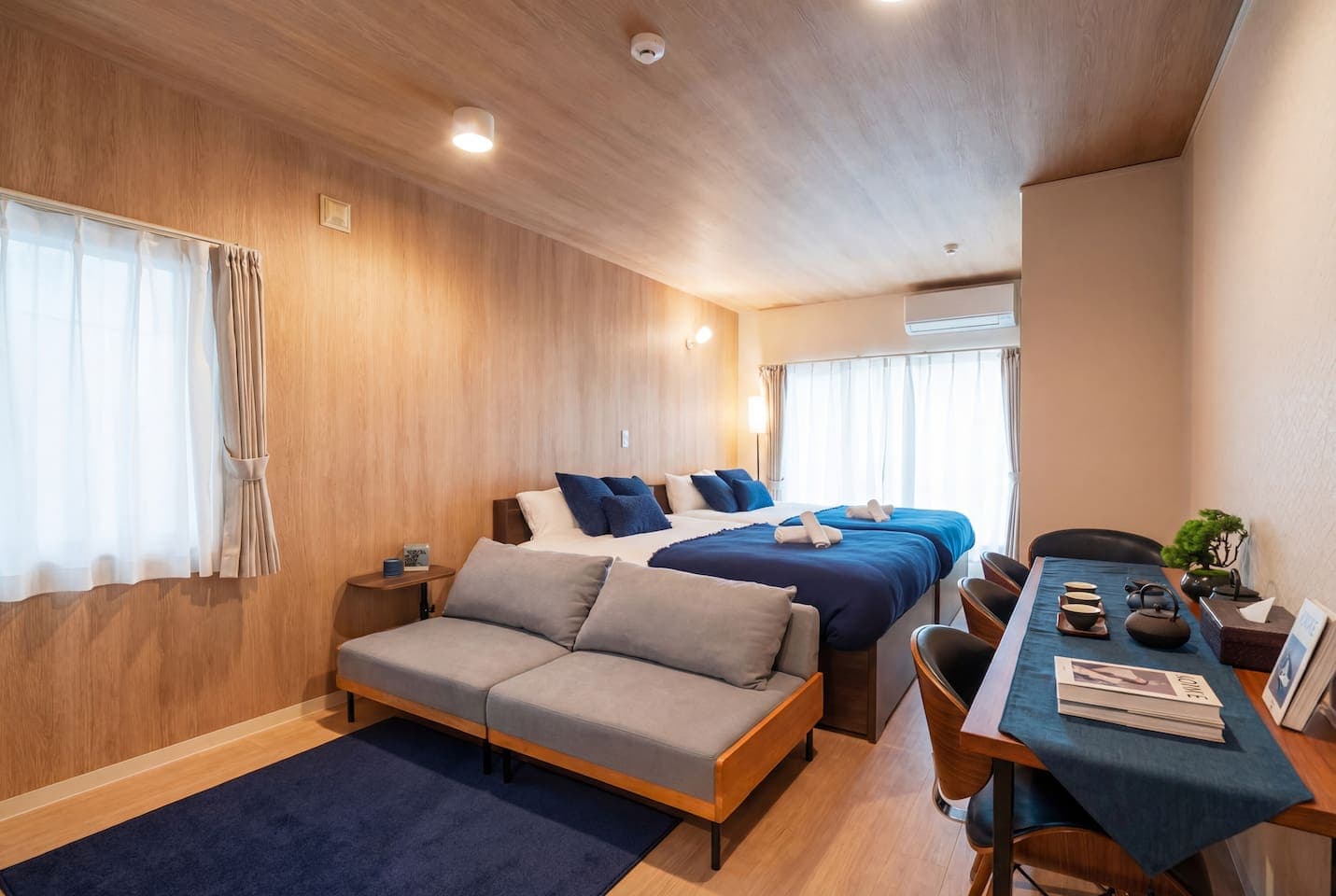
A rice cooker, a stove, a microwave, a full fridge and freezer, and the basic pots, pans and knives, which covers everything an autumn Hokkaido shop can throw at you. Our three SAPPORO NORTH apartments all have the same kitchen, plus a dining table you can sit around and a washer and dryer.
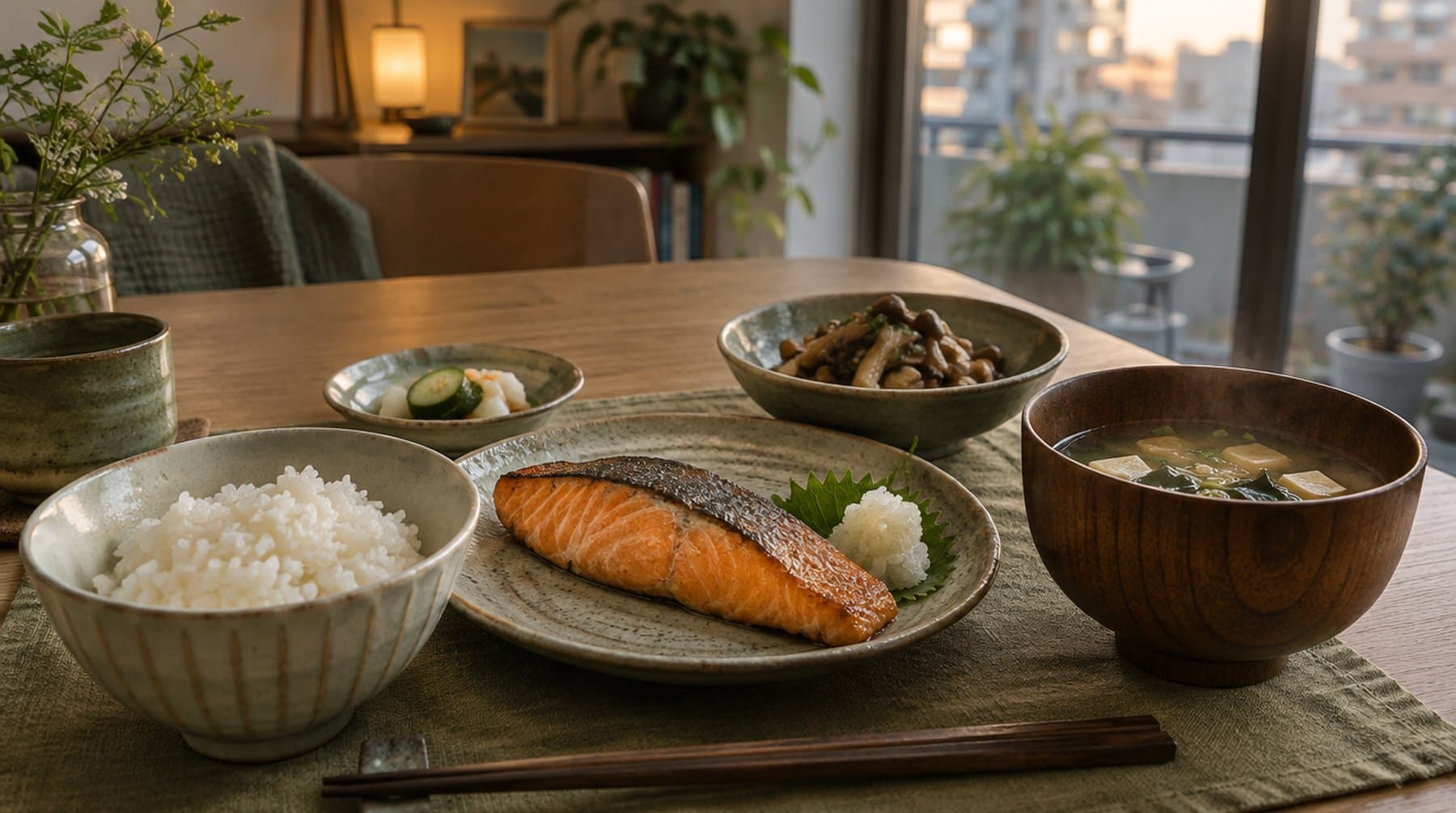
The honest limit is the oven: there is not one, so roasting is out. Everything else is not. The three things guests cook most here are a salmon and ikura bowl over new rice, a whole grilled saury, and a pot of soup with Hokkaido potatoes and pumpkin, in a city where soup curry is a local invention for a reason.
Check-in is from 16:00 and check-out is 11:00, and check-in is self-service, so a late arrival is not a problem. Both convenience stores and the supermarket are open when you get there.
Where do you eat around the apartments?
Within a ten minute walk of the door there are ramen shops, soup curry, a seafood bowl place, a soba restaurant and three halal kitchens, which is what a student neighbourhood next to a national university looks like. Kita ward is not a tourist district, so this is where people who live here eat.
The times below come from the manual we give our own guests. Closing days matter more than opening hours here: several of these are one-person kitchens with a fixed day off. Halal in the table means the shop says so itself, in its name or on its own listing, not a certification we have checked.
| Place | What it is | Walk | Closed |
|---|---|---|---|
| Futago Zan | Seafood bowls | 3 min | Mondays |
| Ramen Yah Yah Yah | Ramen, 11am to 11pm | 2 min | Open daily |
| Soup Curry Picante | Soup curry | 5 min | Open daily |
| Sobakiri Sakata | Soba | 7 min | Sundays |
| Watan Sapporo Halal Food | Indian curry, halal | 2 min | Open daily |
| Warung Jawa | Indonesian, halal | 2 min | Mondays and Thursdays |
| Dawat Cafe | Biryani and curry, halal | 4 min | Saturdays |
| Coffee Shop Ishida | Coffee | 3 min | Tuesdays and Wednesdays |
What is worth walking to in autumn?
The ginkgo avenue at Hokkaido University, six minutes from the door on foot. It is a long double row of ginkgo trees that turns solid yellow, most years in the second half of October, and the university opens the avenue for a short festival at the peak. The dates are announced each autumn by the university, so check them rather than trusting a month.
The rest of the city is close from here: Sapporo Station is two subway stops away, about four minutes, Odori Park is four minutes and Susukino six. Odori is where Sapporo's autumn food event sets up, most years through September, with prefecture-wide producers in booths down the middle of the park. If your dates are in September, it is worth checking the official site before you plan your meals.
See the Sapporo apartmentsCan you go fruit picking from Sapporo in autumn?
Yes, and the orchard towns are a day trip rather than a detour. Yoichi and Niki, about an hour to an hour and a half west of the city by train or car, are where Hokkaido grows its grapes, apples and pears, and the farms there open for picking through September and October most years, grapes first and apples later. A few orchards also sit inside the city limits in Minami ward, on the road out to Jozankei, if you would rather not leave Sapporo.
Each farm decides its own dates by what has ripened, so this is one of the things a month cannot tell you. Pick the farm, check its own page in the week before you go, and bring cash: the smaller orchards are cash only. Guests who do this usually come back with more fruit than the fridge wants, which is one more reason a kitchen with a freezer earns its keep in October.
When should you book an autumn stay in Sapporo?
For September, six weeks out or more, and for November you can usually decide much later. Autumn is not one market here, it is two: September is busy and November is the softest month of the year in Sapporo, and the gap is large.
Our own numbers say it plainly. Across our three Sapporo apartments, occupancy ran 86.7% in September 2025, 80.6% in October and 68.3% in November, against a Sapporo average of 82.0% over the twelve months to July 2026 (measured August 2026, method published on our operating data page). Those are our rooms rather than the city, but the shape holds across the market.
The median booking across our six rooms arrives 42 days before check-in, so half of all guests decide more than six weeks ahead. Book earlier if your dates touch a holiday weekend or the university festival week. If you are flexible, November is when a bigger apartment becomes affordable, and it is the last month before Snow Festival pricing takes over the calendar.
| Month | Our three Sapporo apartments, 2025 | When we would book |
|---|---|---|
| August | 83.9% occupancy | Six weeks out or more |
| September | 86.7% | Six weeks out or more, earlier around long weekends |
| October | 80.6% | About a month out; the ginkgo week goes first |
| November | 68.3% | Two to three weeks out is usually fine |
| December | 87.1% | Six weeks out; winter pricing has started |
Which apartment fits your group?
All three are one-bedroom apartments in the same building in Kita ward, four minutes' walk from Kita-18-jo Station on the Namboku subway line. Two of them combine, which is the option families and small groups usually want.
| Apartment | Sleeps | Suits |
|---|---|---|
| SAPPORO NORTH 1A (Red) | Up to 5 | Couples up to a small family |
| SAPPORO NORTH 1B (Blue) | Up to 5 | Same layout, second unit |
| SAPPORO NORTH 1C (Green) | Up to 4 | Two to four people |
| 1B + 1C together | Up to 9 | Two families or a group, two kitchens |