
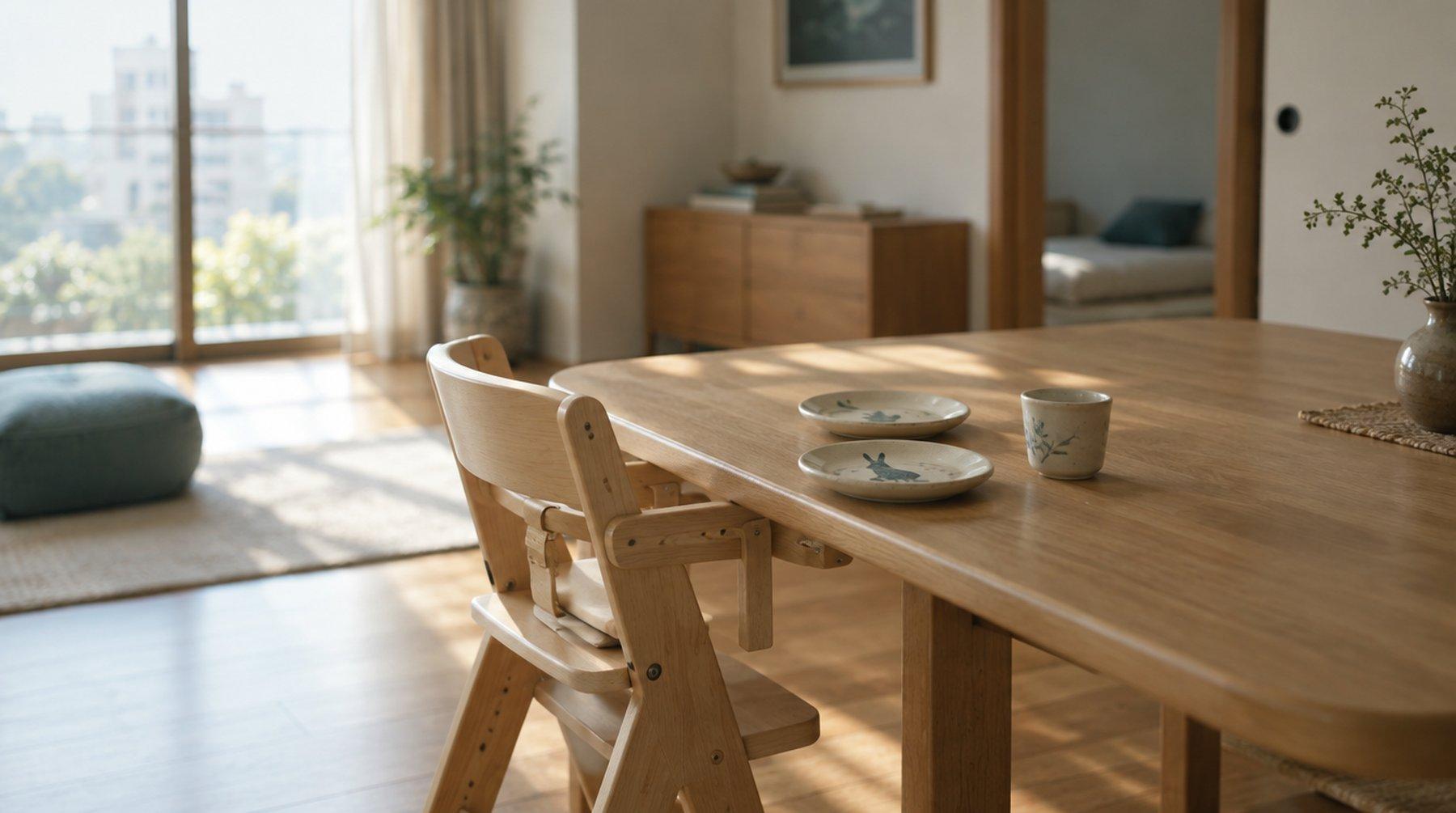
Families choose a room on four things before they think about baby gear: a place for everyone to sleep, laundry they can run daily, a bathtub, and a kitchen that can boil and reheat. In our three buildings and six rooms in Tokyo and Sapporo, all four are in every room, and the crib and high chair are in one room only, the one for ten (listing data for each room as of 24 November 2026; the equipment is published on our stay pages).
By families we mean guests travelling with children or a baby. They use beds and space differently from a group of adults, and they carry more luggage.
What do families look at when they choose a room?
The number of places to sleep, and whether anything will go wrong after they arrive. Of the 50 most recent reviews shown on our property pages (the latest from each listing, as of 24 November 2026), five mention travelling as a family, and three of those are from the upper floor in Kameari, the room for ten.
What they wrote about was cleanliness, finding everything they needed, children playing the board games, and room to park a large car. The one complaint was carrying big suitcases up and down a narrow staircase over three floors. In the rooms for five and for four, two reviews said four people felt a little tight.
Five reviews are not a trend, and we do not present them as one. But the praise and the complaint were both about space and getting around, not about baby equipment.
How should beds be counted against capacity?
By who sleeps where, not by the capacity number. Here is what our six rooms actually sleep on.
| Room | Capacity | Beds |
|---|---|---|
| Heiwajima | 2 | 2 singles |
| Kameari ground floor | 4 | 2 small doubles |
| Kameari upper floor | 10 | 3 doubles, 1 single, 1 sofa bed, 2 futons |
| Sapporo 1A and 1B | 5 each | 2 doubles, 1 sofa bed |
| Sapporo 1C | 4 | 1 single, 1 small double, 1 sofa bed |
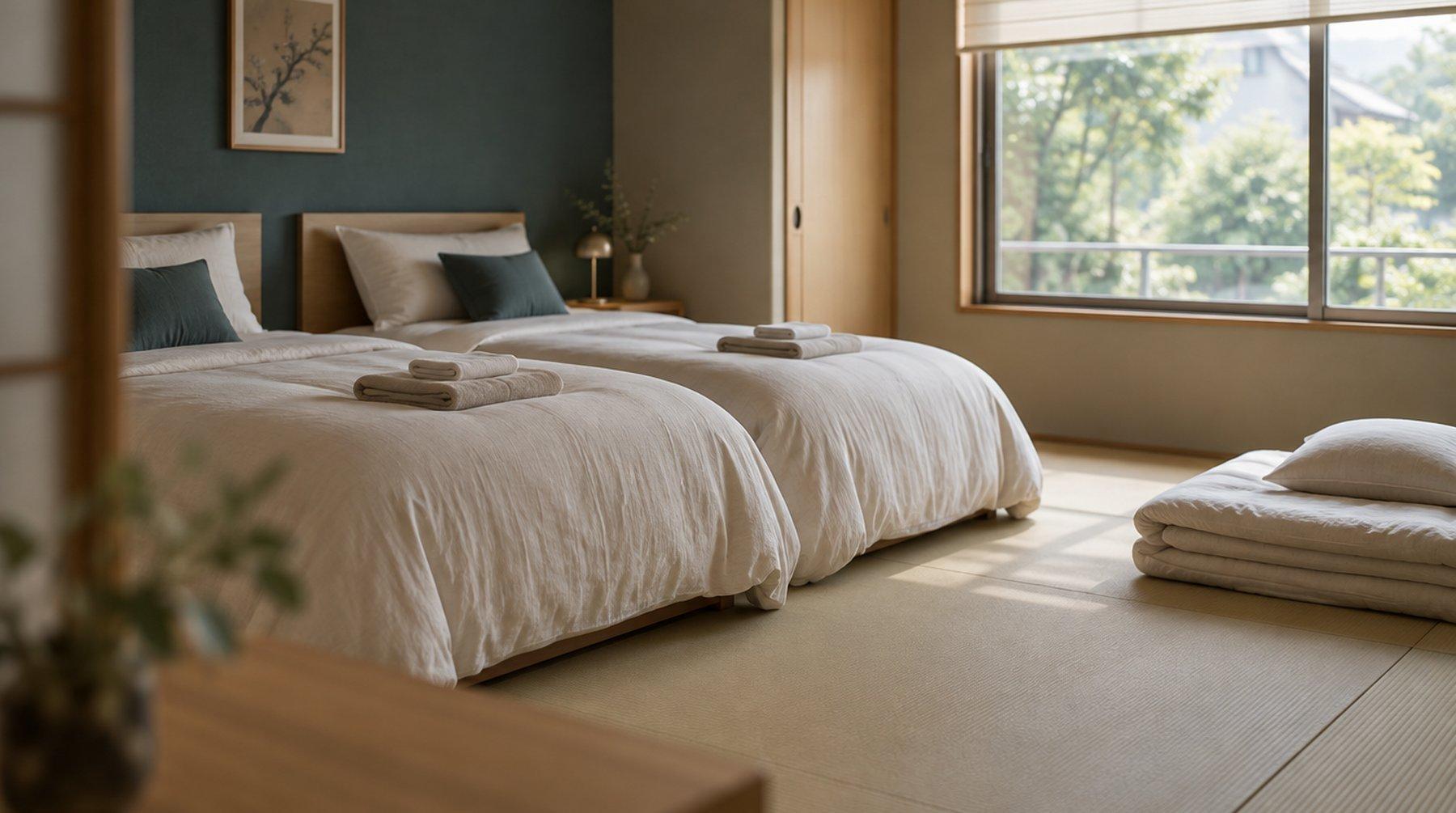
Parents share a double with a child, so a family below full capacity has room to spare. A family at full capacity puts its last member on the sofa bed, and the two reviews that called a room tight came from groups near the limit. Deciding what capacity to advertise is, as with furnishing a room, a decision about which reviews you will receive.
What does every one of our rooms have?
A washing machine, a bathtub, an electric kettle, a microwave, a fridge with a freezer, a rice cooker, room-darkening curtains, and spare pillows and blankets: all six rooms. A dryer is in five of the six.
For a family these are necessities rather than comforts. Children's clothes are washed almost daily, water is boiled for formula, baby food is reheated, and the room has to go dark for a nap. A Japanese bathroom has a separate washing area beside the tub, so a child can be washed sitting on the floor, and a room with a bathtub can say so plainly in a family listing. The same subject from the guest side is in our guide to Japan with a baby.
Should every room have a crib and a high chair?
We put them where the capacity is. The crib, the high chair, children's dinnerware and board games are all in a single room, the Kameari upper floor.
Family bookings gather in large rooms. The Kameari upper floor averaged 5.9 nights and 5.1 guests a booking, against 3.3 nights across our portfolio (selling a building whole or room by room). Our two-guest Heiwajima studio is set on its listing to allow infants but not children. The size of a room decides, before anything else, how many families it will see.
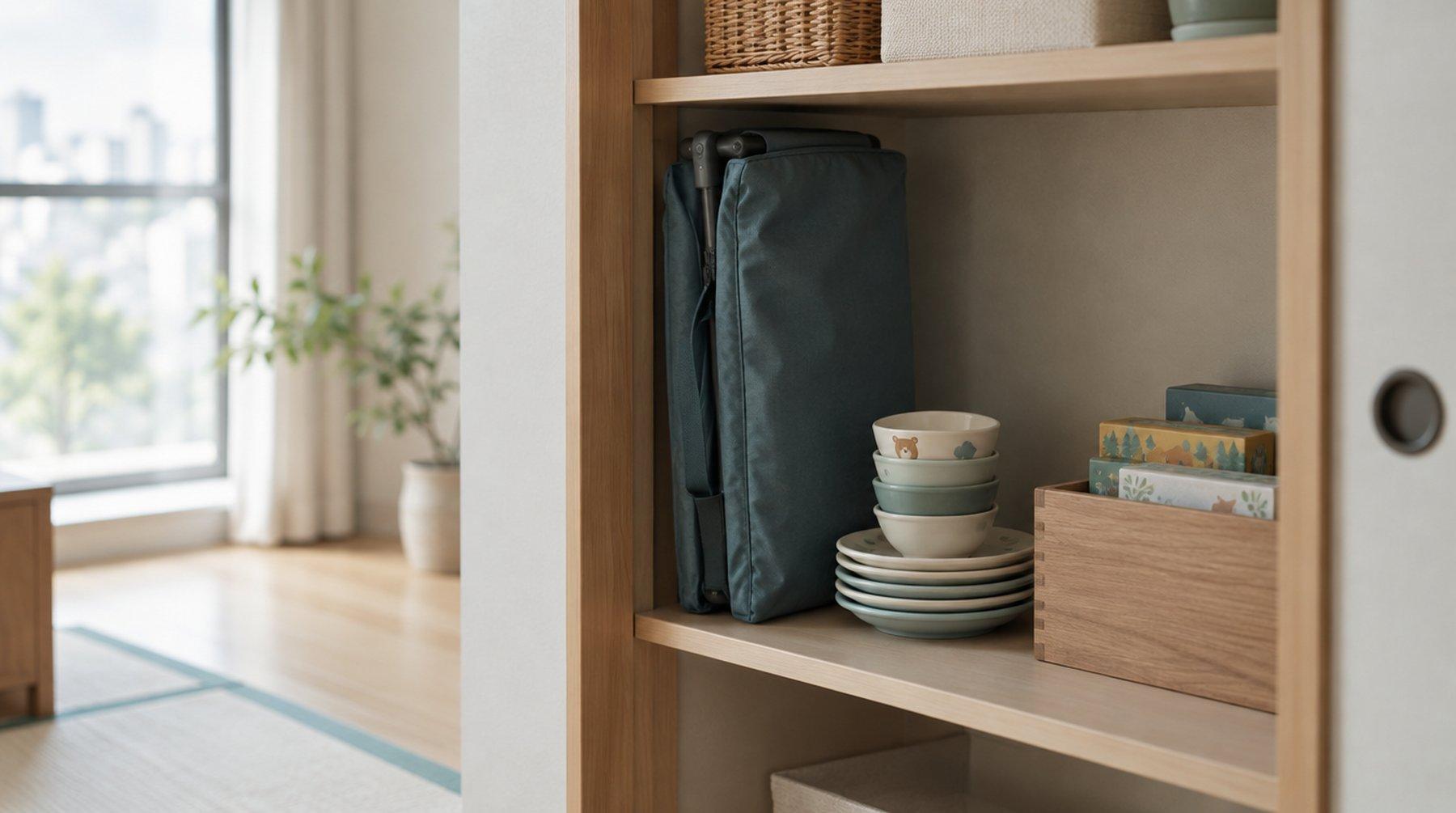
Between bookings that do not need them, these items live in a cupboard. We ask the child's age at booking and set the crib up only for stays that want it, and an infant sleeping in the crib is not counted in the guest total. We do not give purchase prices: they move with how and when you buy, and would not transfer to another property.
What should the listing say, and how?
List each item separately, describe the beds room by room, and state the inconvenient parts up front.
- A crib, a high chair and children's dinnerware are three separate amenities on a listing. If you have only one, list only that one.
- Write the beds room by room, such as two doubles and a sofa bed. A capacity number alone does not tell a family where everyone sleeps.
- Stairs, whether there is a lift, and any steps between the door and the bedrooms. A family carrying suitcases and a small child notices these first.
- If the building has more than one room, say which room the baby gear is in.
For photographs, include one per bedroom that shows every bed in it. How we order listing photos and text is in photos and listing copy.
How does a family booking change the work?
Fewer changeovers, each one heavier. Longer stays mean fewer cleans, but each checkout uses towels, linen and supplies for more people (amenities and consumables).
There is also one more thing to settle before arrival: the child's age, whether the crib is wanted, and who sleeps in which bedroom. Our buildings sit in ordinary residential streets, with quiet hours from 21:00 to 07:00. That is not a rule aimed at children, but saying it in the message before arrival is what keeps a first complaint from the neighbours from happening.
What should my property have?
That depends on capacity and layout, so we answer it after seeing the property. At a viewing we look at the number of bedrooms and how beds fit in them, the stairs and the storage, and propose what to buy for families and what to leave out.
Our fee is 20% of revenue plus actual cleaning, linen and supply costs (how the fee works). Our own rooms hold 431 reviews averaging 4.9 (as of 10 November 2026), but we do not promise any rating or occupancy figure for a property we take on.
Talk to us about your property