
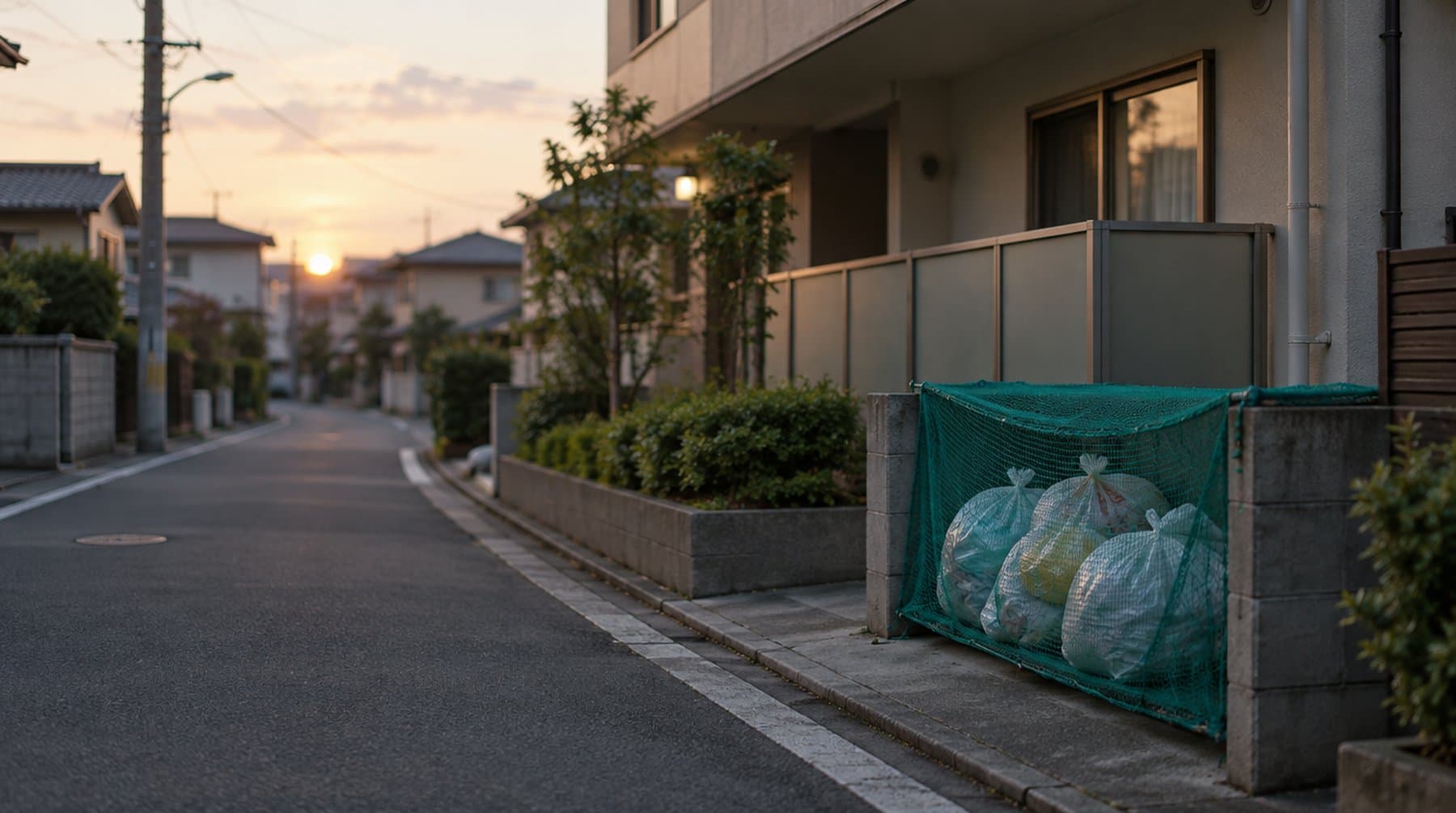
Neighbour complaints almost always reduce to three things: noise, rubbish, and people coming and going late at night. Genuinely serious incidents are rare. Most complaints start from a feeling, which is that nobody told me this was going to happen next door.
We run three buildings and six rooms in Ota City and Katsushika City in Tokyo and in Kita ward, Sapporo, all under 旅館業許可, the hotel-business permit that carries no annual night cap (results published on our operating data page). All three sit on ordinary residential streets within a four-minute walk of a station, and the houses next door have people living in them. At an average stay of 3.3 nights and 449 bookings across twelve months, each room sees strangers arrive with luggage about seven times a month (measured August 2026, covering August 2025 to July 2026). This piece is what we hand out first under those conditions, and who moves when something happens.
What do neighbour complaints actually contain?
There are surprisingly few varieties, and they cluster in time: between ten at night and eight in the morning. The contents are noise, rubbish, use of shared space, and bicycles and luggage.
The sequence is predictable too. The first time, somebody puts up with it. The second time, they look for a management company. The third time, they go to the ward office or the police. So the whole thing turns on whether you can receive the first one. A property with nowhere to send a first complaint hears about it from the local authority instead.
| Complaint | The situation behind it | What works upstream |
|---|---|---|
| Voices and footsteps at night | Arrivals after 10pm, larger parties | In-room notices, occupancy caps at booking |
| Rubbish day and sorting | Checkout day does not match collection day | Guests leave it inside; we take it out |
| Use of shared space | Talking in corridors, doors let slam | Photo guide to the route in and out |
| Bikes, luggage, parking | Rental bicycles, large suitcases | A named place for each |
Where do noise complaints actually stop?
Usually at an agreed schedule, not at construction work. Before thickening a wall, it pays to write down what happens after 10pm in concrete terms.
'Please be quiet' is not an instruction. What works with someone from a different country and a different set of household habits is a named behaviour in a named situation: after 10pm close the windows, do not hold conversations in the corridor, open suitcases inside the room rather than at the door. We keep ours in four languages, not for the translation but so that they get read.
Noise still happens. When it does, the night first-response line calls the room before it calls anyone else. Half the reason we run 24-hour guest response is not for the guests at all, it is for the neighbours.
Why is rubbish the first flashpoint?
Because collection days and checkout days do not line up, structurally. Japanese municipalities take burnable, non-burnable, plastics and bottles and cans on separate fixed weekdays, and a stay averaging 3.3 nights ends on whatever day it ends.
Given that, asking guests to carry rubbish to the collection point cannot work. Ours sort it and leave it in the room, and we take it out at the cleaning turnover. Part of the reason cleaning is 17.5% of revenue sits right here (measured August 2026, our own three buildings and six rooms). Rubbish is not an accessory to cleaning, it is a main line of neighbour management.
What does the sheet you hand out before opening actually do?
It does not reduce complaints. It changes where they go: to us instead of to the ward office.
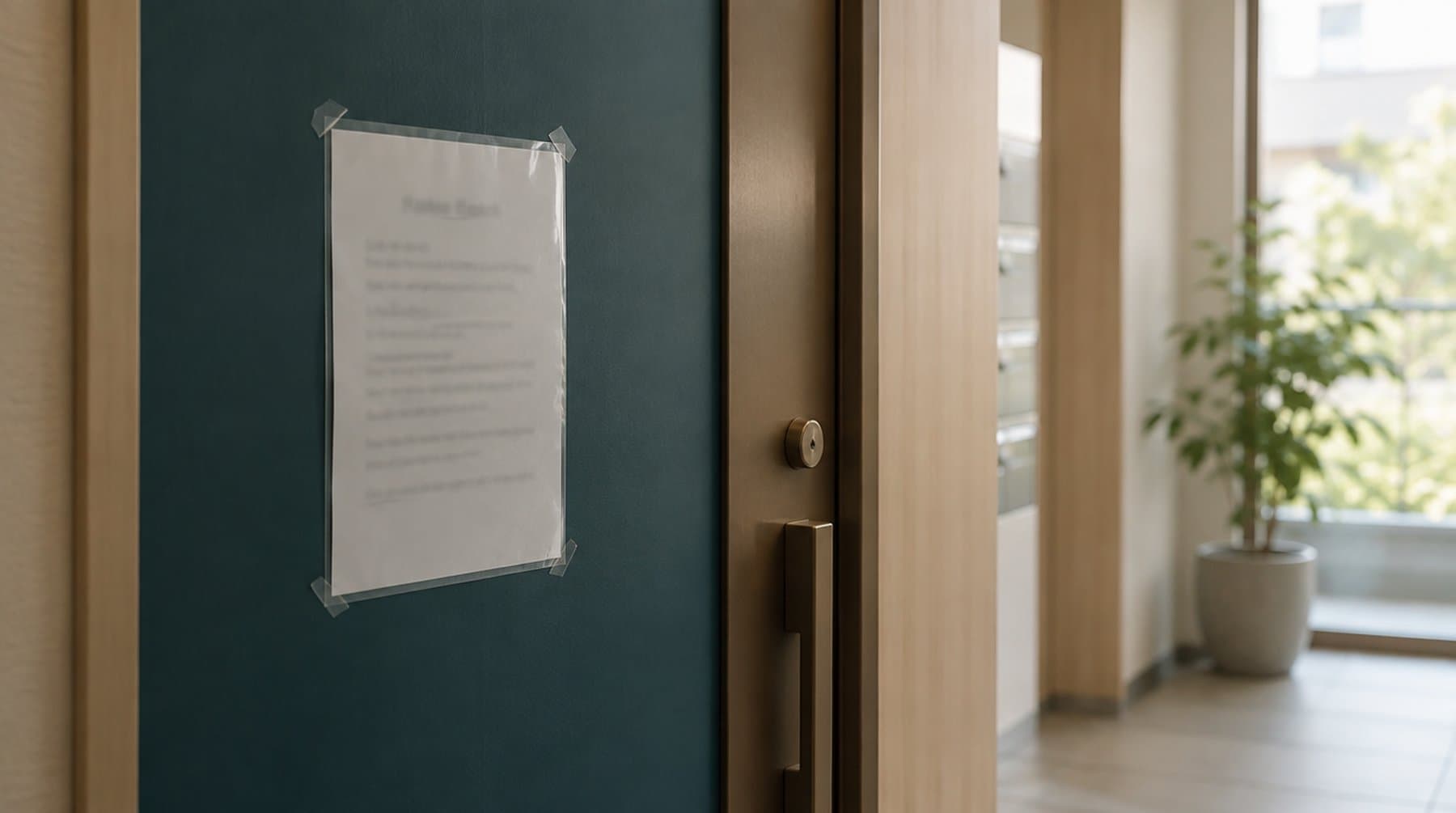
Whether an explanation to neighbours is a procedural requirement depends on the municipality and on which framework the property runs under. Confirm with the health centre and with the ward or city office covering the address whether it is required, and whether there are conditions on signage or on maintaining a complaints contact. Whether it is required and whether it is worth doing are separate questions. We walked all three neighbourhoods before construction started, handing over a sheet saying what the building would be, when it would open, and a number that answers at any hour. The full sequence is in how we took three buildings through the permit, and the ward-by-ward differences inside Tokyo are in Tokyo's 23 wards.
The effect does not show at opening. It shows six months later. People phone a name they know. They report a stranger.
What do we do when a complaint arrives?
We follow a fixed order. The point of fixing it in advance is to avoid having to think in front of an angry person.
- Take it on the spot. No argument, no explanation. Ask only when, what, and how long it went on
- Contact the room. Immediately if the stay is in progress, into the record if the guest has left
- Call back. Tell the neighbour what was done, the same day
- Log it. Same room, same hour, same category repeating means the problem is the operation, not the guest
- Change something. House rules, booking conditions or equipment. Without a change, the same complaint returns
Where does that order stop being enough?
At two points: incidents where police or the fire department attend, and anything needing a spending decision on repairs. Those go to the owner.
Where that line sits is a contract item to settle before starting. Left unsettled, a manager either escalates everything and burns the owner's patience, or escalates nothing and the owner finds out late. The related contract points are in switching managers without pausing bookings.
Can booking rules prevent complaints?
Yes. Most complaints come from party size and stay length, not from what happens inside the room.
A one-night booking for a large group is the highest neighbour risk we see across our three buildings: a late arrival, a lot of luggage, and nightfall before anyone has worked out where anything is. Minimum-stay settings and occupancy caps look like pricing tools; in practice they are neighbour-management tools. Since the median booking arrives about 42 days ahead (measured August 2026, on our data page), tightening the conditions does not leave the calendar empty until the last week.
Trying to solve it with price alone fails. A higher nightly rate still attracts large groups. Conditions work where price does not.
What changes if a management company takes this over?
Speed changes, and the fact that a line is always open. Responsibility itself does not move.
The permit stays on the owner's side and we run the operation. To a neighbour, the only question that matters is who picks up. We own buildings in Ota, Katsushika and Kita ward and live on those streets ourselves; we are not adding an address in a city we never visit.
The honest cases against us: a condominium whose management rules prohibit short-term letting, which is a rules problem before it is an operations problem, and a property where complaints have already reached the authority, which needs a person to go and meet people locally before it needs a management contract.
Talk to us about neighbour relations