
A property we cannot manage fails on one of five points: location, legal framework, cleaning economics, the building and its neighbours, or expectations that do not match what management is. Our fee is performance-based, from 20% of revenue, with no fixed charge in an empty month. If we take on a property that does not earn, the owner loses the setup money and we lose the time. A refusal is cheaper for both sides.
This is the decliner's account: what we look at during the inspection and where we say no. Figures are as of August 2026, from our own three buildings and six rooms in Tokyo and Sapporo over the twelve months from August 2025 to July 2026, published with the method on our operating data page. Whether a property suits short-term letting at all is tabled in turning an empty house into a licensed rental; this article is about the reasons a management company says no.
Which properties does a rental manager in Japan turn down?
Five reasons: two are known before the visit, two are decided on site, one comes out in conversation. Location and framework are settled by the address and the paperwork, economics and the building by walking through it, expectations by talking.
| Reason | What decides it | Can it be fixed? |
|---|---|---|
| Location | The address: outside Tokyo's 23 wards and Sapporo city, or far from a station | No |
| Framework | Whether the hotel-business permit (旅館業許可) is realistic; whether the owner wants to stay on the 180-night route | Yes, if the permit is realistic |
| Economics | The work of one cleaning against the nightly rate the property can carry | Sometimes, by design |
| Building and neighbours | Structure and leaks, the building's rules, a history of complaints | Depends on cost; rules cannot be changed |
| Expectations | Guaranteed occupancy, a fixed monthly sum, no involvement at all | Usually, by talking it through |
When does location alone rule a property out?
Anything outside Tokyo's 23 wards and Sapporo city is declined regardless of the property. The reason is on our side: we can only run a property to the standard of our own where our own buildings and cleaning teams already are.
Inside that area, distance from a station can still end it. Our three buildings stand 30 seconds from Heiwajima station, 4 minutes from Kameari and 4 minutes from Kita-18-jo on foot, and most visitors to Japan do not rent a car. Past about ten minutes' walk, a property fills only by cutting the price, and the cleaning cost does not fall with it. Ward-by-ward and district notes are in Tokyo's 23 wards and starting a rental in Sapporo.
When does the legal framework rule a property out?
A property whose owner wants to stay on the residential-lodging notification (民泊新法, capped at 180 nights a year) is not something we take. AG STAY holds no registration as a residential accommodation management operator (住宅宿泊管理業者) and does not plan to obtain one. All six of our own rooms run on the hotel-business permit, and we manage only properties that hold that permit or are on the way to it.
The other case is a property where the permit is wanted but unlikely. Three things decide it: zoning, the building's structure and its fire equipment, and the decision is not ours but the public health centre's and the fire department's, through a preliminary consultation. We run that check after the inspection, say so at once if the outlook is poor, and never recommend works with no prospect behind them. The economics of the two frameworks are compared in permit or notification; the permit procedure is in getting a hotel-business permit.
When do the economics rule a property out?
We decline a property where the work of one cleaning does not balance the nightly rate it can carry. Across our own portfolio cleaning takes 17.5% of revenue, the largest of seven cost lines that together take 27.9%. The average stay is 3.3 nights, which means roughly 7.6 changeovers per room per month.
That share moves a great deal with the property. A large detached house in a location that cannot carry the rate, or a very small room at a low rate, can push cleaning alone past 30% of revenue; add our fee of 20% and the other cost lines, and the owner's share threatens to fall below 40%. We do not guarantee an amount, but we can estimate the shares on the day of the visit. A minimum stay or a cleaning fee sometimes fixes it; if nothing does, we decline. The cost lines are broken down in operating costs and the owner's share in the monthly P/L.
When do the building and the neighbours rule a property out?
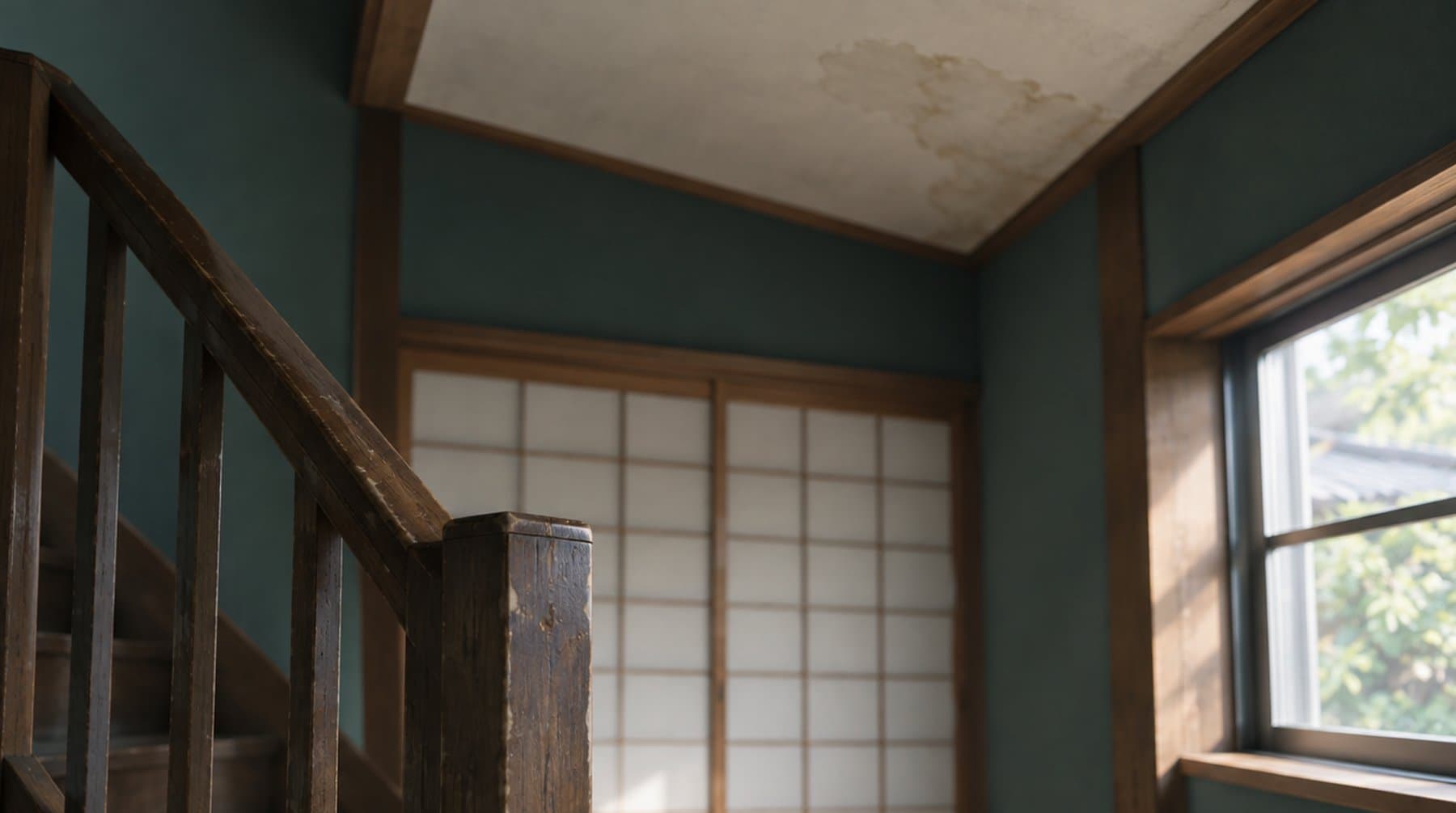
A building that needs structural or leak repairs first, and a condominium unit whose building rules (管理規約) prohibit short-term letting, are both declined. The first is a matter of cost: recovering repair money from rental income takes too many years. The second is nothing we can change, so we ask to see the original rules before the visit.
For neighbours we look at history. Where a previous operator drew complaints, the building manager or the notice board usually tells us, and neighbours who fell out once look at the second operator the same way. We sometimes take such a property, on the condition that we speak to the neighbours ourselves before opening. The complaints that actually arrive are in neighbour complaints.
When do expectations rule a property out?
A promised occupancy figure, a fixed sum every month, or no involvement at all after signing: if any of the three is asked for, we say plainly that we are not the right company.
Our own occupancy averaged 83.6% over the twelve months and ranged from 76.3% to 90.3% by month. That is our record, not a promise for anyone else's property. A fixed sum is what a master lease offers, and what is left at the end differs from management (master lease or management). Even an owner who wants no involvement gets pricing policy and repair decisions back once a month. One more case is a wait rather than a no: when our five places are taken. We manage at most five properties at a time, and while a place is occupied we can still start the permit work.
Why is a refusal cheaper for the owner too?
The cost of being turned down is the half-day of the inspection. The cost of not being turned down is the permit, the interior and the furniture, and then every month of carrying a property that does not earn. Our fee starts at 20% of revenue, so with no revenue nothing comes to us either, and we have no motive to take a property that will not earn.
A manager on a fixed monthly fee sits on different ground: the fee arrives in an empty month too, so the reasons to decline are thinner. Before signing, ask a company how many properties it has turned down. A company that answers none is selecting by results after the fact. The fee models are compared in what management costs.
What should an owner do after being turned down?
The next step depends on the reason. The first two of the five can be judged from photographs and a rough address alone.
- Location: find a company that runs its own properties in that town. An operator with its own buildings there is a safer bet than the top of a comparison site
- Framework: check the permit outlook with the local public health centre. If it is realistic, come back to us
- Economics and building: put ordinary letting, monthly furnished letting and a sale side by side. Short-term letting is one option, not always the best one
- Expectations: run it yourself (self-managing or hiring an operator) or take a master lease for a fixed sum