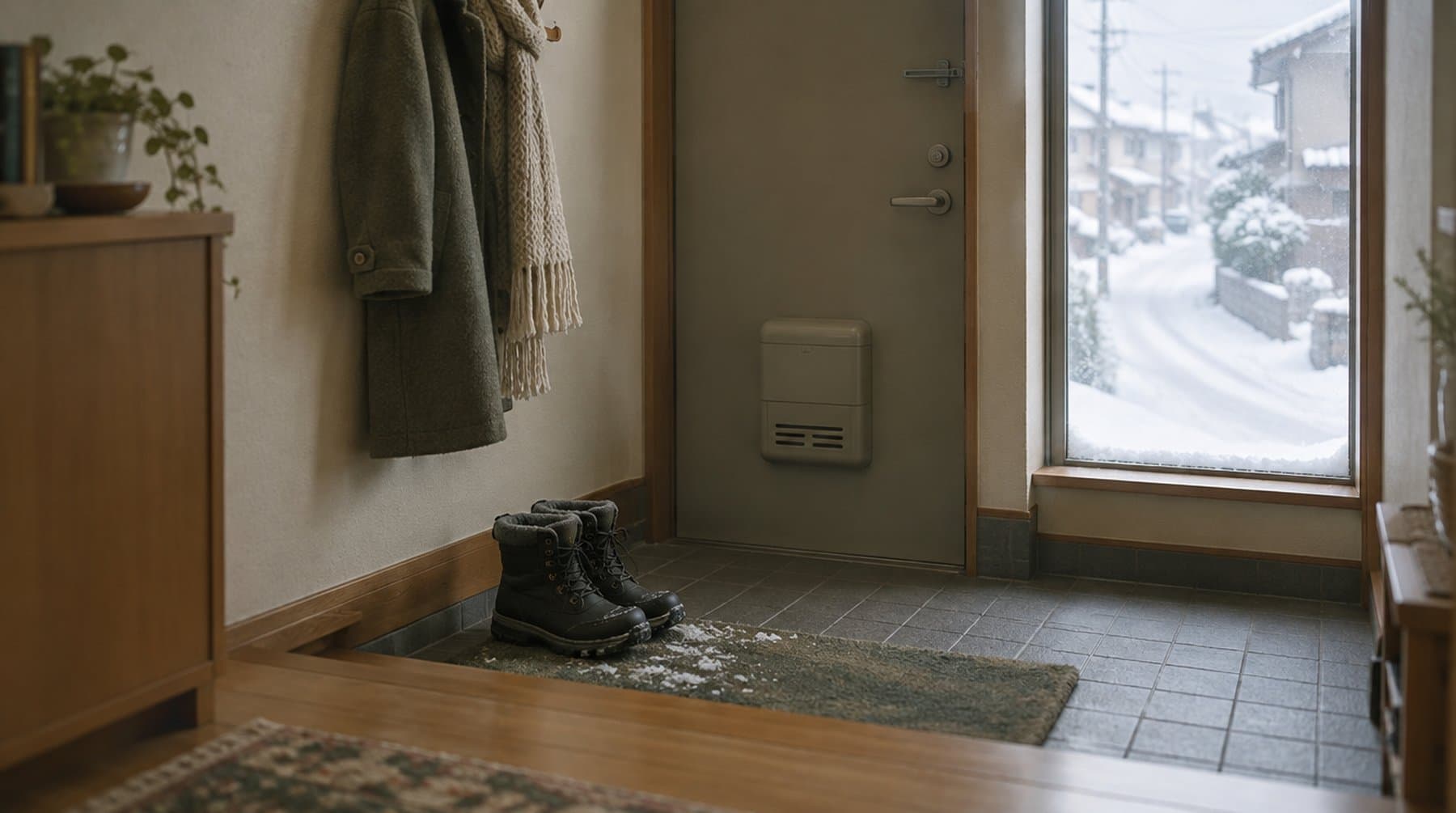

Bring fewer clothes than you think and better shoes than you think. That is the whole packing list for a Hokkaido winter, and the rest of this article is the reasoning. We run three apartments in Sapporo's Kita ward, all with a washer-dryer, and winter is our busy season: in our own twelve months to July 2026, the Sapporo rooms ran 87.1% occupancy in December, 83.9% in January and 94.0% in February, against 82.0% for the year (measured 21 August 2026, method at our published operating data). We watch what guests arrive with. The ones who struggle are almost never under-dressed. They are over-packed, and they are wearing the shoes they wore at home.
How cold is Hokkaido in winter, really?
Below freezing on most days from December to February, with snow lying on the ground from late November until spring, so the question is not whether it is cold but what kind of cold. Sapporo cold is dry and often still, and it is punctuated by strongly heated interiors: shops, subway cars and apartments. You cross a thirty-degree gap every few minutes all day, which is why a single heavy coat over a thick sweater is the wrong answer: fine outdoors, sweating indoors, and damp clothes are what make you cold later.
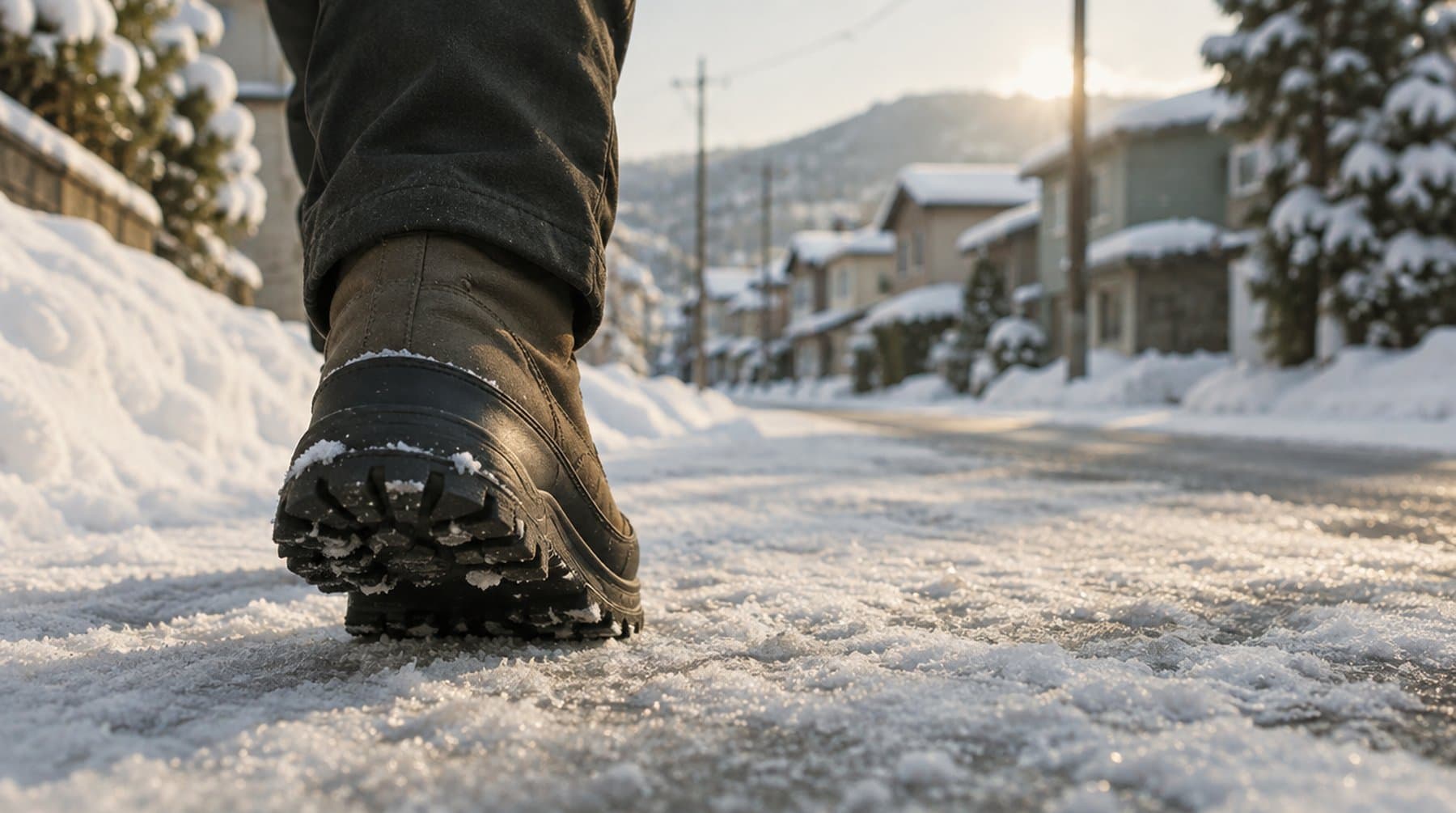
The other thing first-time visitors underestimate is the ground. Sapporo's pavements are packed snow and polished ice for months, cleared to a hard surface rather than to asphalt. The air is manageable in ordinary winter clothing. The ground is what puts people in a clinic on their second day.
What shoes work on Sapporo's icy streets?
Waterproof, ankle-high or better, with a soft rubber sole that has real tread: that combination matters more than anything else in your bag. Leather-soled shoes, fashion sneakers and anything with a hard, flat sole belong at home. If the boots you own already meet the description, bring them. If not, do not buy expensive technical boots for one trip: Sapporo sells clip-on rubber spikes at convenience stores and station kiosks all winter, and locals use them on ordinary shoes when the ice is bad. Buy a pair on your first walk to the subway and keep it in your coat pocket.
Two habits do as much as the sole. Walk the way Sapporo walks: short steps, foot landing flat, weight over the front foot, hands out of the pockets. And stamp the snow off outside and leave the boots in the genkan, the sunken entrance every apartment we run has for exactly this: slush tracked across the floor is the one thing our cleaners genuinely dislike.
What clothing do you actually need?
Three thin layers beat one thick one, and the outer layer's job is wind and snow, not warmth. The table is the list we would pack ourselves for a week, whatever the length of the trip; the reason a week's worth is enough for a fortnight is in the next section.
| Item | Bring | Why |
|---|---|---|
| Base layer, top and bottom | 3 to 4 sets, wool or synthetic | The layer that gets damp and washed; cotton holds sweat and chills you |
| Mid layer | 1 fleece or light down | Comes off indoors; this is what you carry, not wear, half the day |
| Outer coat | 1, windproof and water-resistant, knee-length if you can | Keeps snow off; does not need to be arctic-rated for city walking |
| Hat, gloves, neck | 1 each, plus a spare pair of gloves | Gloves get wet first and dry slowest; the spare is worth its weight |
| Socks | 4 to 5 pairs, wool blend | Change them the moment they are damp; feet are where cold starts |
| Indoor clothes | 1 light set | Apartments are warm; you will not sit indoors in a sweater |
What can you leave at home if the apartment has a washer-dryer?
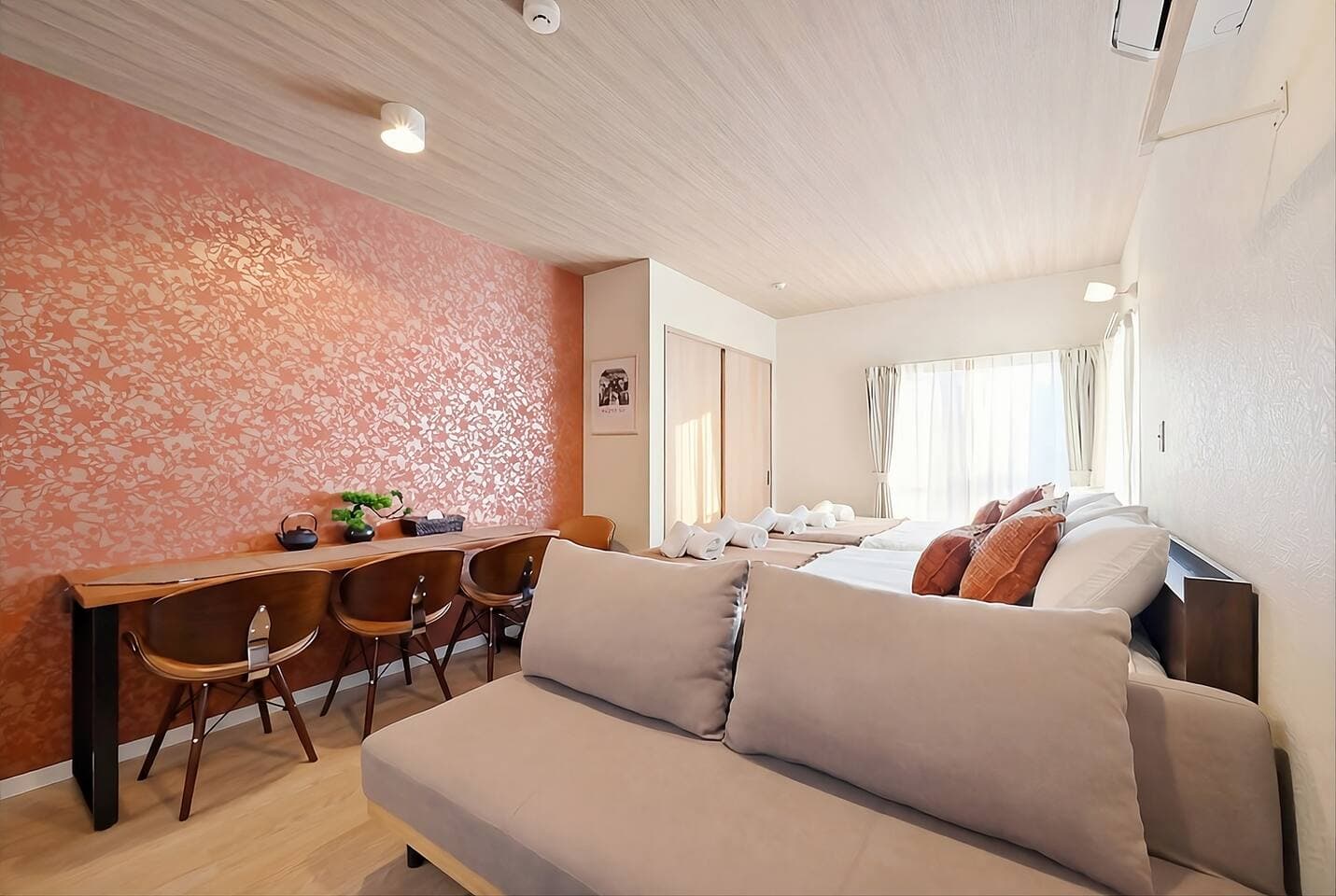
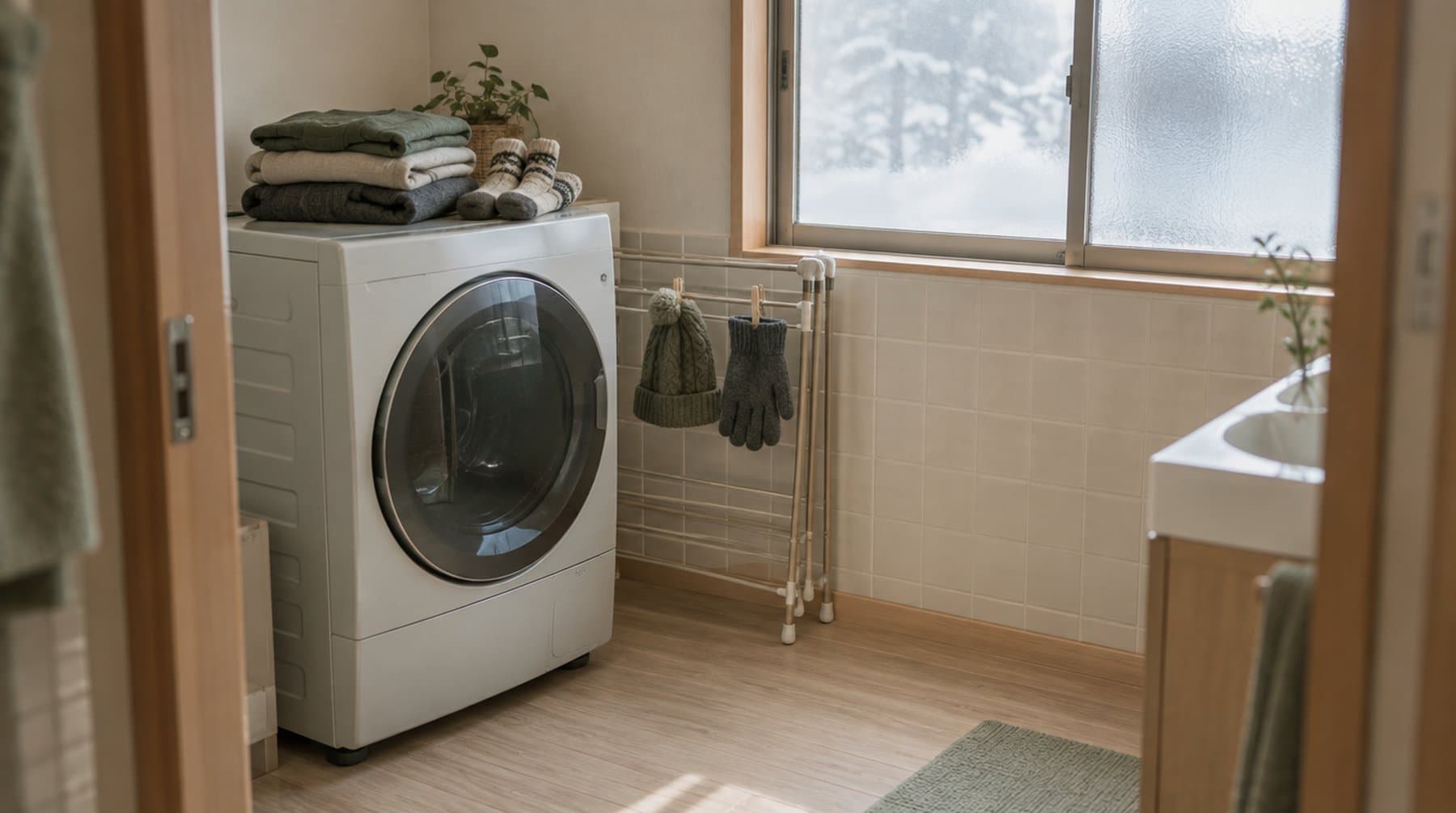
Roughly half the clothes, and all of the anxiety about wet gear. Each of our three Sapporo apartments has a washer with a dryer function, an indoor drying rack and an iron, so a load that goes in after dinner comes out dry before breakfast. That turns four sets of base layers and five pairs of socks into enough for any length of stay, and it solves the problem that ruins ski trips more often than cold does: gloves, hats and thermals that are still damp at eight the next morning. Our average stay is 3.3 nights, short enough that many guests never run the machine; the ones on ten-day ski itineraries do, and they arrive with cabin bags.
Two practical notes. A Japanese apartment washer-dryer is compact, so run it nightly rather than saving up a week; and heavy outerwear does not go in it. Hang the coat and ski shell on the rack near the heating and they are dry by morning. Whether the place you book has a dryer is worth checking before you decide what to pack: a washer alone, in a Hokkaido winter, dries nothing. Why an apartment makes a better ski base than a hotel for exactly this reason is in our guide to skiing from Sapporo.
What is already in the room, so you do not pack it?
Toiletries, towels and the appliances, which removes a surprising amount of the bag. In all three SAPPORO NORTH apartments: shampoo, conditioner and body soap, hand soap and a toothbrush kit, fresh towels for every guest, a hair dryer, an iron, an electric kettle, a stocked kitchen with a stove, microwave and fridge-freezer, heating in the room, Wi-Fi, and hangers in the closet. Bring your own moisturiser and lip balm, though: the heated indoor air of a Hokkaido winter is very dry and this is the item guests most often go out and buy on day two.
Everyday consumables are a two-minute walk away. There are convenience stores within 2 minutes of the door and a supermarket within 5, both of which sell the disposable hand warmers, spare gloves and cold medicine you may have wondered about packing.
What do winter visitors most often forget?
- Sunglasses. Snow glare on a clear day is stronger than most people expect, and Sapporo has plenty of clear days.
- A power bank. Cold drains phone batteries fast, and the door code to a self check-in apartment lives on your phone.
- A small dry bag or plastic bag for wet gloves and hats, so they do not soak the rest of the backpack.
- Slip-on indoor shoes or thick socks for the apartment, if you dislike walking on bare floors.
- A collapsible umbrella is not one of them. Sapporo snow is dry and brushes off; nobody carries an umbrella in it, and it catches the wind.
When should you book a winter stay in Sapporo?
Earlier than for any other season, and earliest of all for the Snow Festival week. February is the busiest month of our year: 94.0% occupancy in February 2026 across our three Sapporo rooms, against a median booking-to-arrival gap of 42 days across all six rooms (our own data, measured 21 August 2026). The 2027 festival runs 4 to 11 February and the rooms nearest the subway go first; what the week is like and where to base yourself is in our Snow Festival guide. December and January are only slightly softer. For everything else about the season, from what to eat to how the city clears its roads, start with our winter in Sapporo guide.
Check-in at all three apartments is self service from 16:00, so a late flight into New Chitose does not need a front desk waiting up for it, and the subway from Sapporo Station puts you four minutes' walk from the door at Kita-18-jo.
Check winter dates in Sapporo