
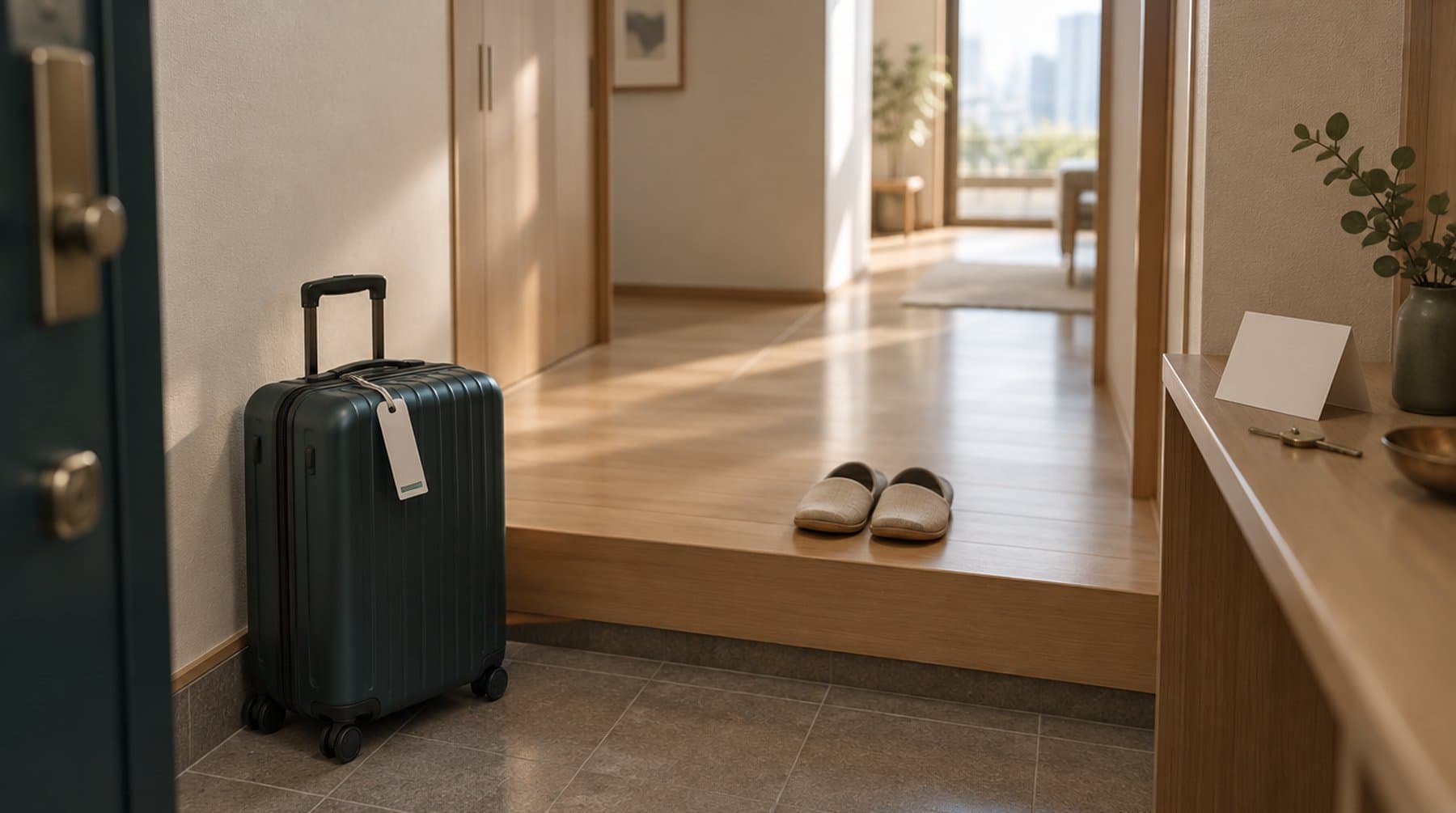
Looking after foreign guests does not take a team that speaks many languages. It takes one short message the guest can read before arrival, and a way of explaining the everyday rules of Japanese housing, like rubbish sorting and quiet, before they come up. Most problems with guests from abroad start with something nobody told them.
Across our own three buildings and six rooms, the 50 most recent reviews published between 29 May and 17 October 2026 came in seven languages, and only five were in Japanese. Nearly all our guests come from outside Japan, and the overall rating stands at 4.9 across 398 reviews (measured 1 October 2026, published as operating data).
How many of the guests are actually from abroad?
Of those 50 reviews, 45 were written in a language other than Japanese. English accounted for half; the rest were Chinese, French, German, Korean and Turkish.
Split by city, the difference is sharp. Among the 24 reviews for our two Tokyo buildings there was not a single one in Japanese; all five Japanese reviews sat among Sapporo's 26. Sapporo also had six in Chinese. The same template for guest messages works in both cities, but which language to polish first depends on where the property is.
A review's language is not a passport, and we do not treat it as one. Plenty of people from non-English-speaking countries write in English, and guests who leave no review are not counted at all. Even so, the safe working assumption is that instructions written only in Japanese will go unread by most of the people staying.
| Review language | Reviews |
|---|---|
| English | 25 |
| Chinese (simplified and traditional) | 9 |
| Japanese | 5 |
| French | 4 |
| German | 3 |
| Korean | 3 |
| Turkish | 1 |
Which languages does an operator need to answer in?
We answer in Japanese and English. Guests may review in their own language, but the messages that arrive through the booking platforms mostly come in English (does a rental need 24-hour guest response).
What matters more than the number of languages is writing that survives machine translation. One action per sentence. Not "the shop nearby" but "out of the front door, turn right, second building". Anything hard to describe goes in as a photograph instead.
What goes in the message before arrival?
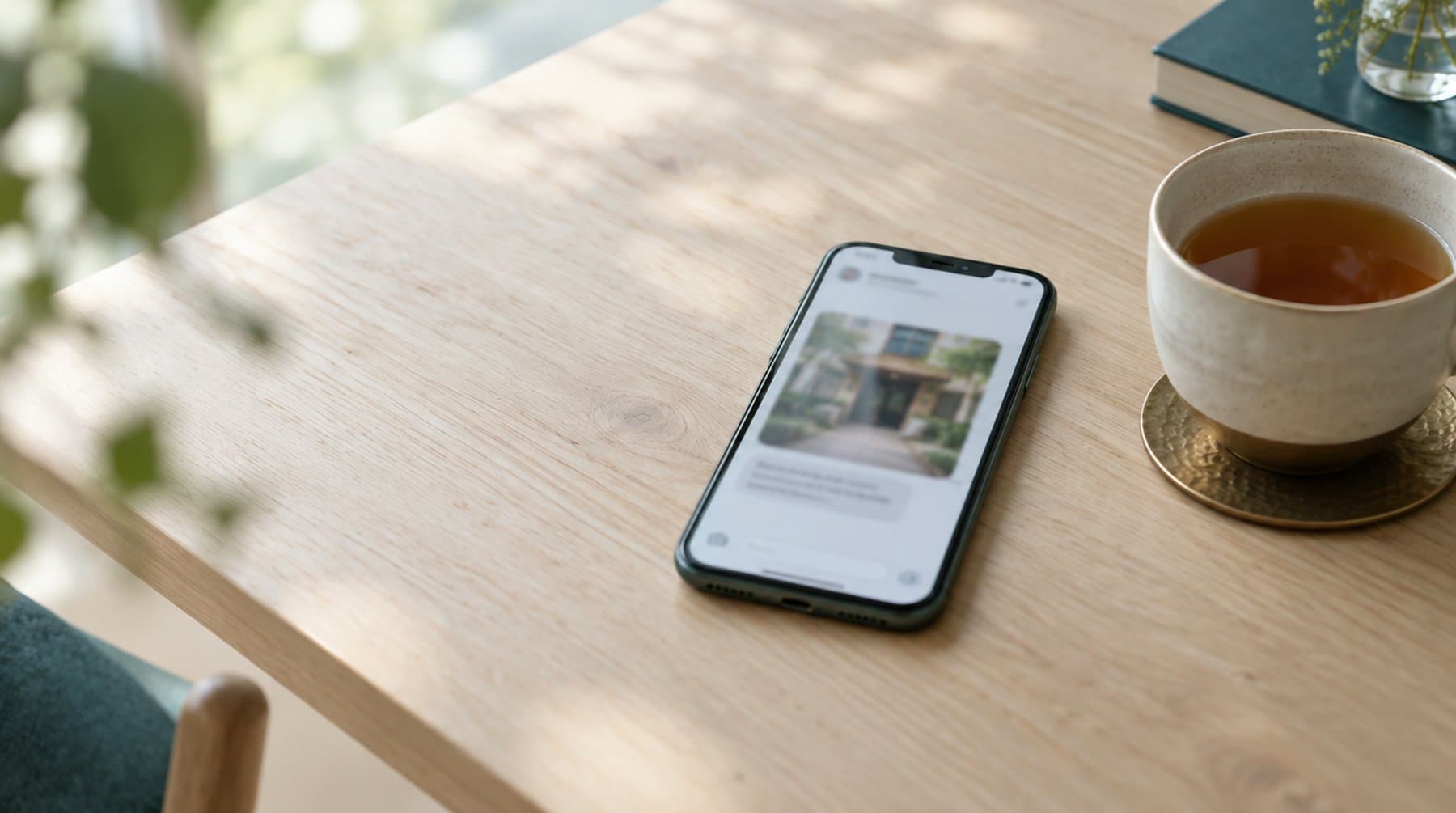
Before any door code, we ask the guest to complete the guest register (宿泊者名簿, the record of everyone staying that a licensed property keeps). Only once it is done do we send the check-in instructions with photographs. Guests without an address in Japan are also asked for a copy of their passport, and the message explains why.
The order is deliberate. Send the door code first and some guests will arrive with the register still empty, and the chasing starts. Make the register the condition for the instructions and no chasing is needed.
Every room is self check-in, so this one message does the job of a front desk. It carries:
- The walk from the station to the building entrance in photographs, one at every turn
- How to get in: keypad or smart lock, step by step for each building (key handover)
- Check-in from 16:00, check-out by 11:00 (10:00 in one room)
- No smoking indoors, no parties, no pets
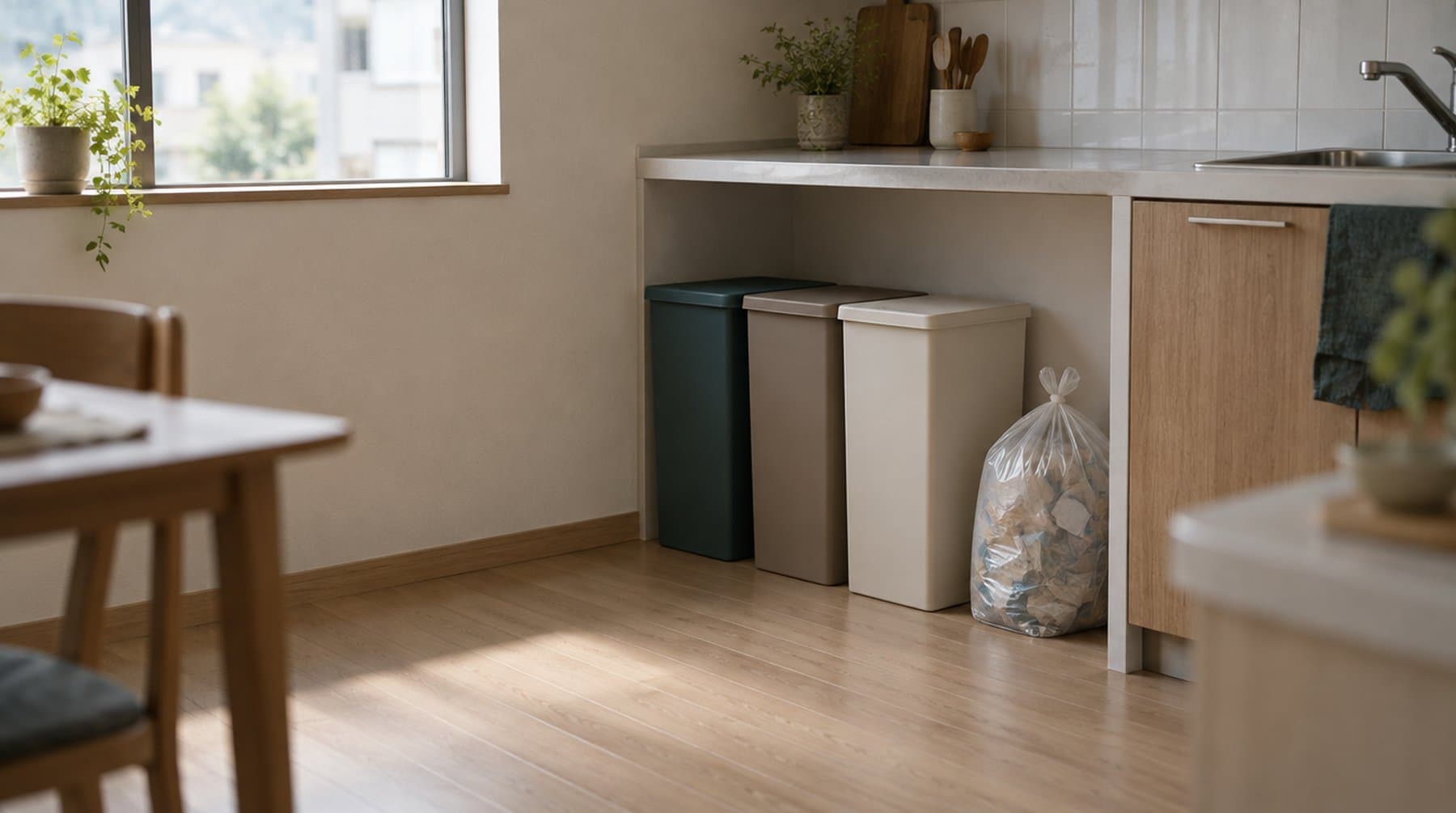
- How the rubbish is sorted, and where to leave it on departure
How far does the airport route need to go?
Give one route from the airport to the nearest station, then photographs from the station onwards. Guests rarely get lost on the long leg; they get lost in the last few hundred metres.
Heiwajima is 10 minutes by train from Haneda Airport. Kameari is 60 minutes from Haneda by direct limousine bus. Kita-18-jo in Sapporo is about 50 to 60 minutes from New Chitose Airport by JR train and subway. Every building is within a five-minute walk of its station, so even with large luggage the final stretch is on foot.
For a guest landing in Japan for the first time, the airport leg is usually the one they have researched; the station exit, the right side of the street and the building entrance are what they have never seen. That is where the photographs earn their place.
How do rubbish rules and quiet hours actually get across?
A short note where the guest's hands are works better than a long rule in the listing. Sorting instructions do more beside the bins than in a message. Japanese municipalities sort household rubbish into categories collected on set mornings, which few visitors have met before, so we still take the last bag out ourselves at cleaning (rubbish at a Japanese rental).
Quiet works the same way: the night hours, and the fact that voices carry along corridors and stairwells, go into the message before arrival. What we do once a complaint arrives is in neighbour complaints.
How are payment and lodging tax explained to the guest?
The room itself is paid through the booking platform or our own direct-booking checkout, so there is almost never cash to collect on site. The item to explain is lodging tax.
Lodging tax (宿泊税, a per-night municipal tax on accommodation) is paid by the guest and collected and remitted by the property. Because a guest meets it separately from the booking total, it is stated in both the listing and the pre-arrival message. The mechanics are in who pays the accommodation tax, and when.
How do you check the guest-register and passport rules for your own property?
Ask the public health centre (保健所) that covers your property what the register must contain, how passport copies are handled and how long records are kept. Guidance differs between municipalities and changes over time, so instead of stating the rules here, this is the list of questions to take with you:
- Which details the register records, and how guests fill it in
- How passport copies are taken and stored for guests without an address in Japan
- Whether identity is checked in person or by video or another remote method
- How long the register is kept, and where
- Which documents in the permit application describe this process (getting a hotel-business permit)
Before you hire us
Our service area is the Greater Tokyo area and Sapporo, Hokkaido. Farther areas depend on whether we can send someone to the viewing, and to the building when something goes wrong, so please contact us and we will consider them case by case. We also consult on minpaku-law properties: the minpaku law and the hotel-business permit (旅館業許可) differ in conditions such as how many nights a property can operate, so we suggest the approach that suits the property, including a switch to the permit.
The language split and the 4.9 above are the record of our own six rooms, not a figure offered for a property we have not seen. What we promise is guest communication in Japanese and English, and a pre-arrival message written for each property.
Ask about your property