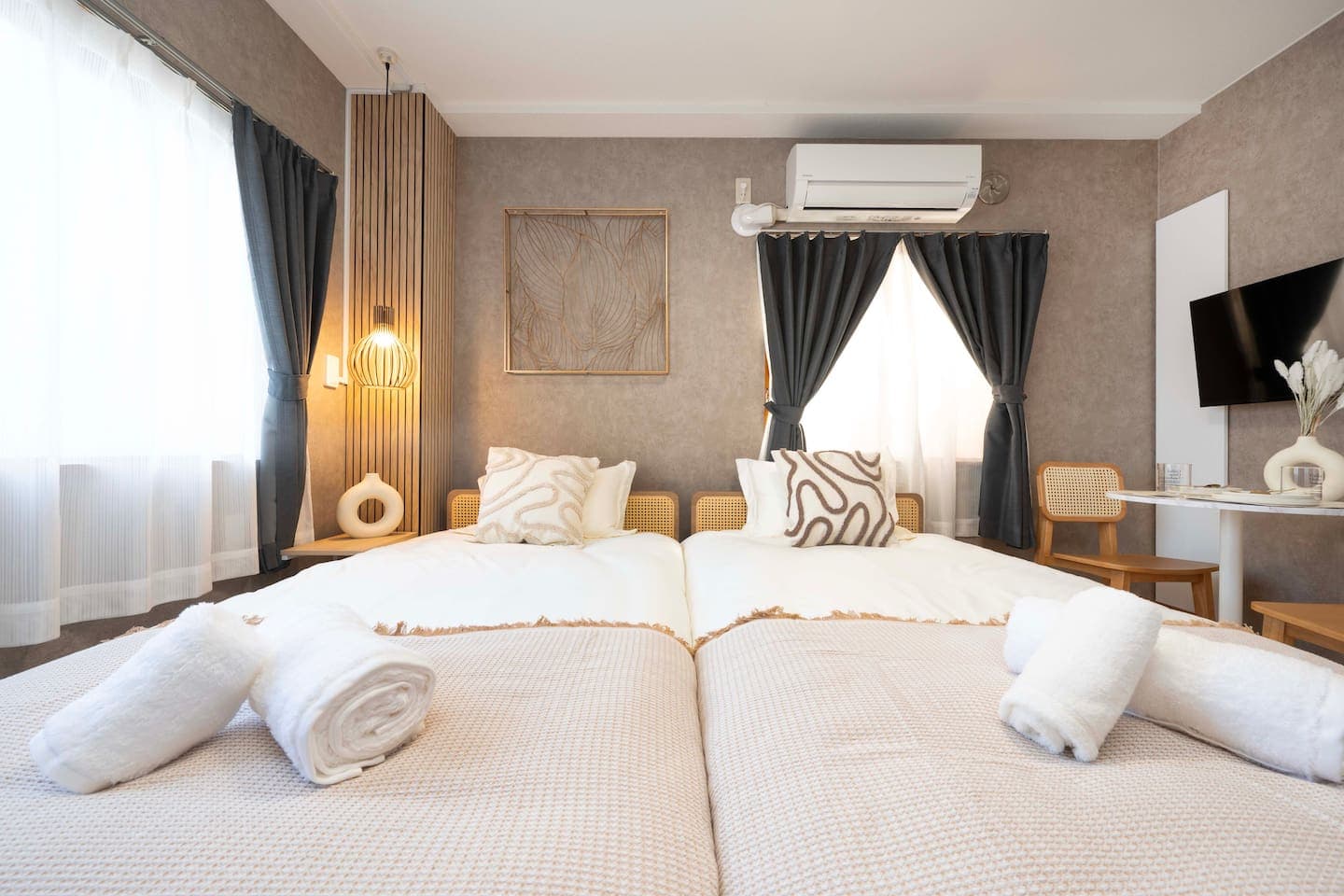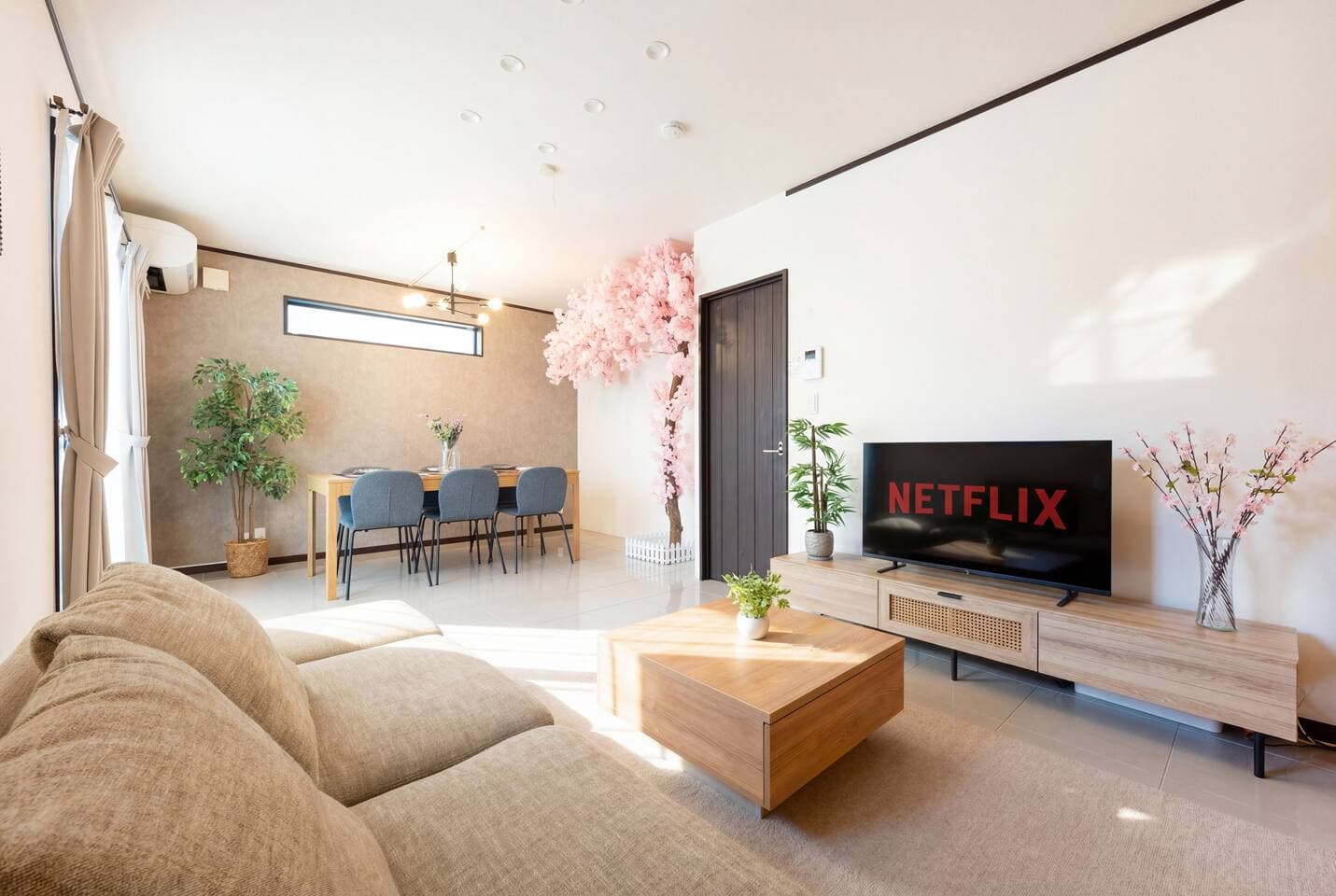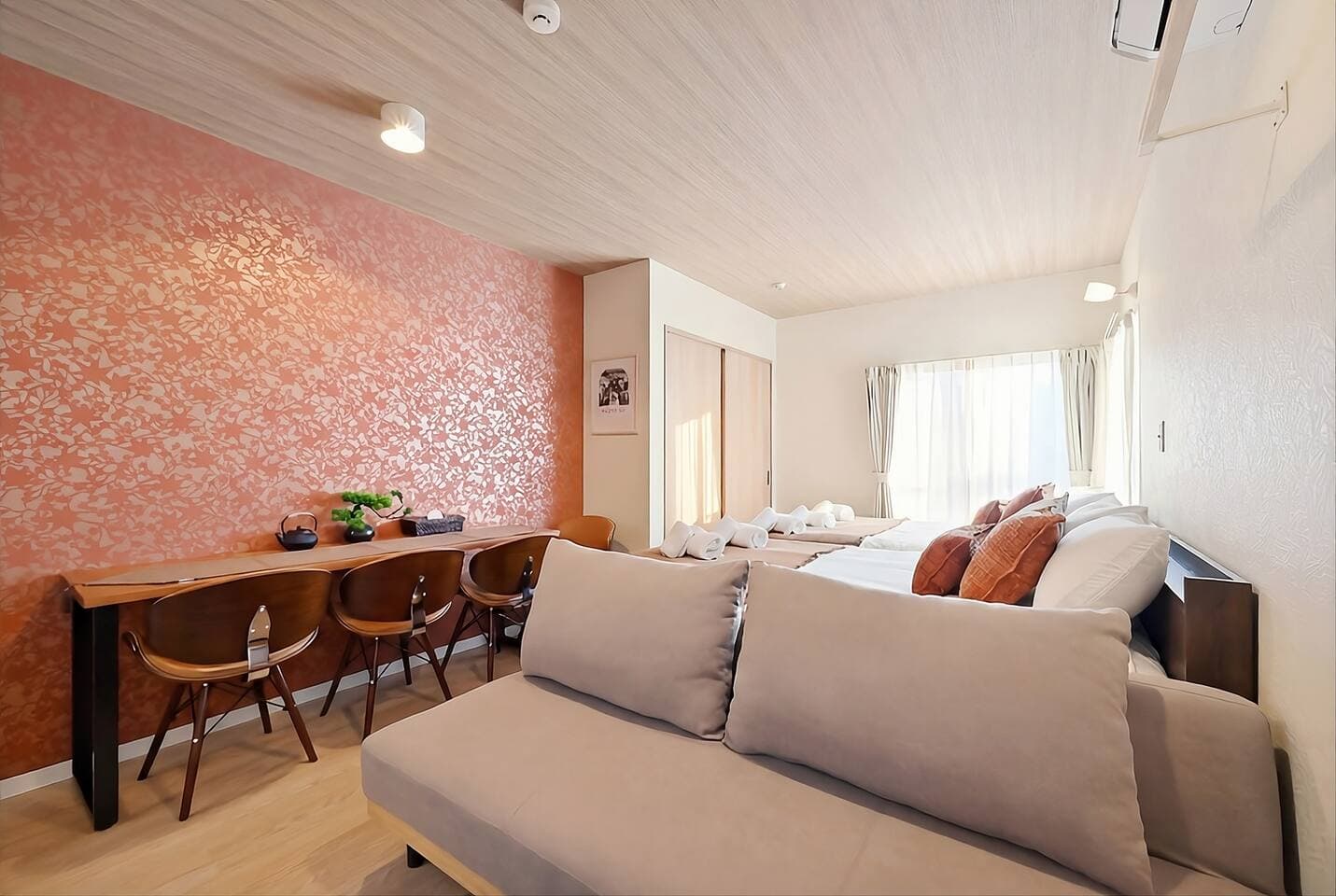

If it is your first trip to Japan and you are staying in an apartment rather than a hotel, you need to know about a dozen small things, and most of them are about arriving: data on your phone before you land, the address in Japanese, and how a door with no front desk opens. The rest is house habits: shoes off, rubbish sorted, quiet in the evening. We run six licensed apartments in Tokyo and Sapporo, and these are the short answers we give first-time guests. Each one links to a longer guide.
What should you sort out before you fly?
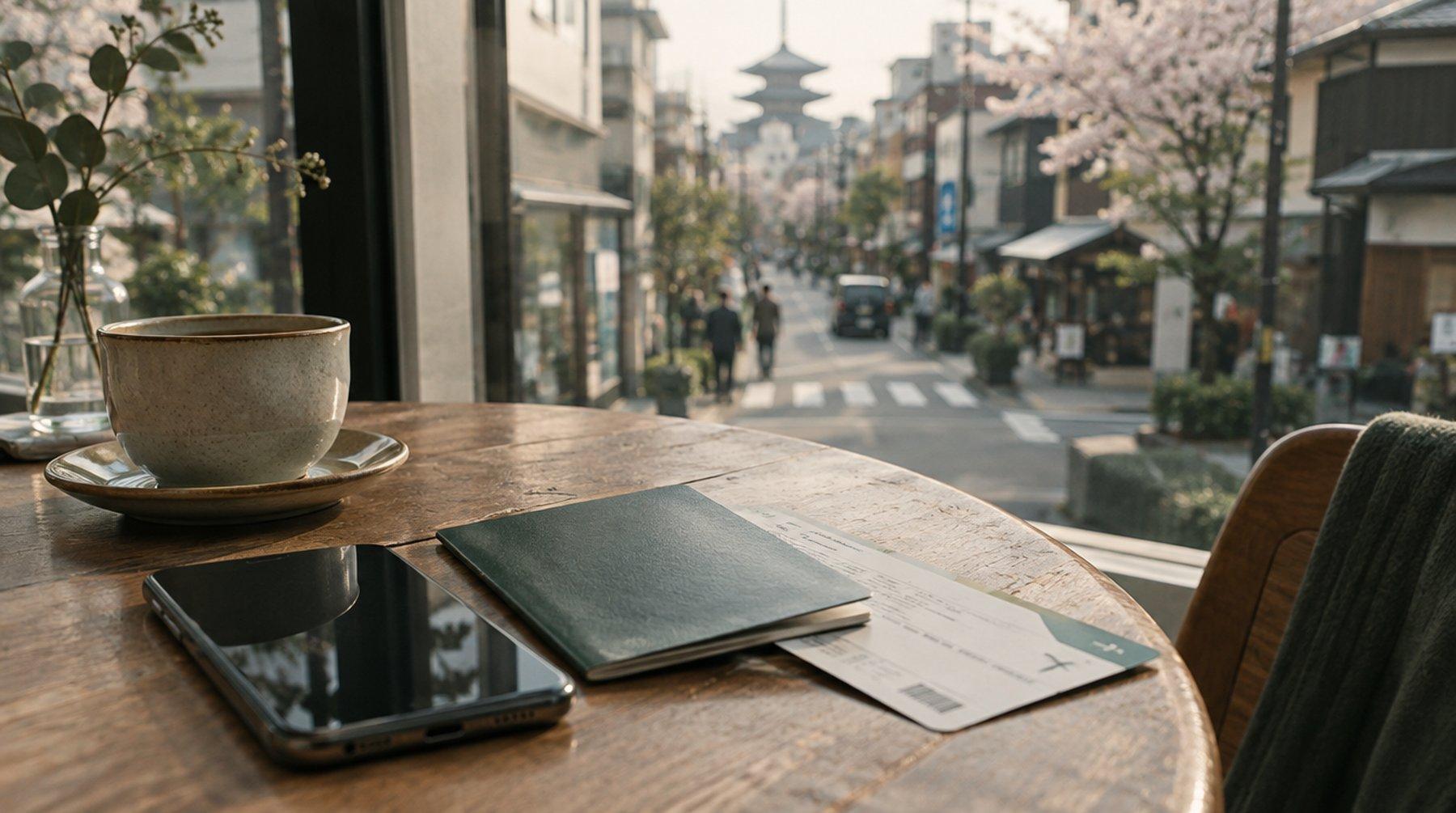
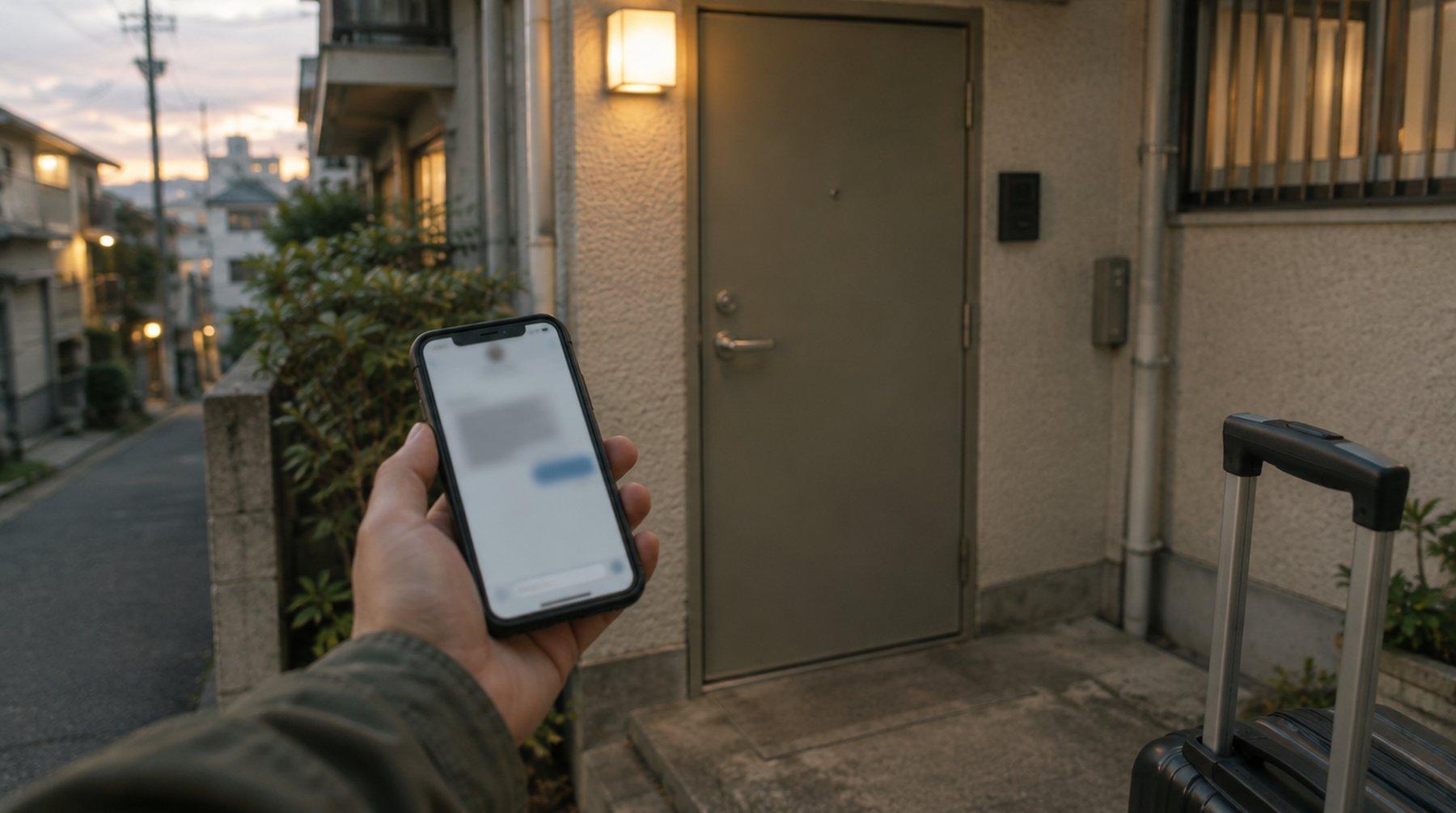
Mobile data that works the moment you land. In an apartment with self check-in, the door code and the entry photos are in your booking message, and the place you most need to read them is the street outside. A travel eSIM installed at home, before the flight, is the simplest answer; pocket Wi-Fi suits families and groups.
Then take three screenshots: the check-in message, the door code, and the address written in Japanese, which you can show a taxi driver. A screenshot still works when the network does not. The options, and how to check your phone takes an eSIM, are in our guide to eSIM and Wi-Fi in Japan.
How do you get from the airport to the apartment?
By train in most cases, and the right route depends on the airport more than the city. Look it up before you fly rather than at the arrivals hall, especially if you land in the evening.
| Airport | To our apartments | Guide |
|---|---|---|
| Haneda (Tokyo) | HEIWAJIMA about 10 minutes by train; Kameari about 60 minutes by direct limousine bus | Landing late at Haneda |
| Narita (Tokyo) | Kameari about an hour by Skyliner and JR, with one change at Kita-Senju | Narita to Kameari or Heiwajima |
| New Chitose (Sapporo) | About 50 to 60 minutes by JR and subway | New Chitose to Sapporo |
How does check-in work without a front desk?
You let yourself in with a door code, any time from 16:00. Self check-in means there is no desk and no key handover: the code and photos of each step arrive in the booking thread, in Japanese, English, Chinese or Korean, and there is no last check-in time, so a delayed flight costs you nothing.
If you land in the morning, ask us to keep your bags before check-in; we take them on request. Check-out is 11:00, or 10:00 on the KAMEARI upper floor. If anything is unclear on the day, message us: we answer around the clock.
Do you need cash in Japan?
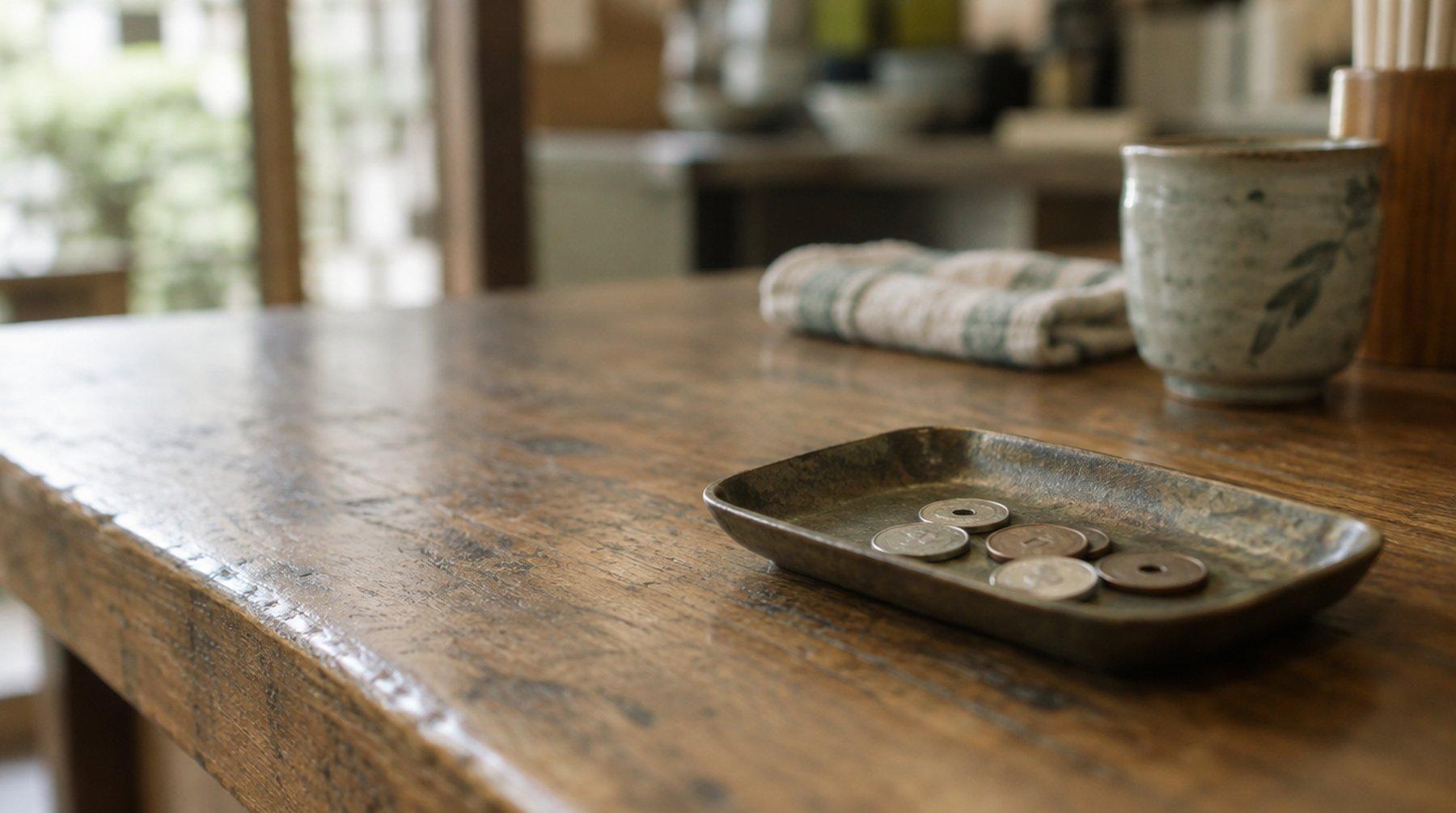
A little. A card and a transit IC card such as Suica or PASMO cover most of a trip; small family restaurants, older ticket machines, coin laundries and shrine offerings can still need yen. Our own rule of thumb is about ¥10,000 per adult for a week, topped up when it runs low.
For overseas cards, use the ATMs in 7-Eleven stores (Seven Bank) or at post offices (Japan Post Bank). Where cards work, what an IC card covers in Tokyo and Sapporo, and the ATM limits are in do you still need cash in Japan.
What is different about staying in an apartment?
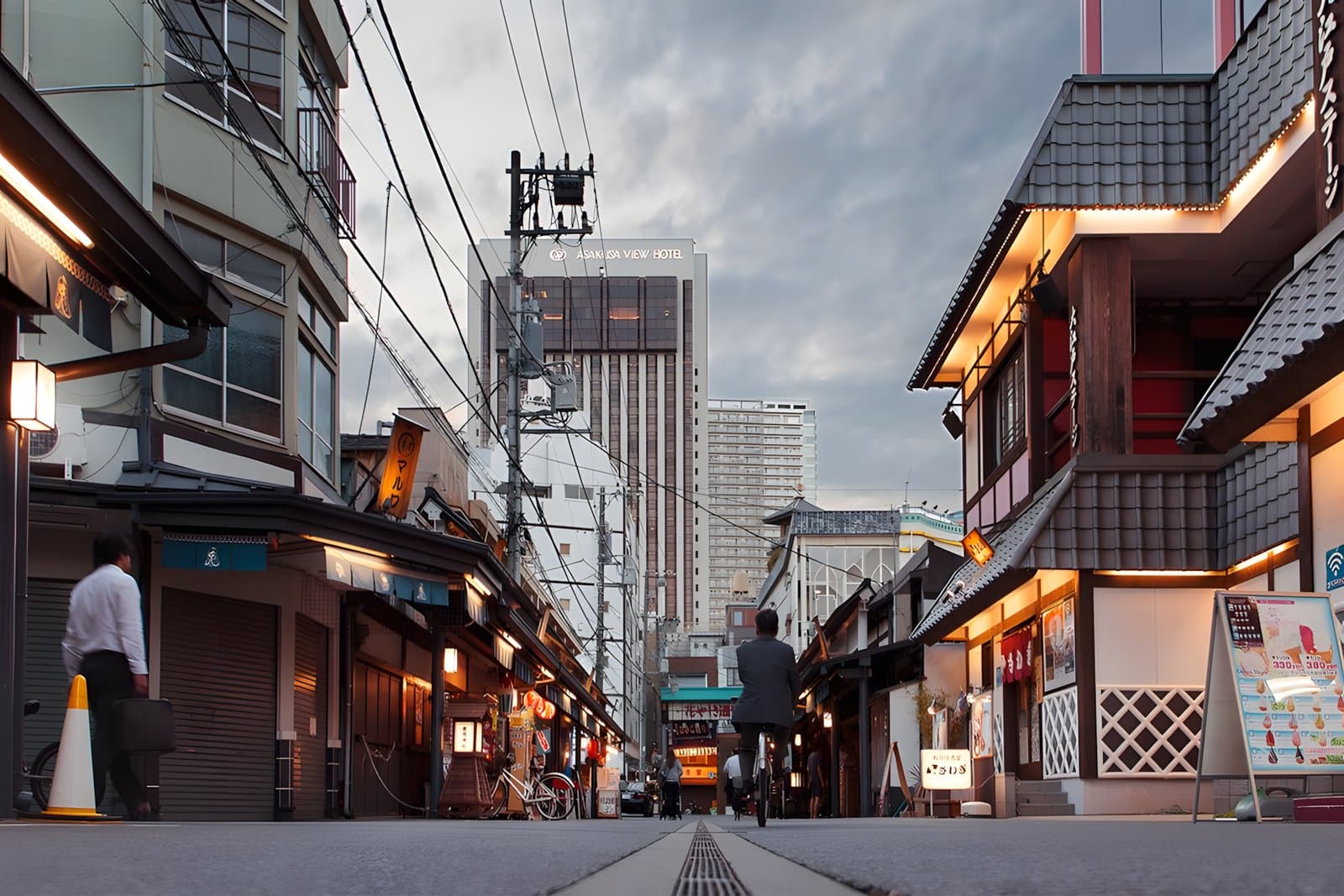
You live by the house rules of a residential street rather than a hotel. A licensed apartment is an ordinary building with neighbours, so the few rules there are exist for them, and they are the same in Tokyo and Sapporo.
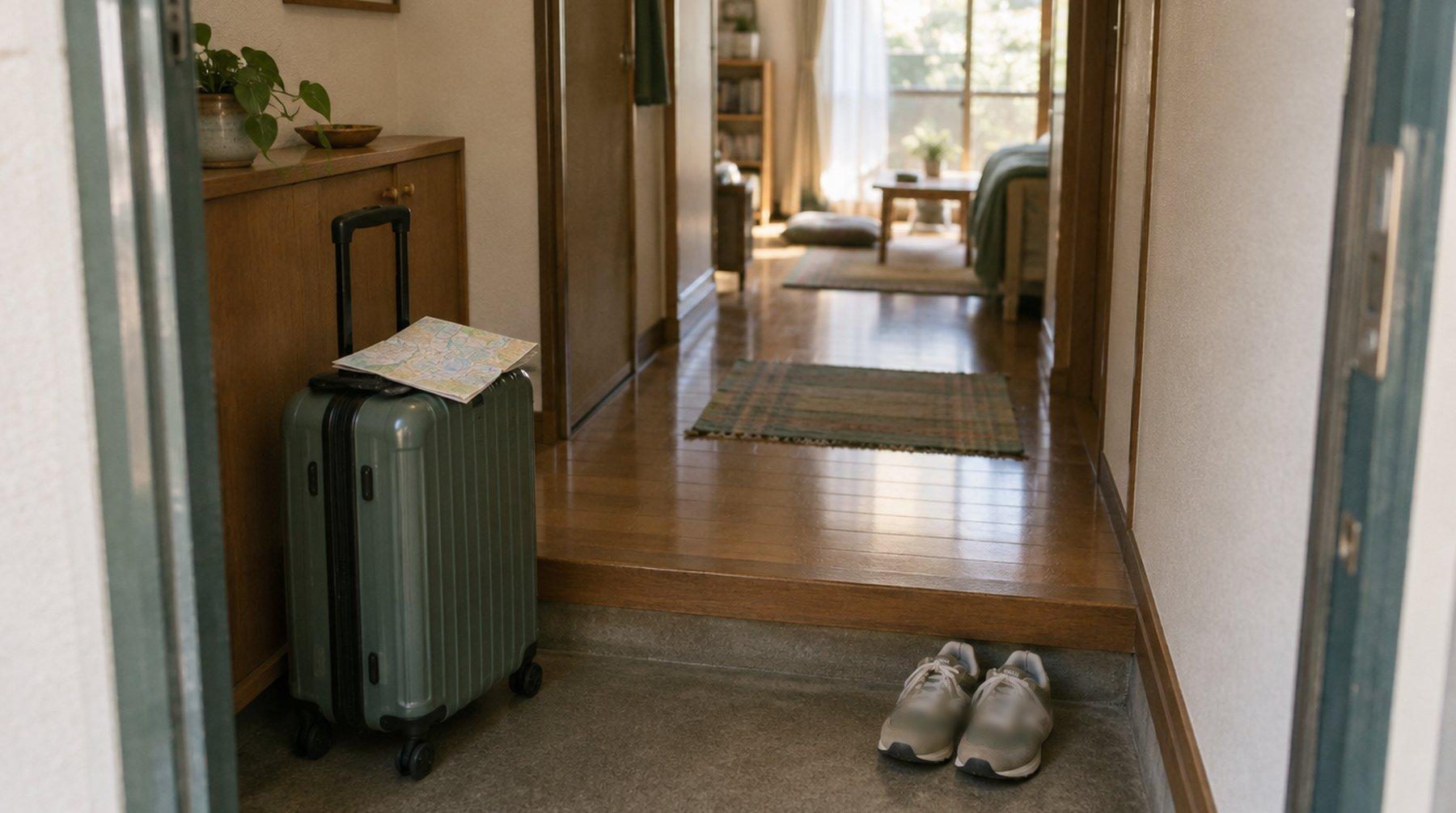
- Shoes come off at the genkan, the step just inside the front door.
- Rubbish is sorted the way the ward sorts it. The bins are labelled, and the collection days are in the house manual.
- Quiet hours run from 21:00 to 07:00. Talking is fine; a party is not, and events are not allowed.
- No smoking, and no pets.
- There is no daily cleaning. On a longer stay, a clean or a change of linen in the middle can be arranged: ask us before you book.
How do laundry and heating work?
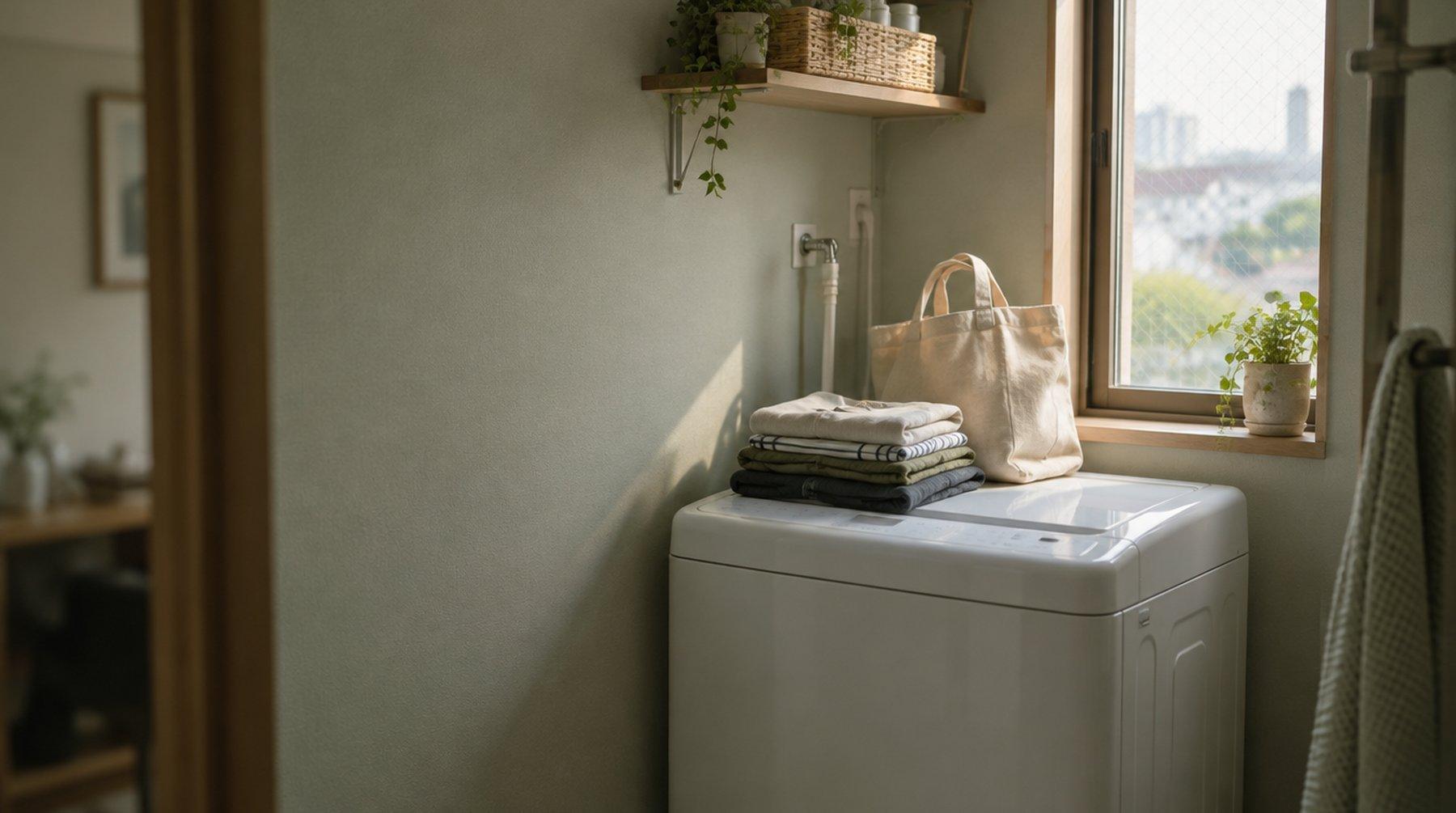
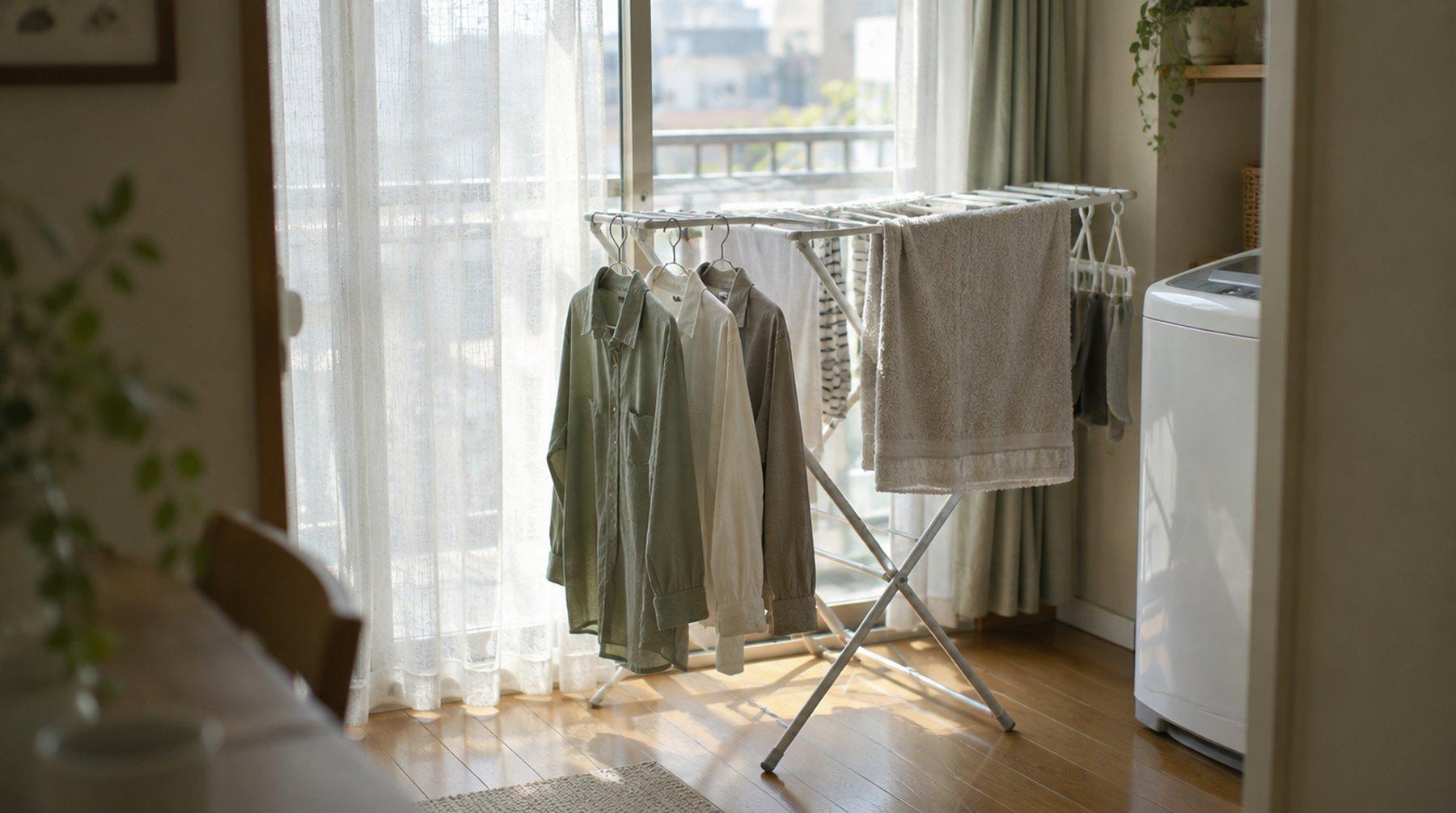
Every one of our six rooms has a washer and five of them also dry, so you can pack about five days of clothes for a two-week trip and wash on day four. The panel is in Japanese only; the six words you need are translated in our laundry guide for Japan.
Heating is room by room, from the air conditioner on the wall: press the button marked 暖房 (heating) on the remote. Winter air is dry, so bring lip balm. More on the remote, and on why a Sapporo flat is often warmer inside than a Tokyo one, in heating in a Japanese apartment.
Is an apartment the right choice for a first trip?
For a stay of a few nights or more, and for families and groups, usually yes; for a single night between cities, a hotel is simpler. An apartment gives you a kitchen, a washer and separate rooms, in exchange for self check-in and no daily housekeeping. What the licence on a listing means is in minpaku vs hotel in Japan, and why our rate is lowest on our own site is in why book direct.
If your first trip falls over the New Year holidays, read what closes in Japan at New Year before you plan meals.
See our apartments