
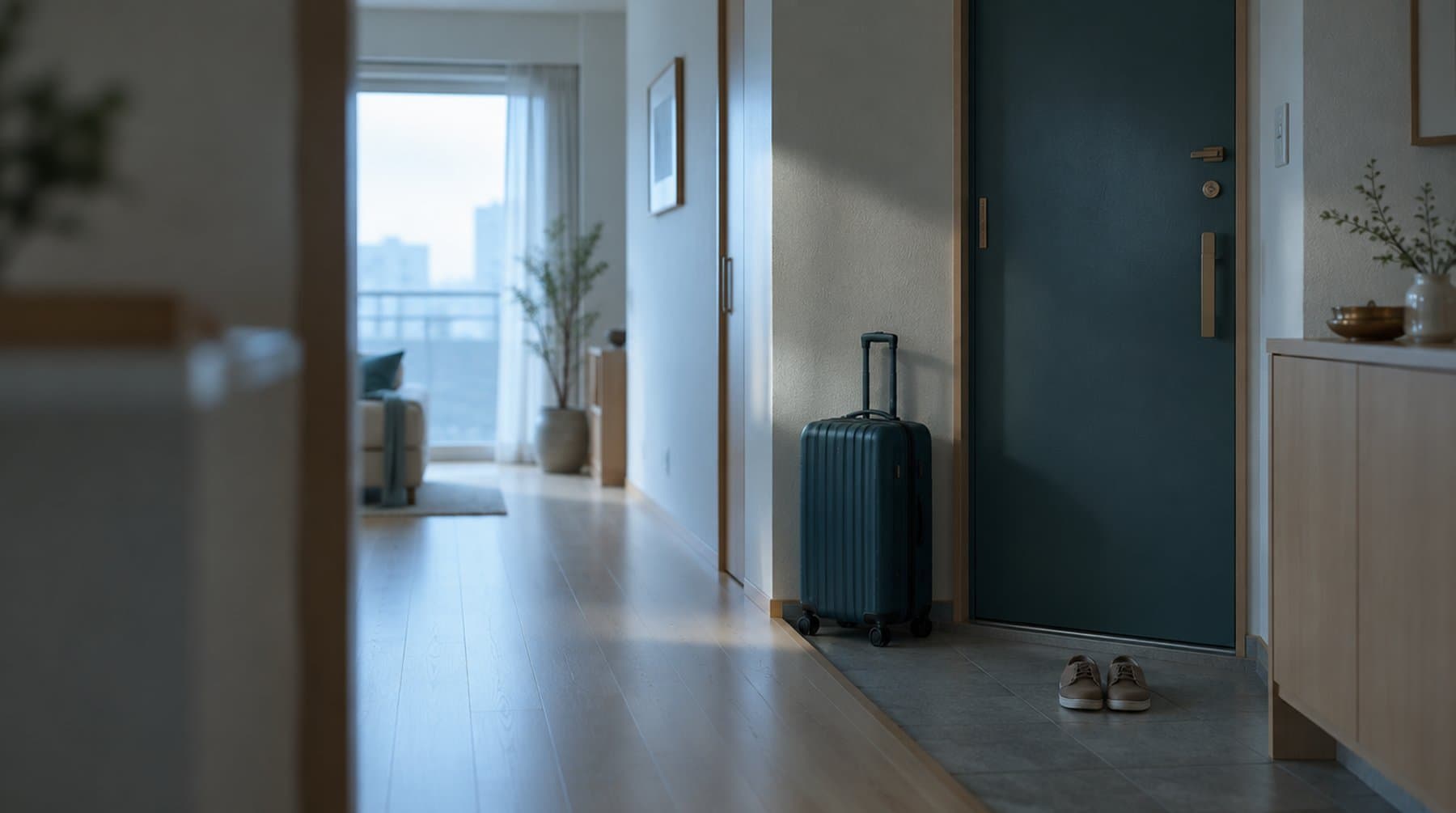
A short-term rental in Ota, the Tokyo ward that contains Haneda Airport, is pulled around by the airport's timetable. The core of the demand is people catching the first flight of the morning and people landing late at night, so stays run shorter here than elsewhere in Tokyo, and how much of that demand you can take depends on whether your setup can sell a single night. We run a studio in Omorihoncho under a simple-lodging permit (旅館業許可, the Hotels and Inns Business Act route, which carries no annual cap on nights), 30 seconds on foot from Heiwajima station on the Keikyu line and ten minutes by train from Haneda. The permit number, 保生環第0473号 from the Ota City Public Health Center, is on our company page.
This is not a table of the ward's rules: such a table is out of date the day it is written, and the order to check any Tokyo property in is in Tokyo's 23 wards. The figures are as of August 2026, from our own three buildings and six rooms over the twelve months from August 2025 to July 2026, published with the method on our operating data page.
What does airport demand actually change?
Two things: how long people stay, and the hours of the day when they move. Our six rooms average 3.3 nights, but the bookings that arrive around flight times run shorter, with one-night and two-night stays mixed in as a matter of course, because the guest is not a tourist making a base for a week but someone flying out tomorrow morning or someone who landed tonight.
What counts for more than the minutes is the number of changes. Heiwajima gets used not because of the number ten but because you arrive with your luggage without changing at all, and the same line runs on into central Tokyo, so an airport day and a city day work from one room. The times below are those on our own HEIWAJIMA stay page.
| Destination | From Heiwajima |
|---|---|
| Haneda Airport | 10 min by train |
| Shinagawa | 6 min |
| Yokohama | 14 min |
| Tokyo Station | 19 min |
| Shibuya | 23 min |
Why the hotel-business permit and not Ota's special-zone route?
Because we wanted the one-night booking. Ota City, as a national strategic zone, certifies 特区民泊 (the special-zone lodging business for foreign visitors): no annual cap on nights, but a minimum stay of two nights and three days. The single night someone books to catch the first flight falls outside that condition.
The framework will not bend, so the choice is made on the design side: longer stays fit the special-zone route, and a business that also wants one-night stays needs the permit. The third option, the residential-lodging notification route (民泊新法), is capped at 180 nights a year, which leaves the possibility of not being able to sell the very days the airport demand appears (the comparison is in permit or notification). Requirements and their interpretation move, so check the current ones with the Ota City counter.
| Framework | Minimum stay | Nights per year |
|---|---|---|
| Hotel-business permit (simple lodging) | From one night | No cap |
| Special-zone lodging (Ota) | Two nights and three days | No cap |
Who actually books a place like this?
One person or two. The shape of the room decides it: a studio with two single beds, one bathroom, a washing machine and a kitchenette, sleeping a maximum of two. Families and groups do not come here at all.
As of September 2026 the room holds 129 reviews at an average of 4.88, live on the stay page. They arrive in English, German, French and Chinese and praise the same things: the station directly outside, how close the airport is, and how quiet and clean the room is. Some of them say the room is small, which it is, so the listing says so first (guest ratings).
What do short bookings do to the operation?
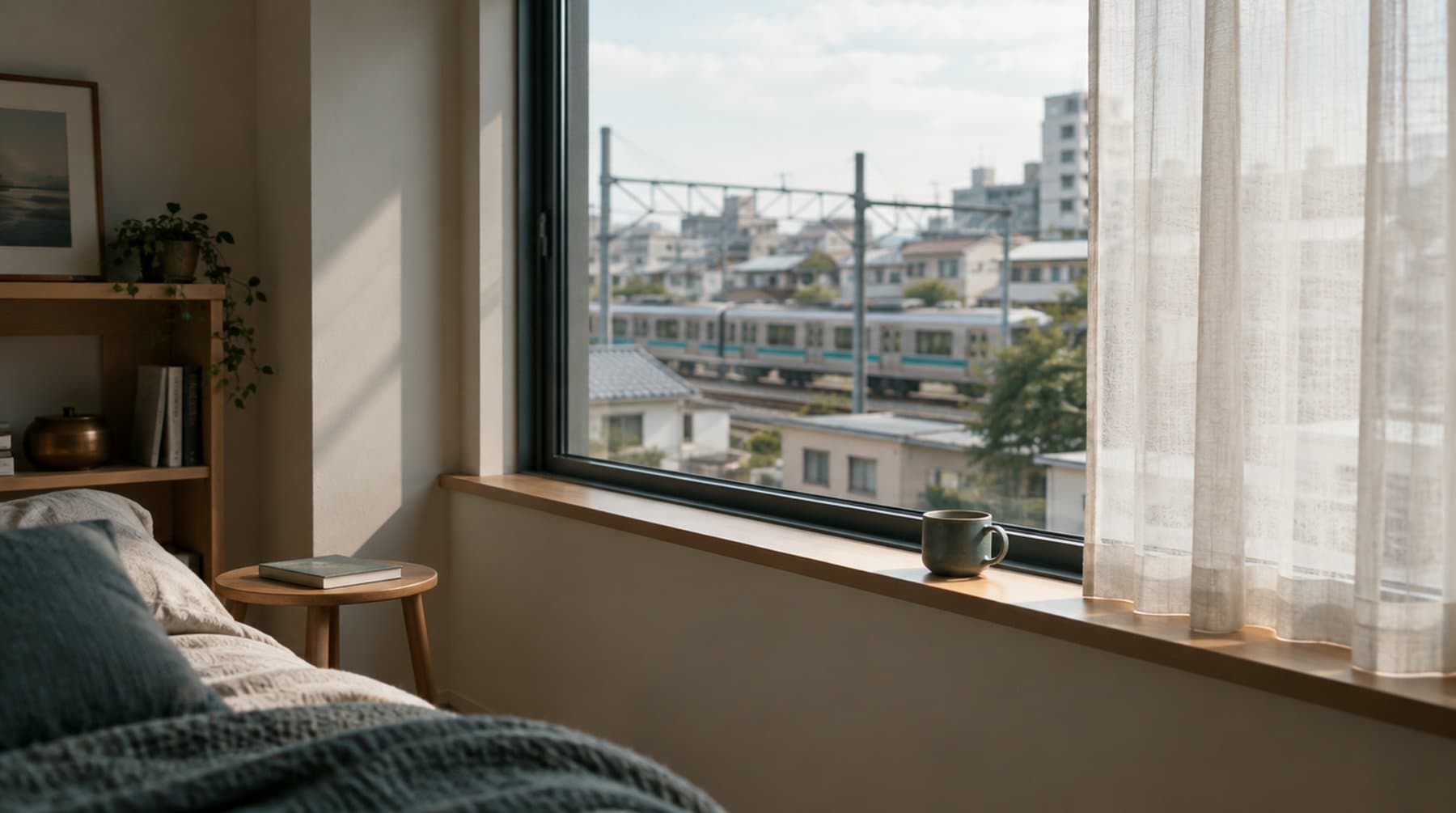
They multiply the cleaning. Cleaning is 17.5% of revenue and the largest of the seven lines that make up our 27.9% operating total (as of August 2026; the breakdown is on our operating data page). A cleaning is triggered by a booking, not by a night, so building the same revenue out of one-night bookings alone runs three times the cleanings that three-night bookings would.
That is why, at a property living on airport demand, the rate has to be designed before any discount is. Worked on our own portfolio average of 3.3 nights, merging two bookings into one saves a changeover worth only 0.58 nights (an average stay of 3.3 nights). Unless the cleaning price and the cleaning route are settled first, you get months where occupancy is high and nothing is left (operating costs).
How do you fit around first flights and midnight arrivals?
By the design of the keys and the messaging, not by keeping someone awake. Check-in is 16:00 and checkout 11:00, but every month there are guests who leave before the first train and guests who arrive after the last one. Entry is self check-in, so nobody is posted at the door for an arrival time (key handover).
We take messages around the clock, which is not the same as a person being awake around the clock (does a rental need 24-hour response). Near an airport the phone rings for roughly three things: someone landed at night and cannot find the entrance, someone wants to know whether they will make the first train, and someone wants to leave a bag for the few hours between checkout and their flight. Half of all three disappear in how the pre-arrival message is written, and the other half is why a route to a human stays open overnight.
What should you look for in a property in this ward?
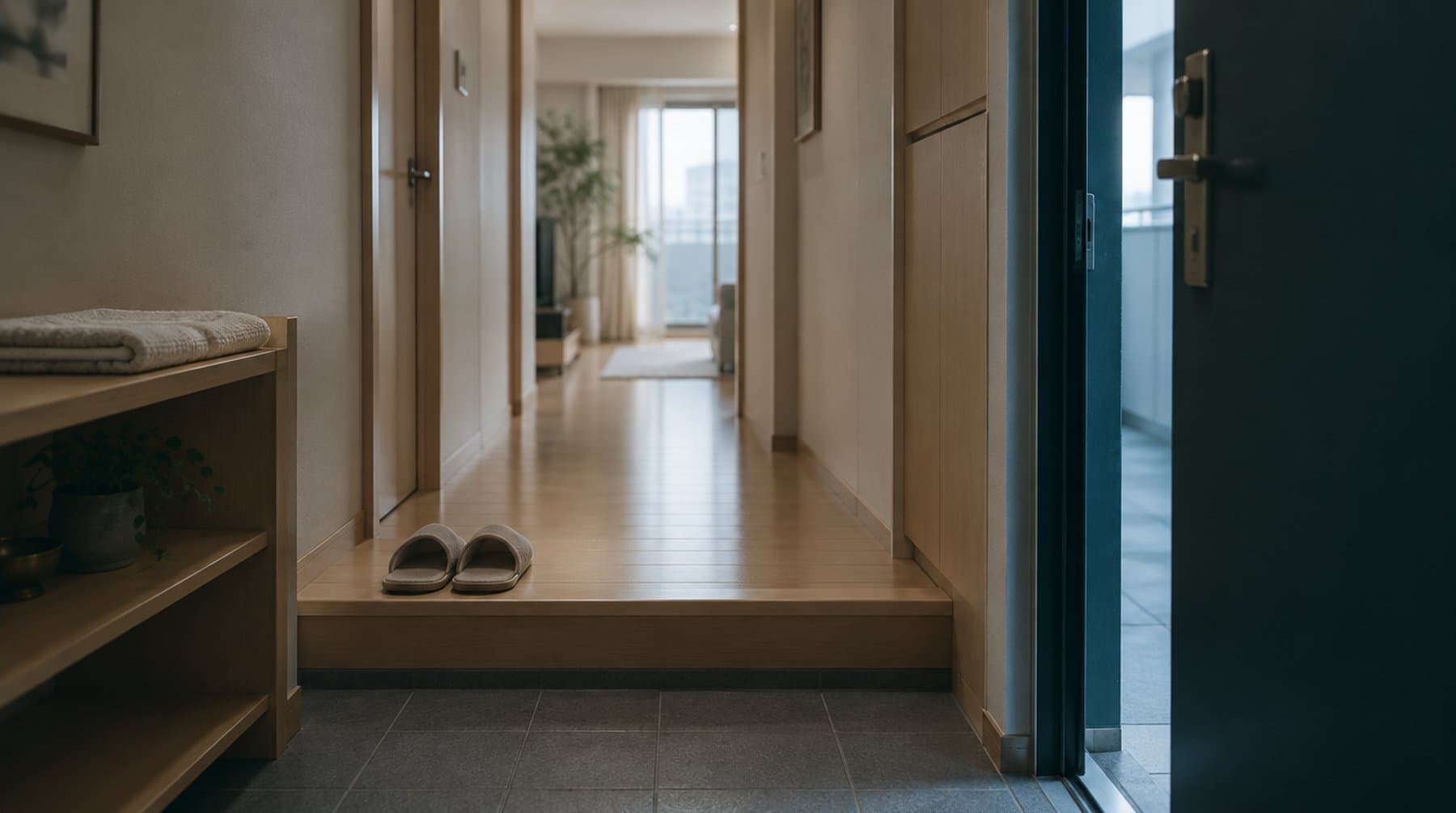
Five things at the viewing. Being near Haneda is not on its own a qualification.
- Whether the airport is reachable without changing trains. Add one change and a ten-minute property loses to a twenty-minute direct one
- Minutes on foot to the station. These guests are pulling suitcases, so the walk counts for more here than in central Tokyo
- How much of the railway and the main road is still audible with the window shut
- Zoning and the building itself. Fail here and everything after it is wasted effort
What should an owner in Ota check first?
The address. Which framework is open to a property, and whether building work is needed, are settled by the address and the building, and the permit route is not open to every building. What the wrong order costs is time: until these three counters have answered, the only thing worth moving is paper (the procedure as we went through it is in getting a hotel-business permit).
- Check the zoning for the address. If it fails here, nothing afterwards brings it back
- Take the building to the Ota City counter for a preliminary consultation: which framework is open to it, and what would be required
- Ask the fire department covering the address what equipment it would expect. This comes before any interior work
- For a condominium unit, read the original building rules; for a rented property, get the landlord's written consent. Both before construction, both on paper
- Decide who explains the plan to the neighbours, and when
Would you manage a property in Ota?
It is inside Tokyo's 23 wards, so it is in our area. Our three Tokyo rooms (one in Ota, two in Katsushika) averaged 85.4% occupancy over the twelve months, with monthly figures between 72.6% and 95.2% (as of August 2026; the month-by-month table is on our operating data page). That is our record, not a promise for anyone else's property.
We take at most five properties at a time, and we do decline some after the viewing and the enquiries to the authorities (the properties we turn down). The fee is performance-based, from 20% of revenue, with no fixed charge in a month without bookings, and the exact rate is quoted after we have seen the property. Ota is a ward where we own a room and our cleaning team already works, so the viewing can happen quickly.
Show us the property and ask