
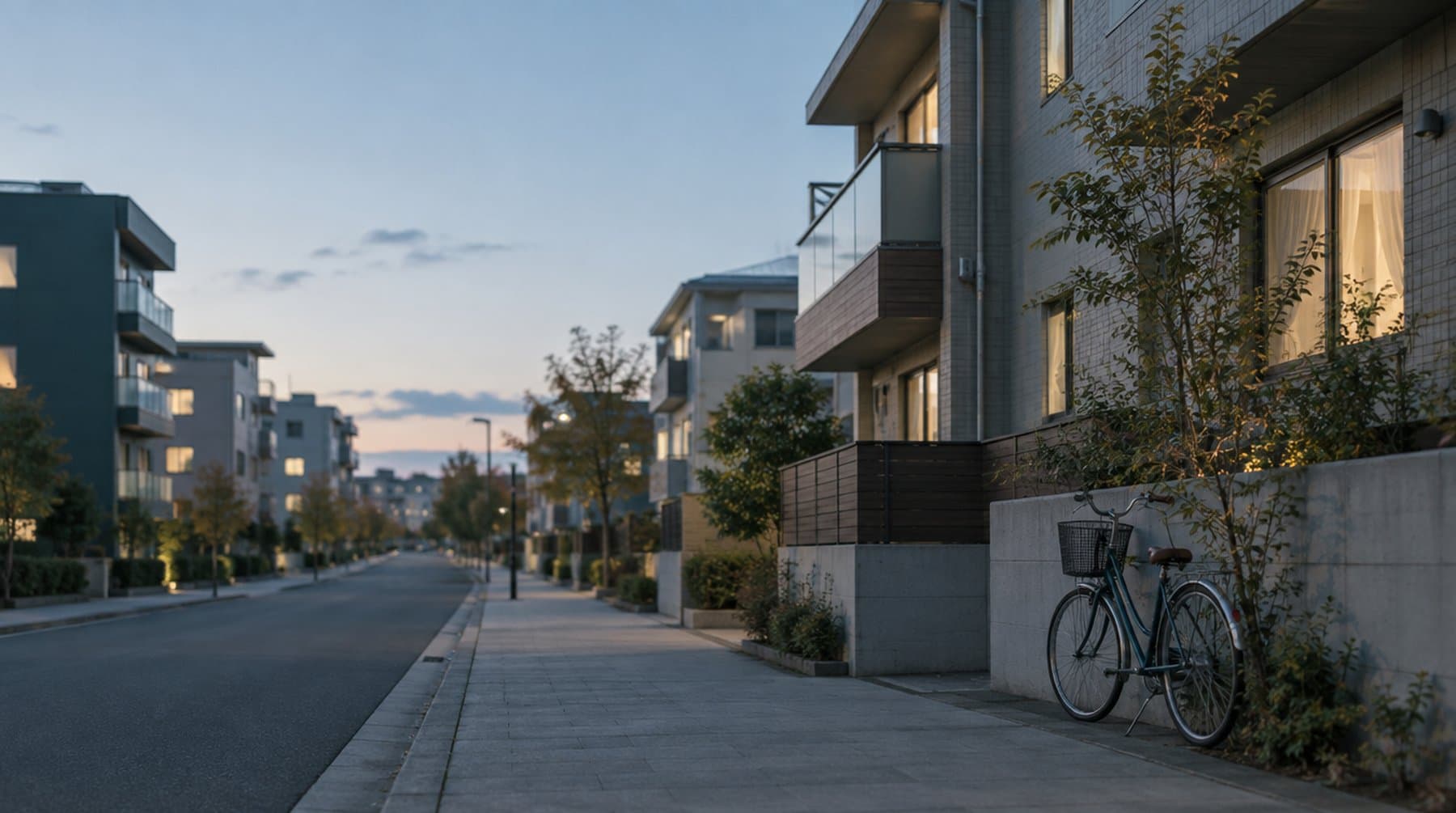
A short-term rental works in Kita, the residential ward immediately north of central Sapporo. What makes it work is not proximity to a sight but the number of minutes on foot to the subway and the number of people the apartment sleeps. We run three of them at Kita 15-jo Nishi 3 under a simple-lodging permit (旅館業許可, the Hotels and Inns Business Act route, which carries no annual cap on nights), four minutes on foot from Kita-18-jo station on the Namboku subway line and two subway stops from Sapporo Station. The permit number, 札保生許可(旅)第64号 from the Sapporo City Health and Welfare Bureau, is on our company page.
This is not a table of the rules: such a table is out of date the day it is written. In Sapporo the application runs through the city health centre and the fire side through the Sapporo City Fire Bureau, and the current requirements belong to those counters rather than to an article (the city-wide picture is in starting a rental in Sapporo). The figures below are as of August 2026, from our own three buildings and six rooms over the twelve months from August 2025 to July 2026, published with the method on our operating data page.
Does a rental in Kita ward actually work?
It does. Our three rooms there averaged 82.0% occupancy across the twelve months, with monthly figures between 68.3% and 94.0% (as of August 2026, for August 2025 to July 2026). Our three Tokyo rooms averaged 85.4% over the same months, so Kita sits 3.4 points lower on the average and swings rather wider through the year.
One subway line does most of the work. Four minutes on foot to Kita-18-jo, then two stops to Sapporo Station, four minutes to Odori Park in the centre and six to Susukino, the nightlife district. Guests reach both the sights and the bars without changing trains, while the apartment itself sits on the residential side of that line. The times are those on our own SAPPORO NORTH stay page.
| Destination | From Kita-18-jo |
|---|---|
| Sapporo Station | 2 stops (~4 min) |
| Odori Park | 4 min by subway |
| Susukino | 6 min by subway |
| Hokkaido University | 6 min walk |
| New Chitose Airport | 50–60 min by JR and subway |
What changes if you choose a residential street over a walk to the nightlife?
Who books, and through that, how the quiet months fill and how many complaints arrive. Within walking distance of a nightlife district the subject of the business is a one or two-person stay of a night or two; on a residential street a larger apartment is booked by families and groups.
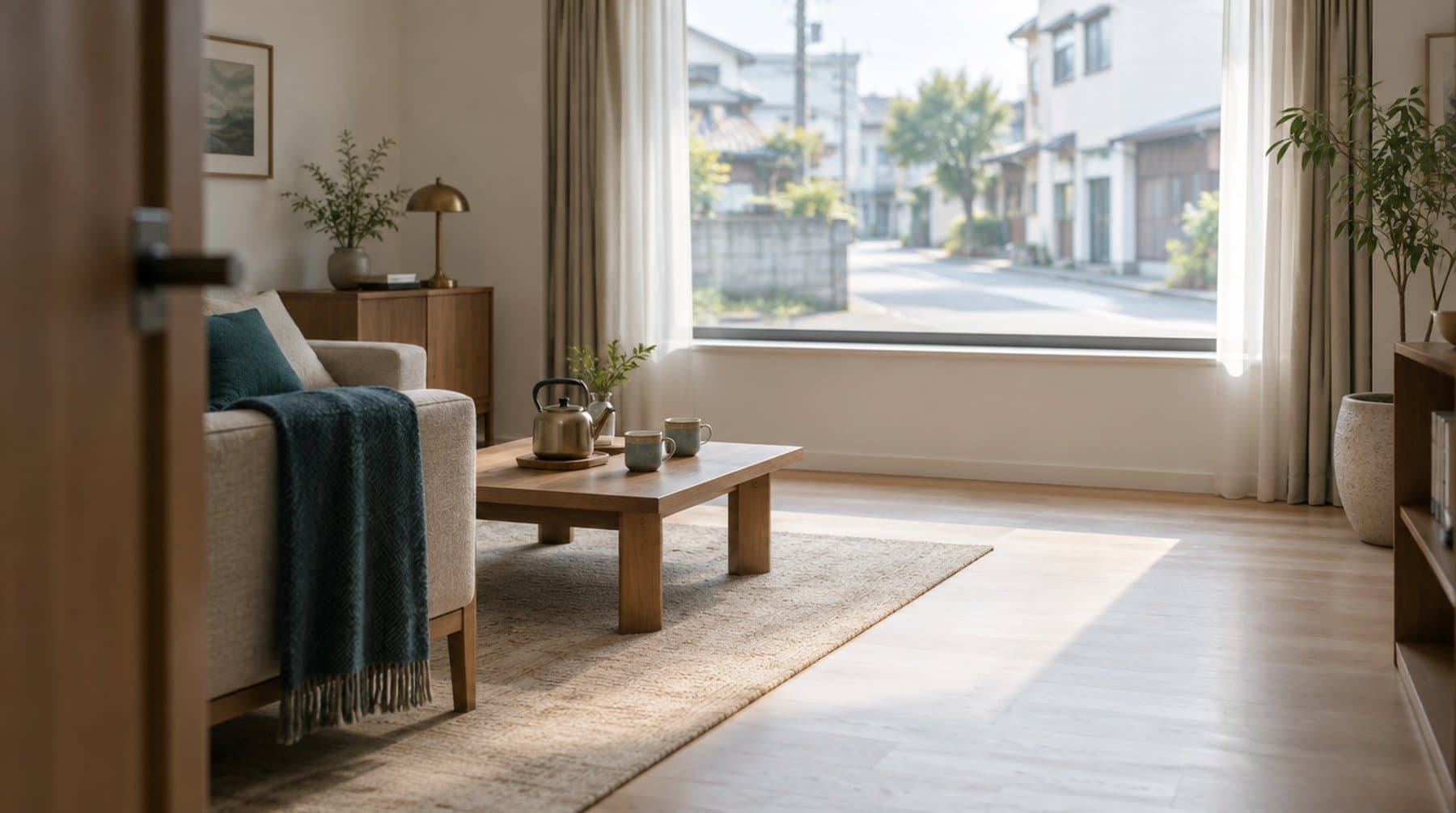
Our three units sleep five, five and four, and all three are ground-floor apartments. A convenience store is two minutes away on foot, a supermarket five, and Hokkaido University and its teaching hospital are walkable, so bookings that follow no tourist calendar at all turn up as a matter of course. This is not a street where people gather at night, which means the two most common neighbour complaints, late arrivals and noise (neighbour complaints), are unlikely here to begin with.
Who actually books a place like this?
Families, small groups, and people staying a while. The shape of the rooms decides it: three studios, each with two beds and a sofa bed, one bathroom, one washing machine and one kitchen apiece. We have not built a room for a single guest.
Across the three units the apartments hold 170 reviews at a weighted average of 4.87 as of September 2026, live on the stay page. The praise is consistently the same four things: how close the station is, how much space there is, the washing machine, and the fact that being on the ground floor means no stairs with a suitcase. We do publish long-stay discounts, and the arithmetic of when a discount pays for itself is in an average stay of 3.3 nights. Check-in is 16:00, checkout 11:00, and entry is self check-in (key handover).
How does occupancy move between summer and winter here?
Winter is the strongest season and the weakest months are not summer but the edges of winter, before the snow settles and after it melts. December to March averaged 88.8% and the other eight months 78.6%, with the year's low at 68.3% in November 2025 and the next lowest at 71.1% in April 2026. Summer is not weak: June to August averaged 81.1%.
So the trough sits at the seasonal joins rather than in a season. February 2026, the month of the snow festival, was the year's high at 94.0%, and the November three months earlier was its low, 25.7 points apart. In that same November our Tokyo rooms ran 93.3%: one company, one month, twenty-five points between two cities. An owner holding a single building feels that swing directly in their cash flow (how the two cities compare is in seasonality).
| Period | Occupancy, our three Kita rooms |
|---|---|
| December to March, average | 88.8% |
| June to August, average | 81.1% |
| The other eight months, average | 78.6% |
| Highest month (February 2026) | 94.0% |
| Lowest month (November 2025) | 68.3% |
What does winter add in a ward like this?
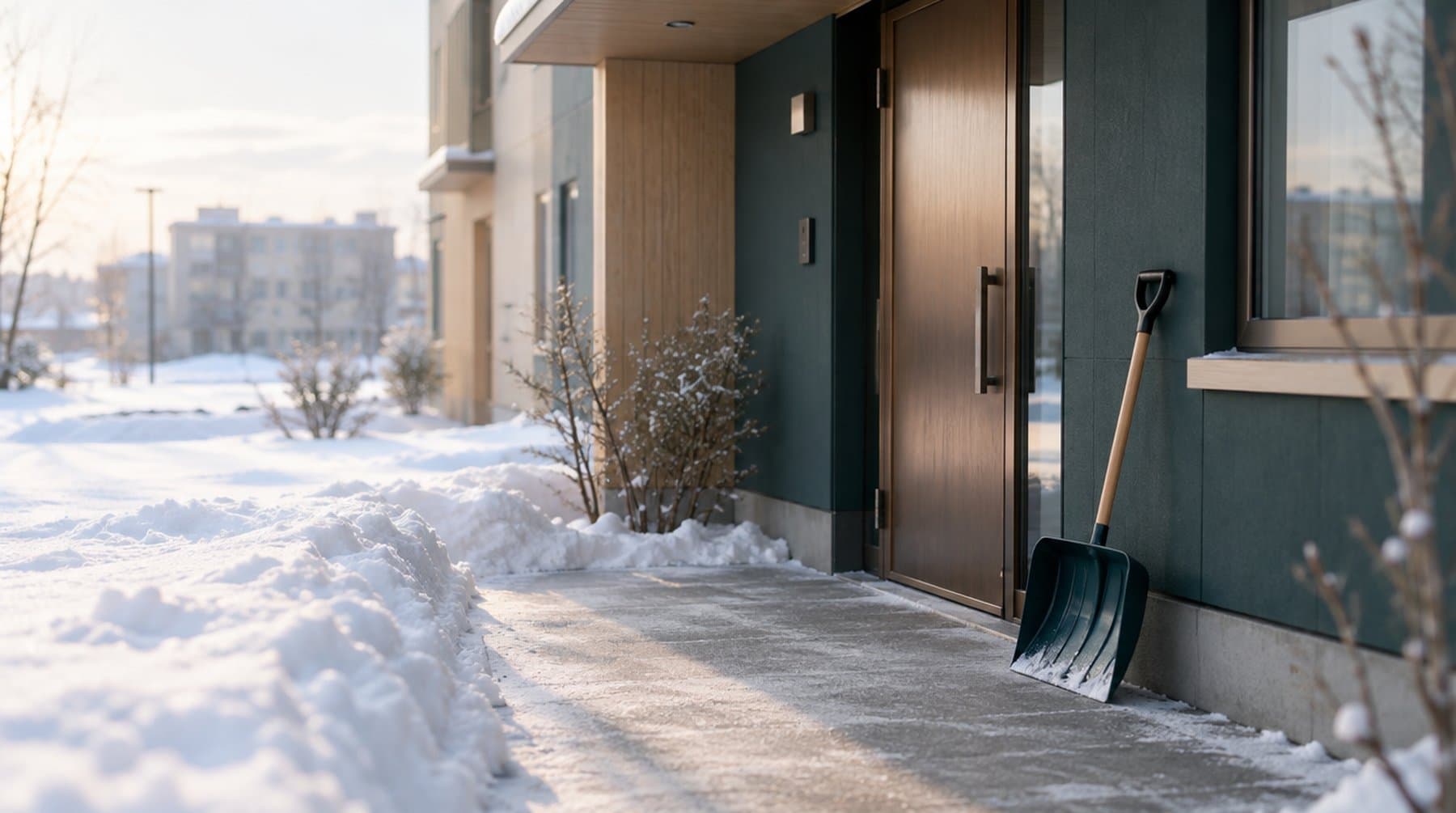
Snow clearing, and the ground underfoot on the night someone arrives. All three of our units are on the ground floor, so nobody gets in if the snow in front of the door is not moved. Clearing is triggered by snowfall rather than by the changeover calendar, which means it has to be arranged separately from the cleaning: it is not inside a cleaning contractor's standard quote (how it is arranged and where the cost lands is in winter in snow country).
Heating shows up as electricity at 2.6% of revenue and gas at 1.0%, but that is the average across all six rooms including Tokyo, so it is not a ratio to carry across to a single Sapporo building; estimate per property by heating type instead (the seven-line breakdown is in operating costs). Winter preparation has to finish in October. With a median booking lead time of 42 days, discounting once November has started barely moves November.
What should you look for in a property here?
Five things at the viewing. Minutes to the centre are only one of them.
- Minutes on foot to the subway. In winter that walk is over snow, so the same number of minutes weighs more than it does in summer
- Whether the floor area and the layout can sleep four or more. A single-occupancy room loses to the ones within walking distance of the nightlife
- Whether there is somewhere on the plot to put the snow from in front of the door. If there is not, every snowfall becomes a cost of carting it away
- Laundry and drying. Long stays and family bookings are decided by whether this exists
- Zoning and the building itself. Fail here and everything after it is wasted effort
What should an owner in Kita ward check first?
The address. Which framework is open to a property, and whether building work is needed, are settled by the address and the building. What the wrong order costs is time: until these three counters have answered, the only thing worth moving is paper (the procedure as we went through it is in getting a hotel-business permit). The order is this.
- Check the zoning for the address. If it fails here, nothing afterwards brings it back
- Take the building to the Sapporo city health centre for a preliminary consultation and ask what would be required of it
- Ask the fire department covering the address what equipment it would expect. This comes before any interior work
- For a condominium unit, read the original building rules; for a rented property, get the landlord's written consent. Both before construction, both on paper
- Decide who explains the plan to the neighbours, and when
Would you manage a property in Kita ward?
It is inside Sapporo city, so it is in our area. Our three rooms there averaged 82.0% occupancy over the twelve months, monthly between 68.3% and 94.0% (as of August 2026; the month-by-month table is on our operating data page). That is our own record, not a promise for anyone else's property.
What we take on is a property already operating under the hotel-business permit, or one whose owner wants to reach that permit. We cannot run a property that stays on the 180-night residential-lodging notification route (民泊新法) on the owner's behalf (the comparison is in permit or notification). We take at most five properties at a time, and we do decline some after the viewing and the enquiries to the authorities (the properties we turn down). The fee is performance-based, from 20% of revenue, with no fixed charge in a month without bookings, and the exact rate is quoted after we have seen the property. Kita is a ward where we own rooms and where the cleaning and the snow clearing are already arranged, so the viewing can happen quickly.
Show us the property and ask